


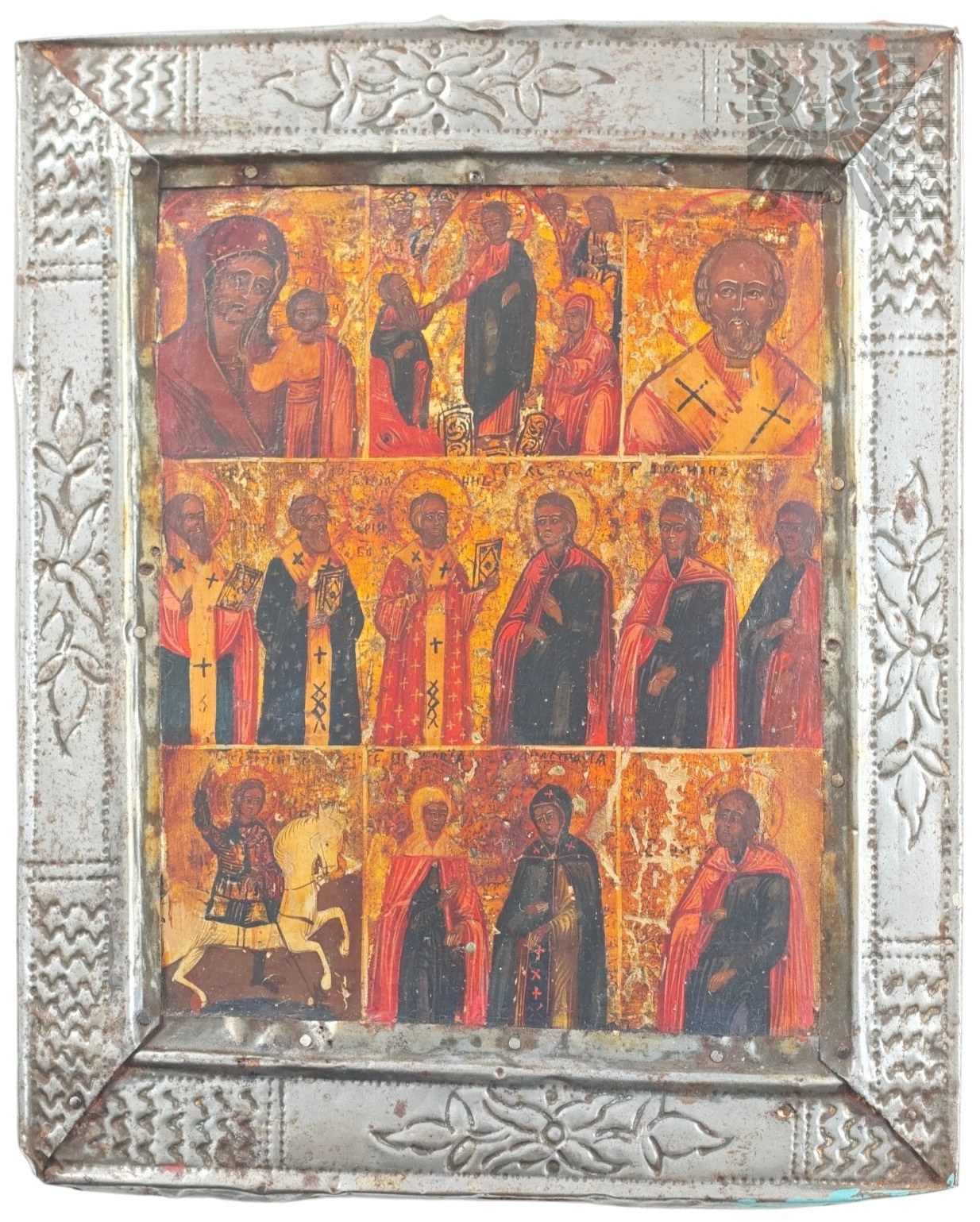
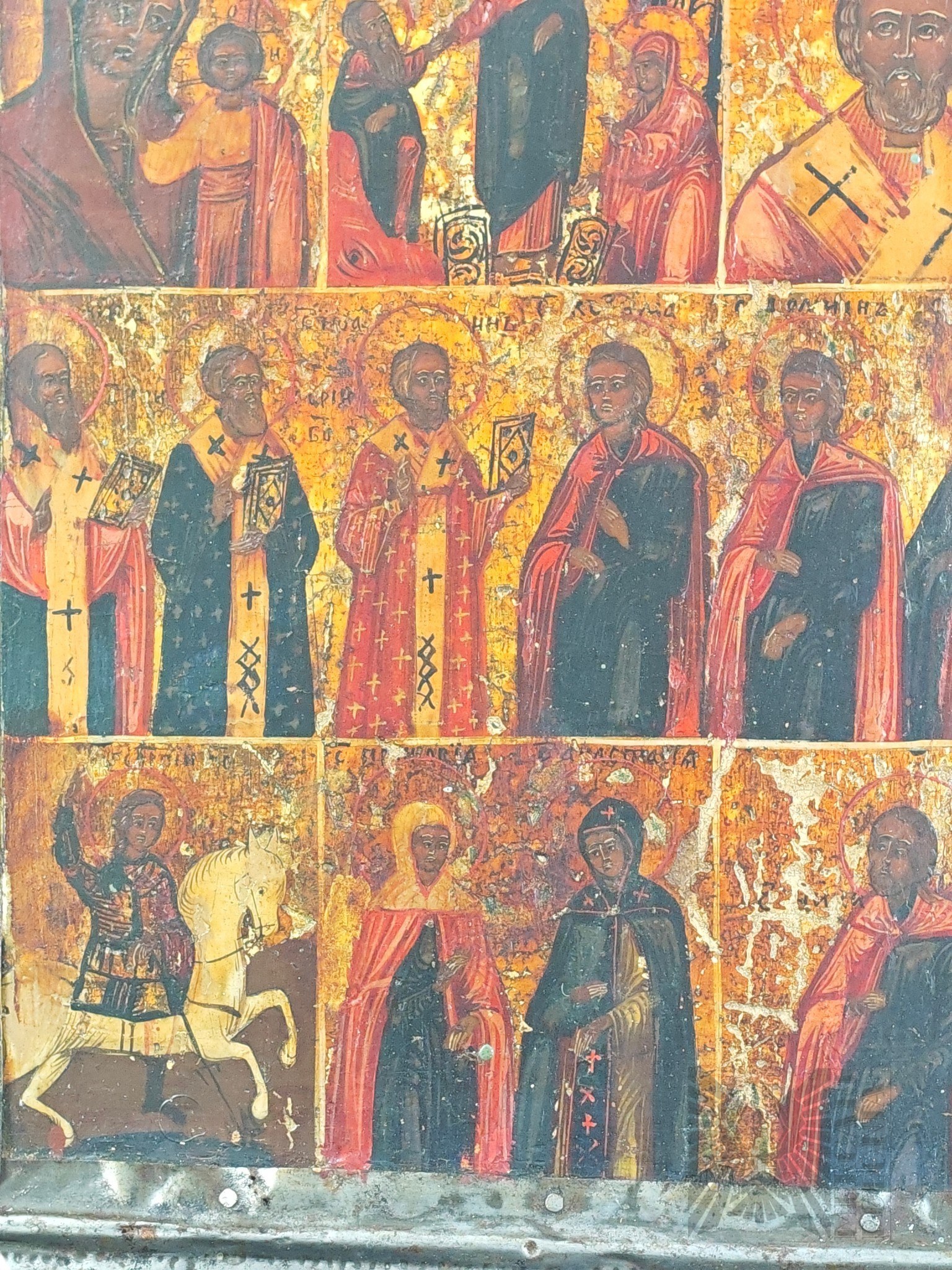
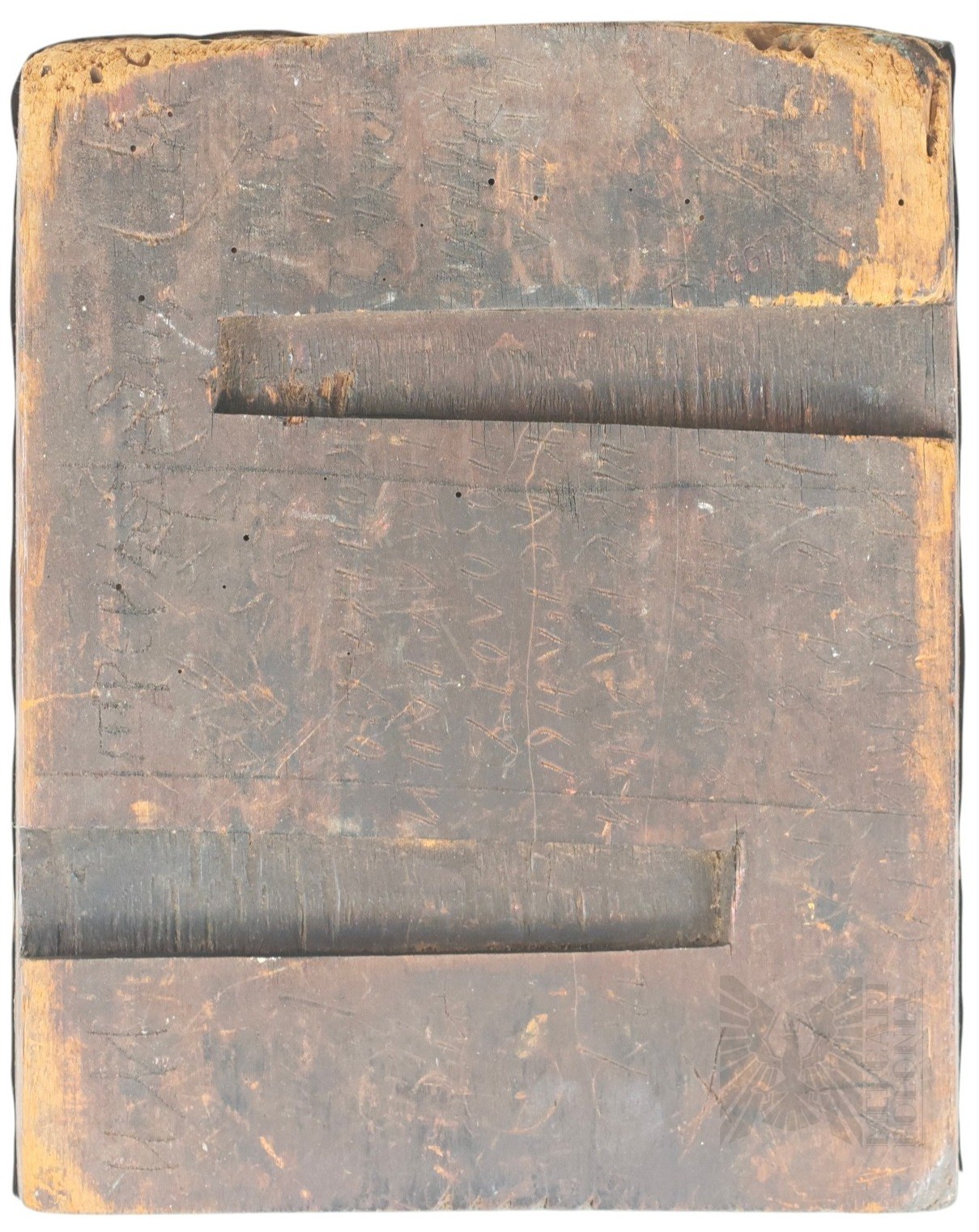
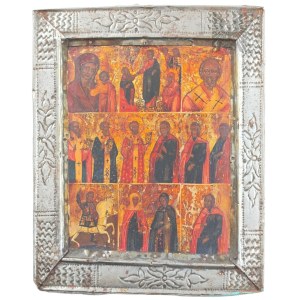
The icon has a rectangular layout, framed by a decorative embossed basma metal covering the periphery of the composition. The central painting field is divided into three horizontal quarters, in which numerous figural representations are arranged. The upper zone shows figures of a sacred nature, shown frontally against a gilded background, with clearly marked nimbuses. The middle strip is filled with standing figures of saints in long robes, framed in a schematic and symmetrical manner. The lower register contains further figural representations, including a figure on horseback (St. George?), followed by St. Irene and St. Anastasia. An elaborate iconic composition of a protective nature, with depictions of saints and narrative scenes, framed by an embossed metal facing.
Tempera on board, embossed metal cover (basma)
Dimensions: 30, 5 x 24, 5 cm.
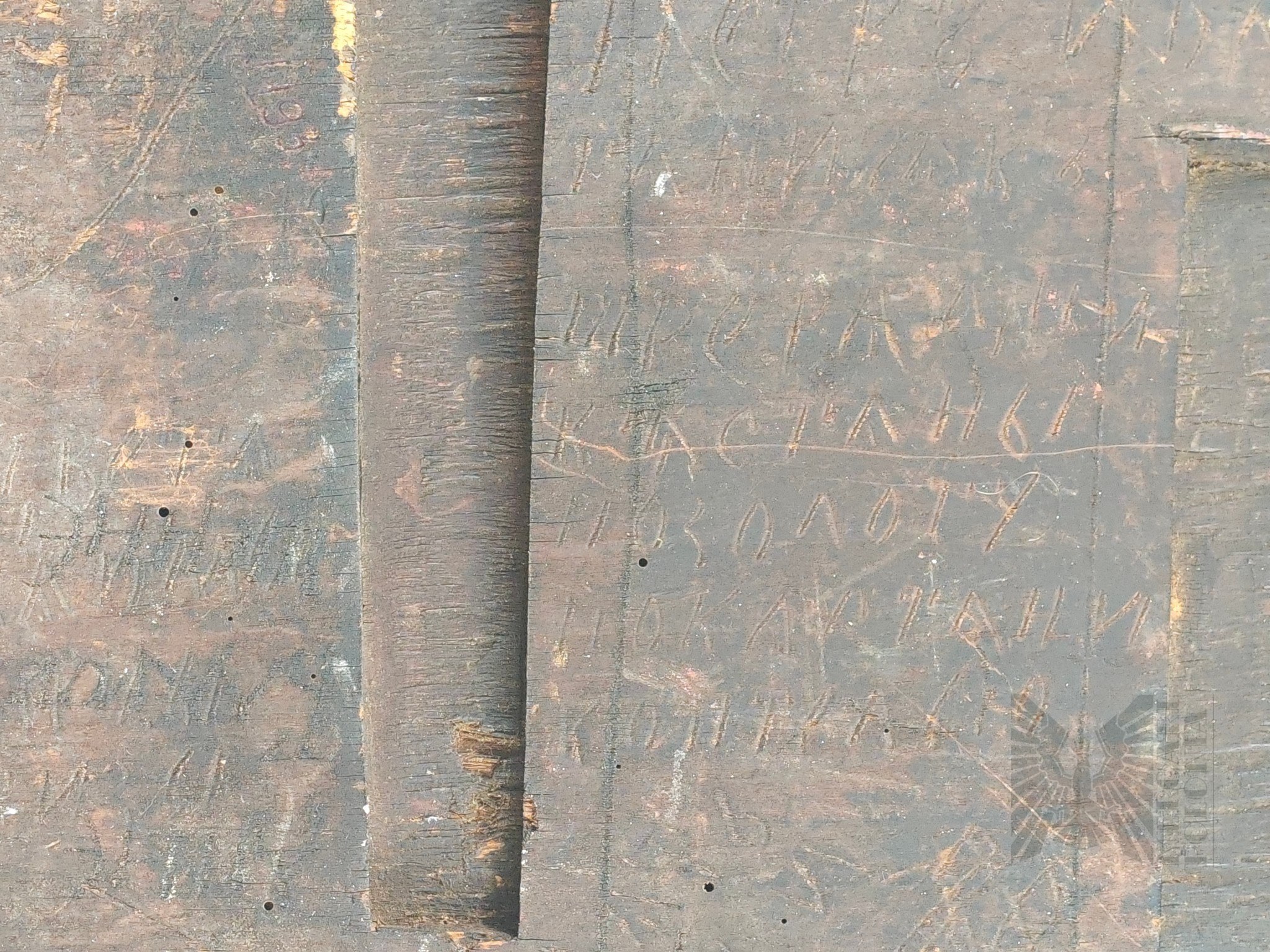
Condition as in the photos.
Multifield icons, juxtaposing numerous figures of saints and narrative scenes in a single representation, are among the characteristic products of Russian piety of the 19th century. Their function was primarily devotional and protective - the presence of multiple saints in a single icon field was meant to provide extensive intercession and symbolically encompass various aspects of the believer's life. The compositional arrangement, with its division into registers and hieratic treatment of the figures, corresponds to the canonical principles of icon painting, although the apparent simplification of form and schematization indicate workshop production, typical of the late Russian Empire period. Icons of this kind were produced both in urban centers and in numerous provincial studios, responding to the growing demand of the religious market.










Nylig sett
Logg deg inn for å se en liste over objekter
Favorittobjekter
Logg deg inn for å se en liste over objekter