


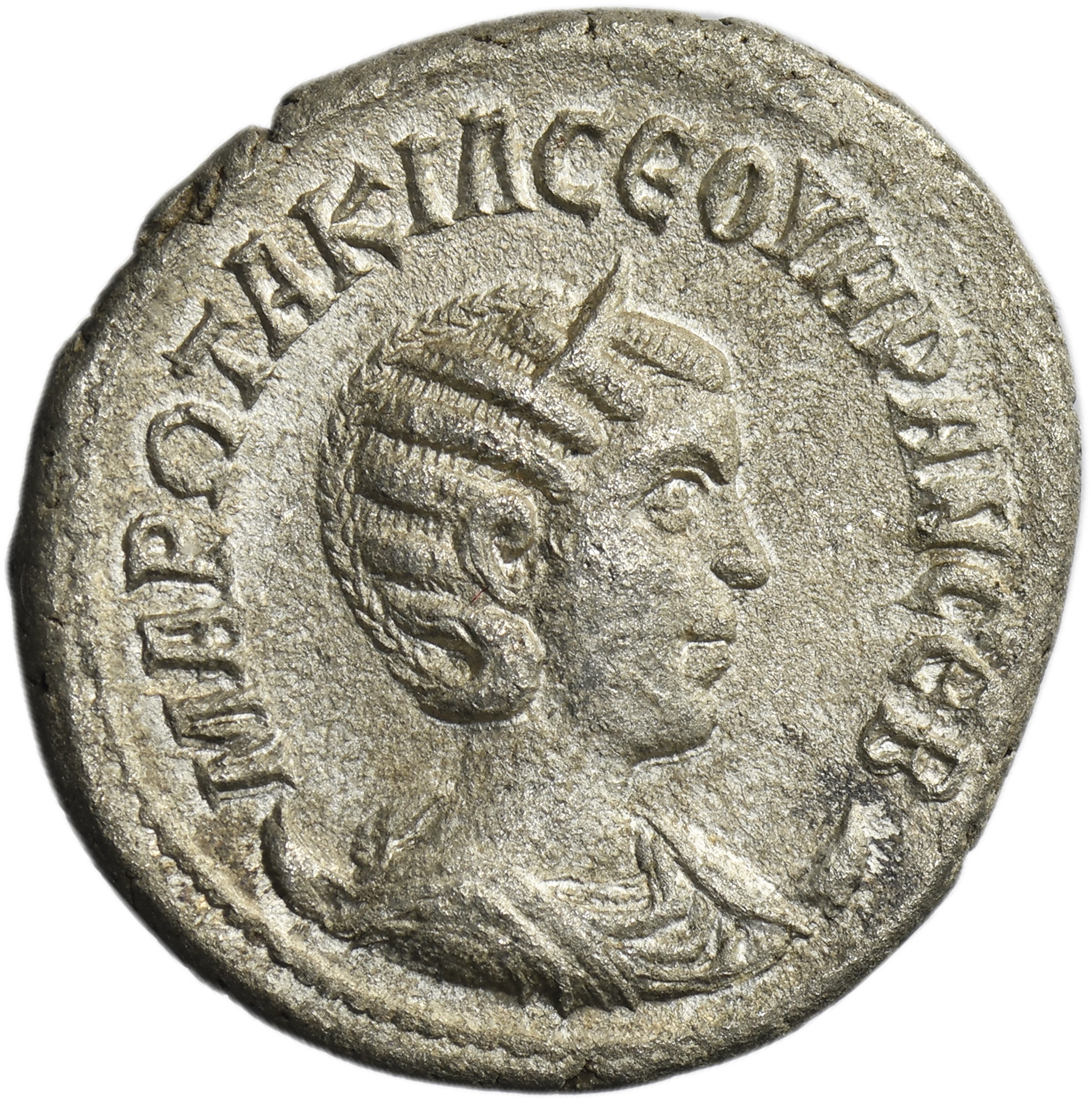
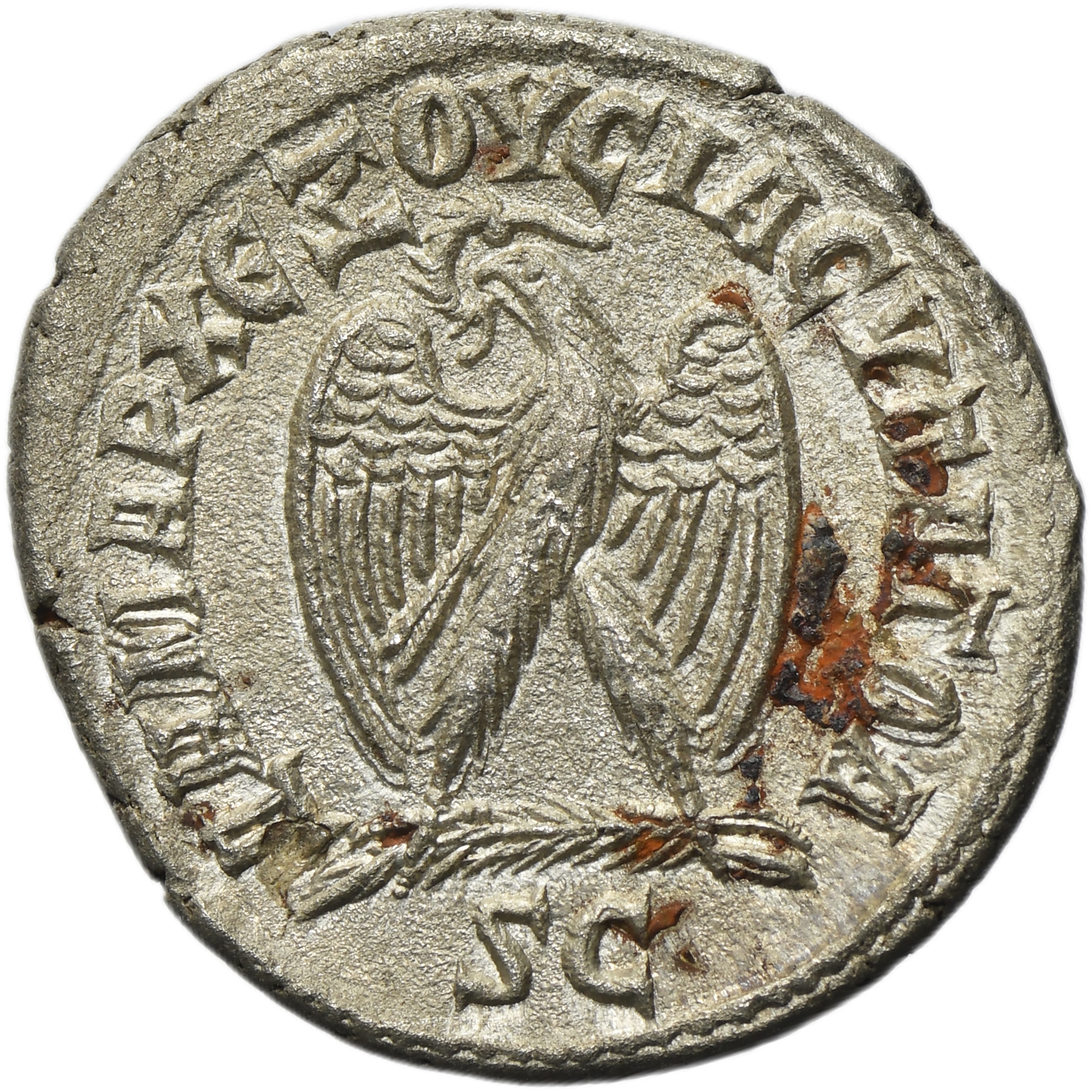


Bilon tetradrachm of Otacilia Severa (AD 244–249), struck at Antioch in Syria in AD 244–245, belongs to the eastern monetary system that functioned alongside the Roman imperial coinage, in which tetradrachms played a central role in regional circulation.
The obverse shows a bust of the empress set on a crescent, facing right, with the Greek legend MAΡ ΩTAKIΛ CEOVHΡAN CEB, identifying her as Marcia Otacilia Severa Augusta. The crescent motif, characteristic of imperial female portraiture in the mid-3rd century, is associated with lunar symbolism and the sacral dimension of imperial authority.
The reverse depicts an Eagle (aquila) standing on a palm branch facing right, with its head turned left and a wreath in its beak, accompanied by the legend ΔΗΜΑΡΧ ΕΞΟΥϹΙΑϹ ΥΠΑ ΤΟ Α and SC in the exergue. The eagle represents imperial power and the Roman military, while the palm branch signifies victory and triumph; the wreath reinforces the idea of success and prosperity.
The reverse legend refers to the tribunician power (δημαρχικὴ ἐξουσία) and the first consulship (ὕπατος Α), allowing precise dating of the issue to AD 244–245, at the beginning of the reign of Philip I the Arab.
Roman Provincial
Syria, Antioch, Otacilia Severa (244-249), Tetradrachm 244-245
Obverse: bust of Otacilia Severa on crescent right
MAΡ ΩTAKIΛ CEOVHΡAN CEB
Reverse: eagle standing right, head left, on palm, spreading wings, holding wreath in beak, SC in exergue
ΔΗΜΑΡΧ ΕΞΟΥϹΙΑϹ ΥΠΑ ΤΟ Α
Diameter 28 mm, weight 10.81 g











