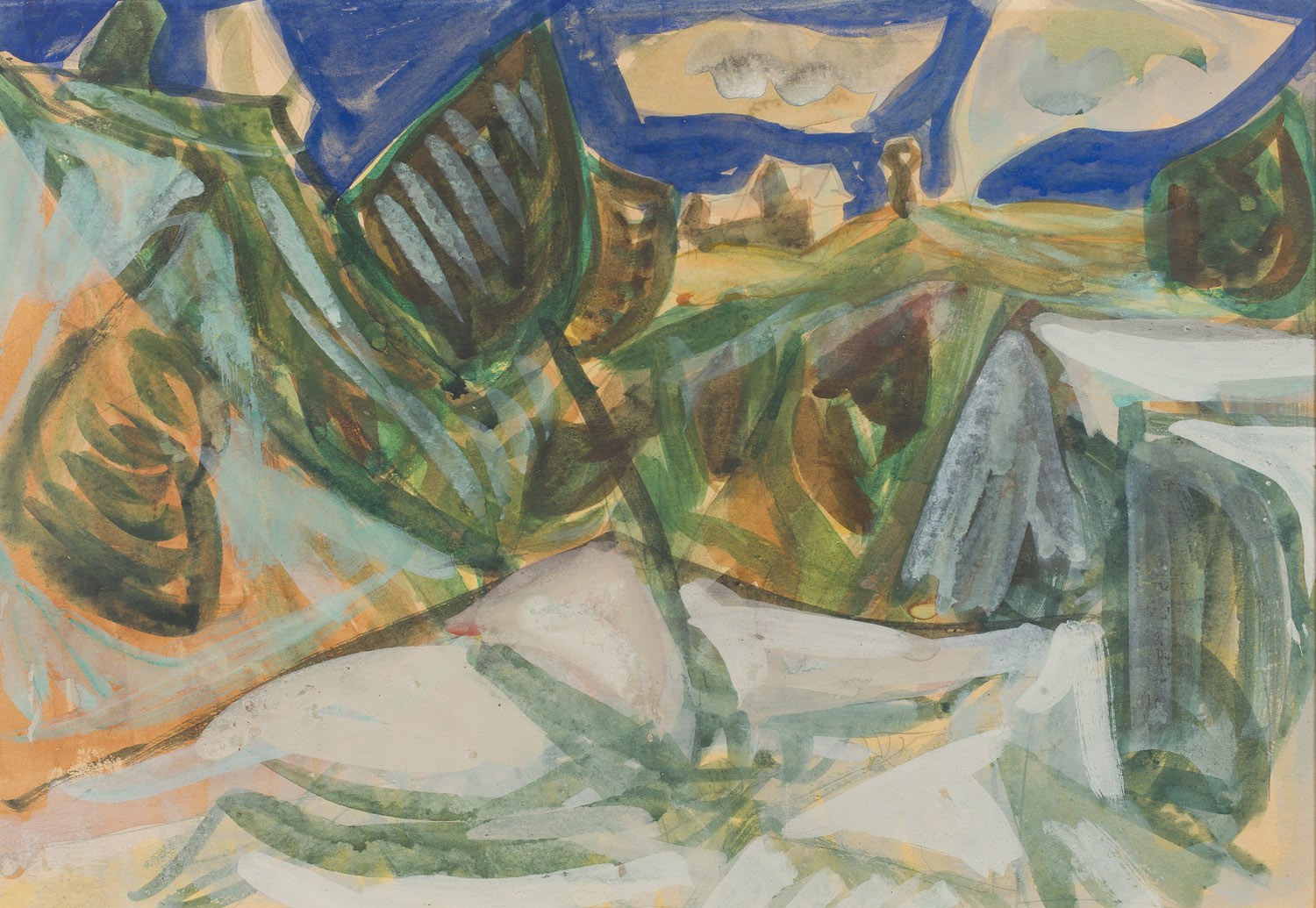
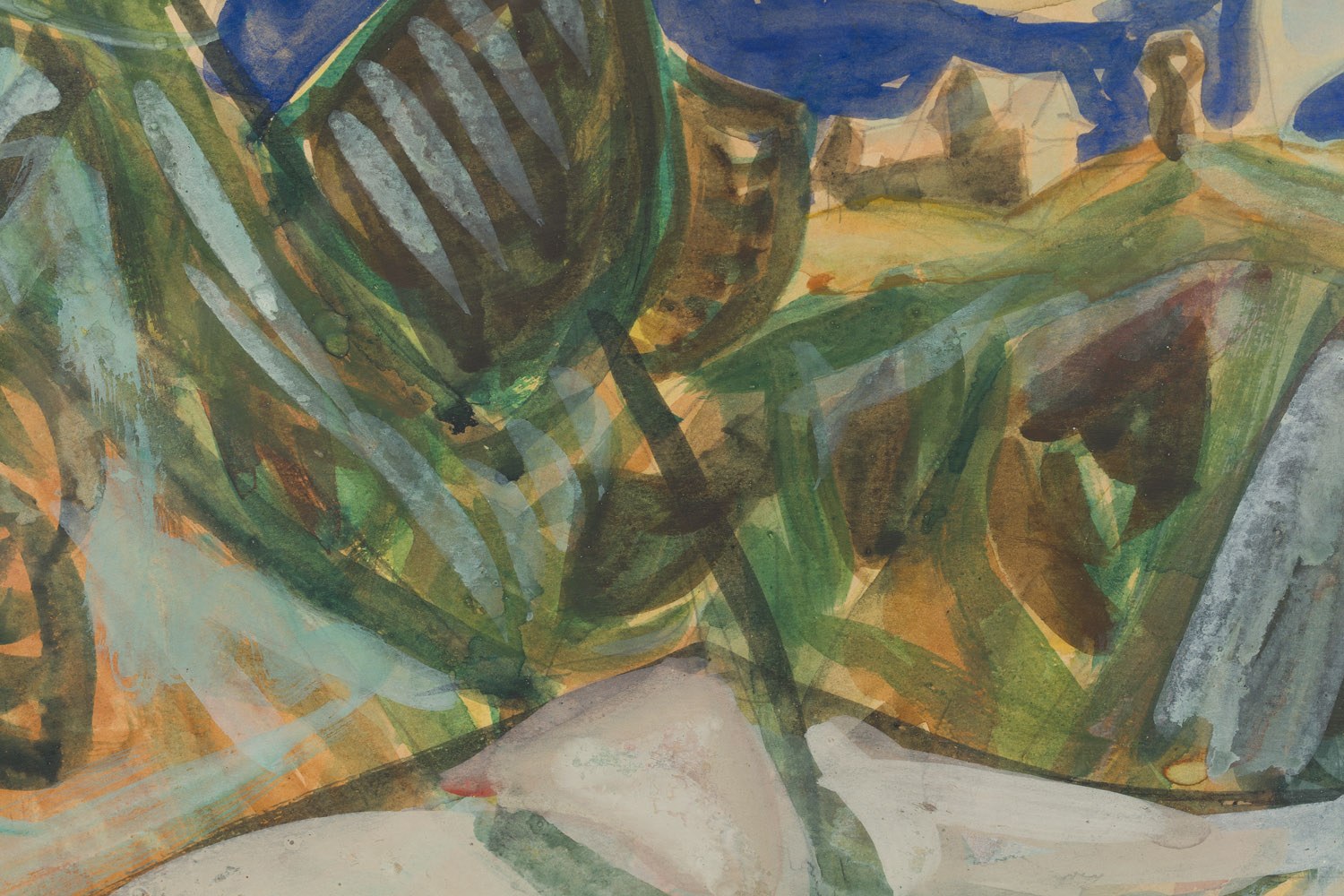
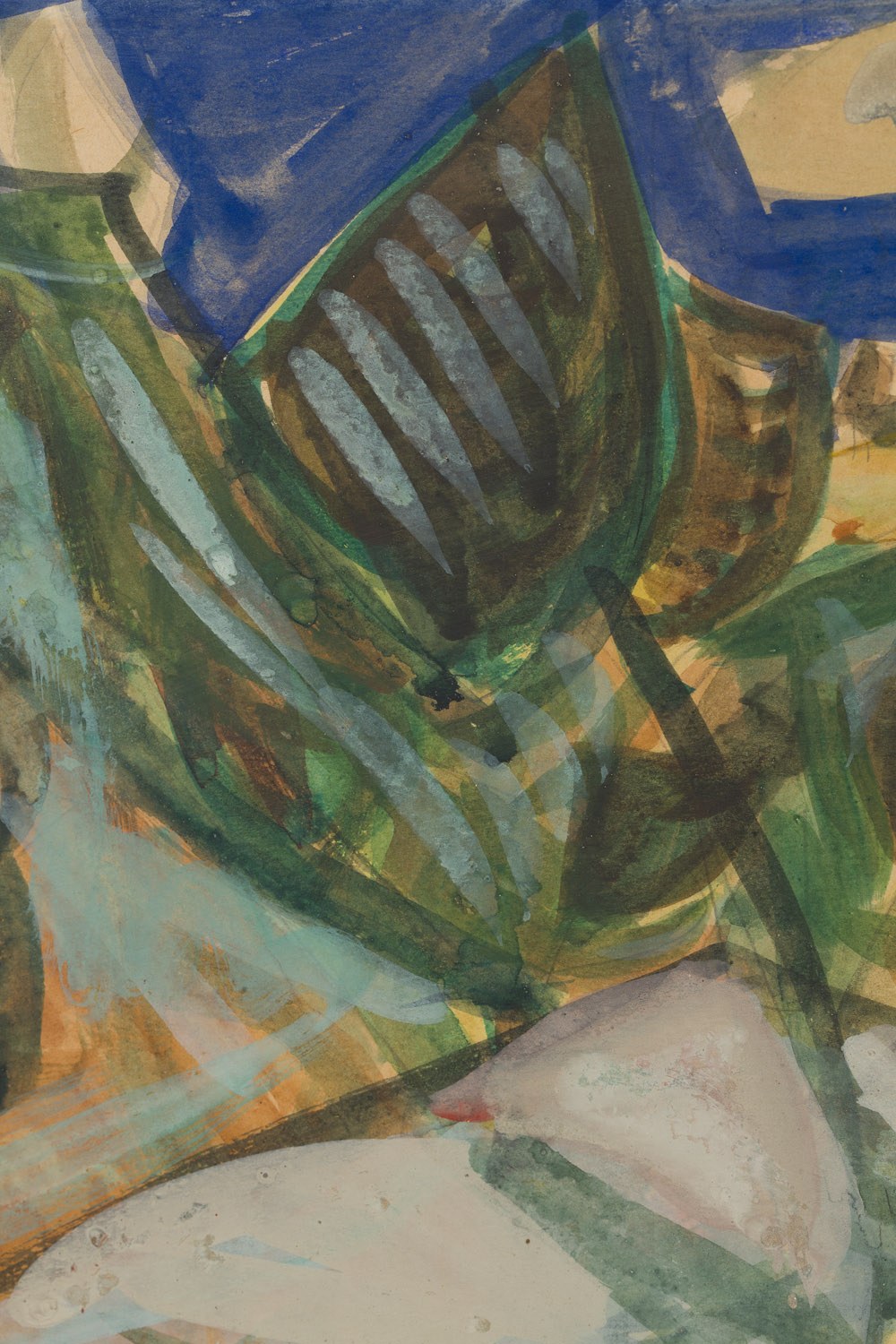
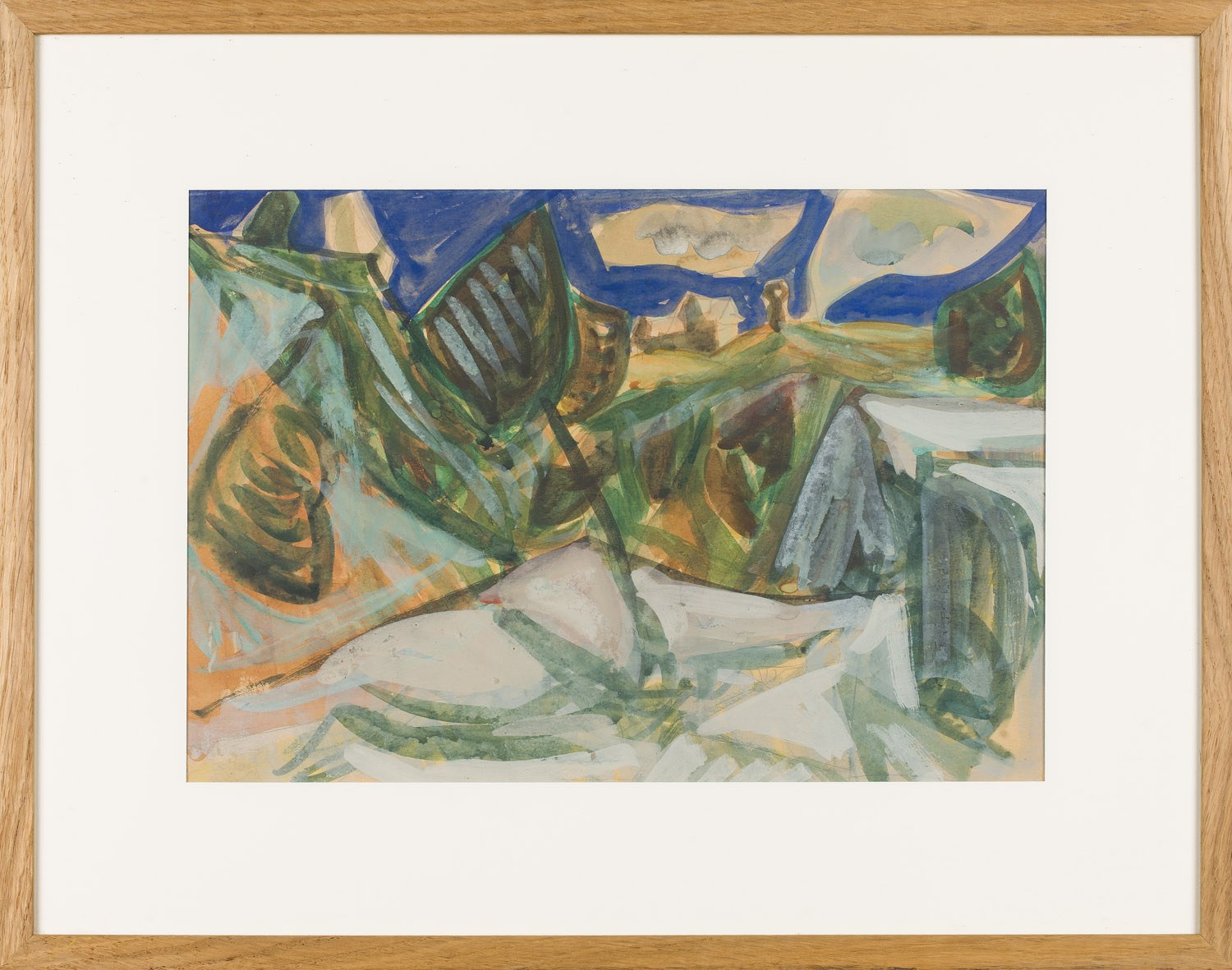
Dimensions: 23 x 33.5 cm
Biography
Andrzej Mierzejewski (1915-1982) was a painter who created outside groups and currents, consistently following his own artistic path. Born in Zakopane, son of formist Jacek Mierzejewski and older brother of Jerzy Mierzejewski, he studied from 1935-1939 at the Warsaw Academy of Fine Arts under Mieczysław Kotarbiński; he received his diploma after the war in 1947. He exhibited rarely, and his most important solo show was an exhibition at the Zachęta Gallery in 1980. Posthumously, his work was recalled in an exhibition of three generations of Mierzejewskis at the National Museum in Warsaw (2004).
Mierzejewski's paintings, based on a solid drawing technique, focus on existential issues, growing out of personal war experiences and life traumas. The artist drew inspiration from Expressionism, Picasso's Cubism, existentialism and the austere aesthetics of art brut, but always subordinated them to individual metaphor and reflection on the human condition. He mainly created figurative paintings, often devoid of titles, in which deformation of form served to intensify the emotional message.
Self-portraits, varying in style from realistic to deeply deformed, existential images, were an important motif in his work. Contradictory tensions coexist in his paintings: obsession with death and affirmation of life, fear and eroticism, alienation and the need for closeness, darkness and dreaming. This internal ambivalence is why Andrzej Mierzejewski's art retains a timeless appeal and speaks again and again to the sensibilities of contemporary viewers.