


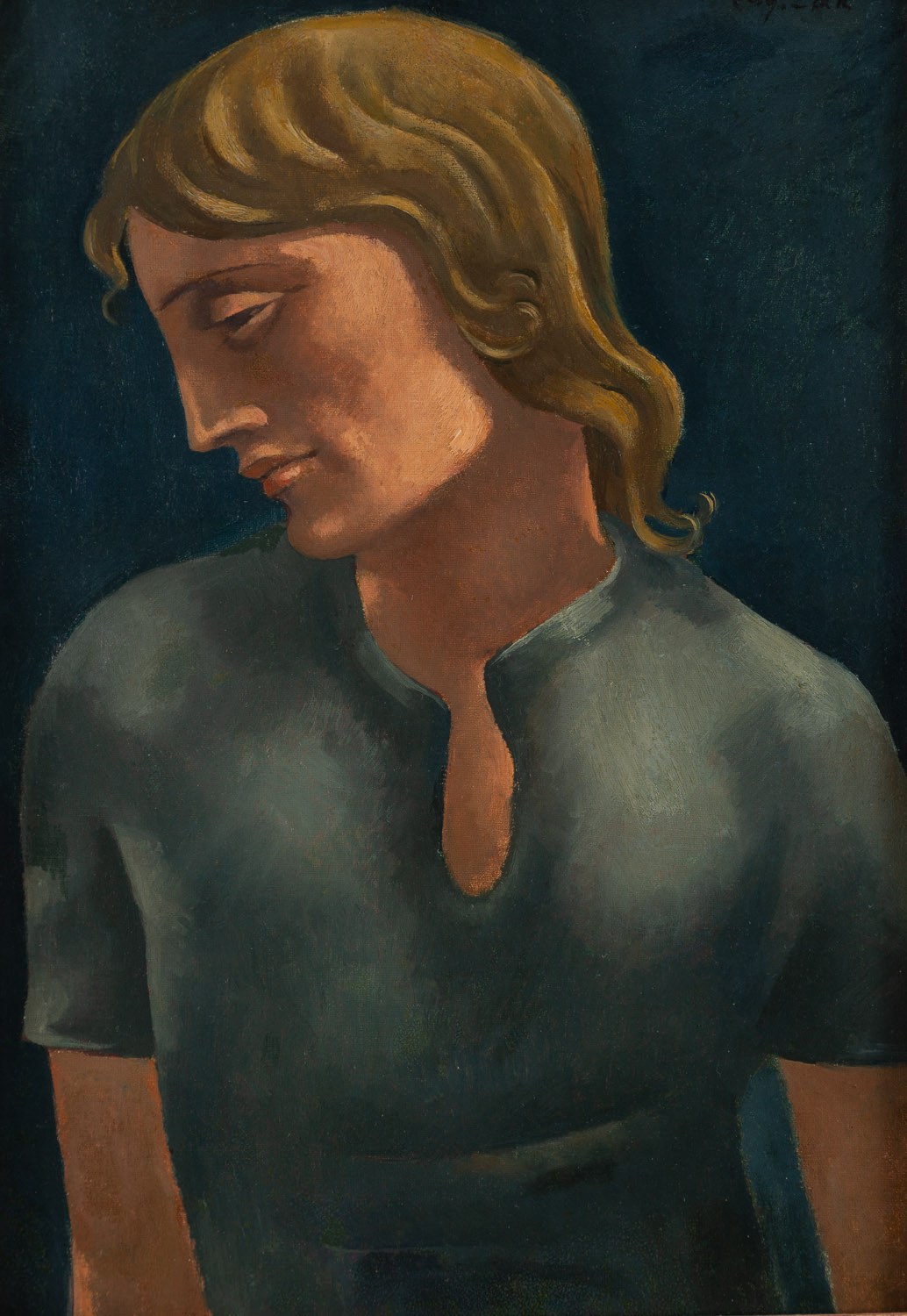
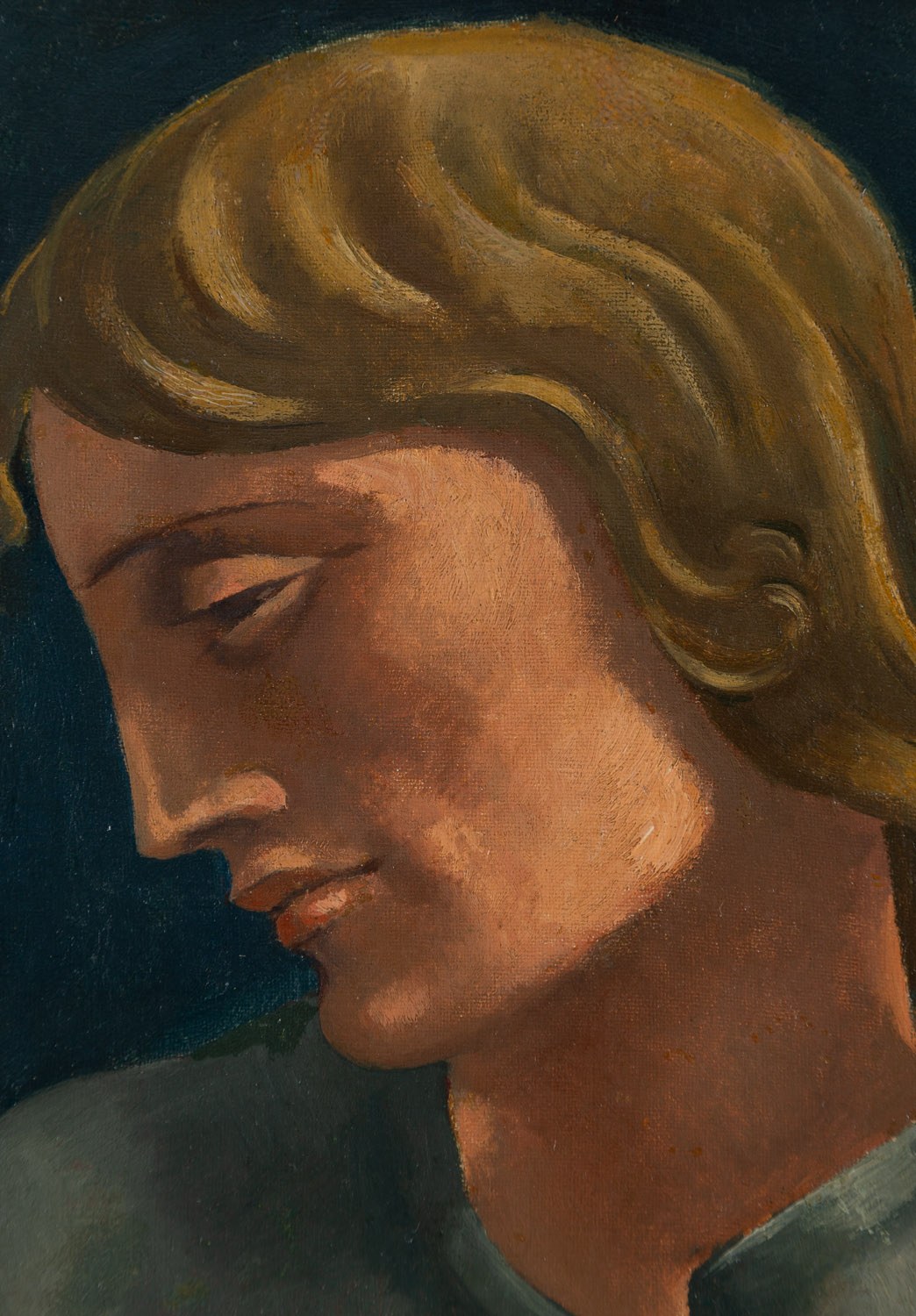
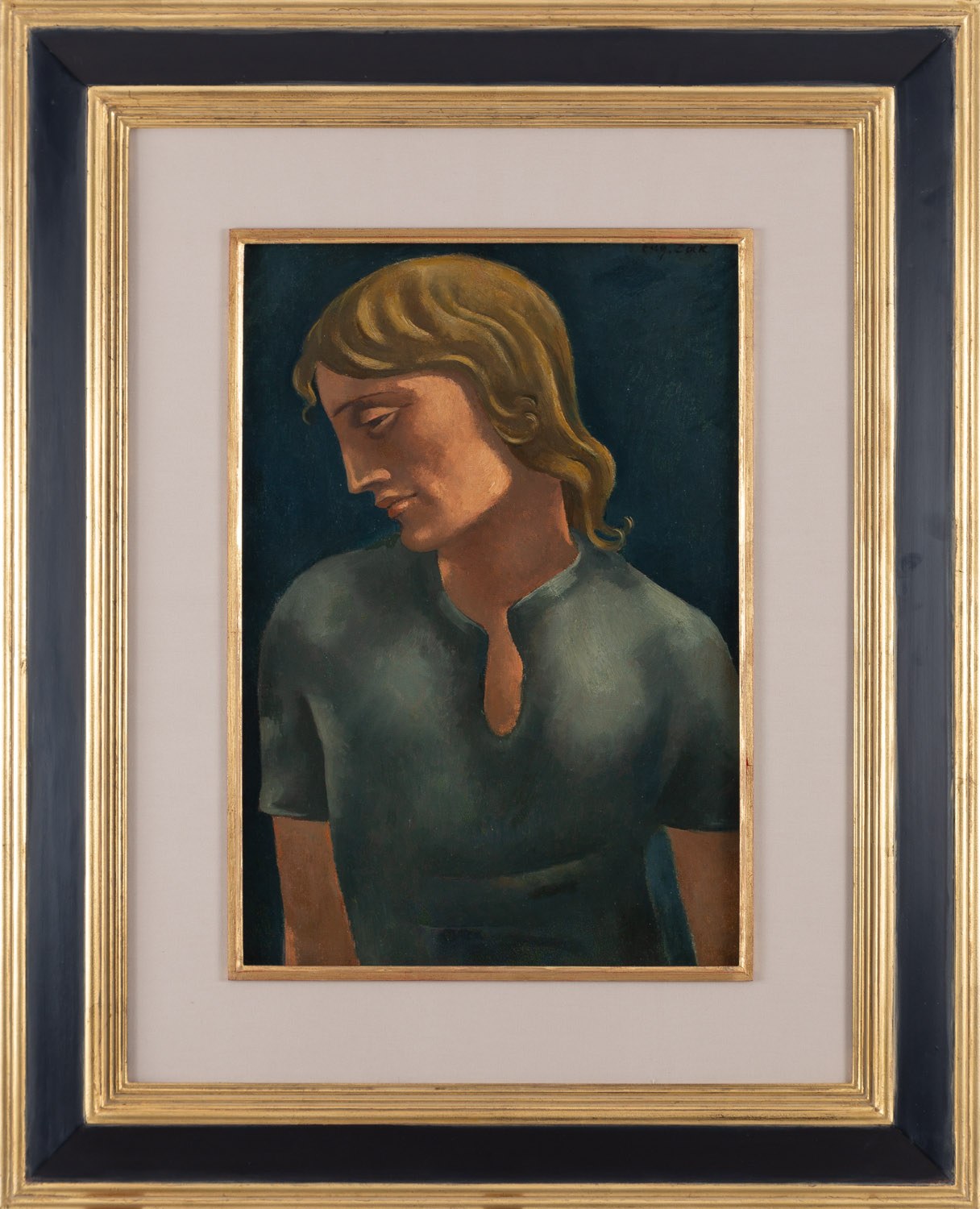
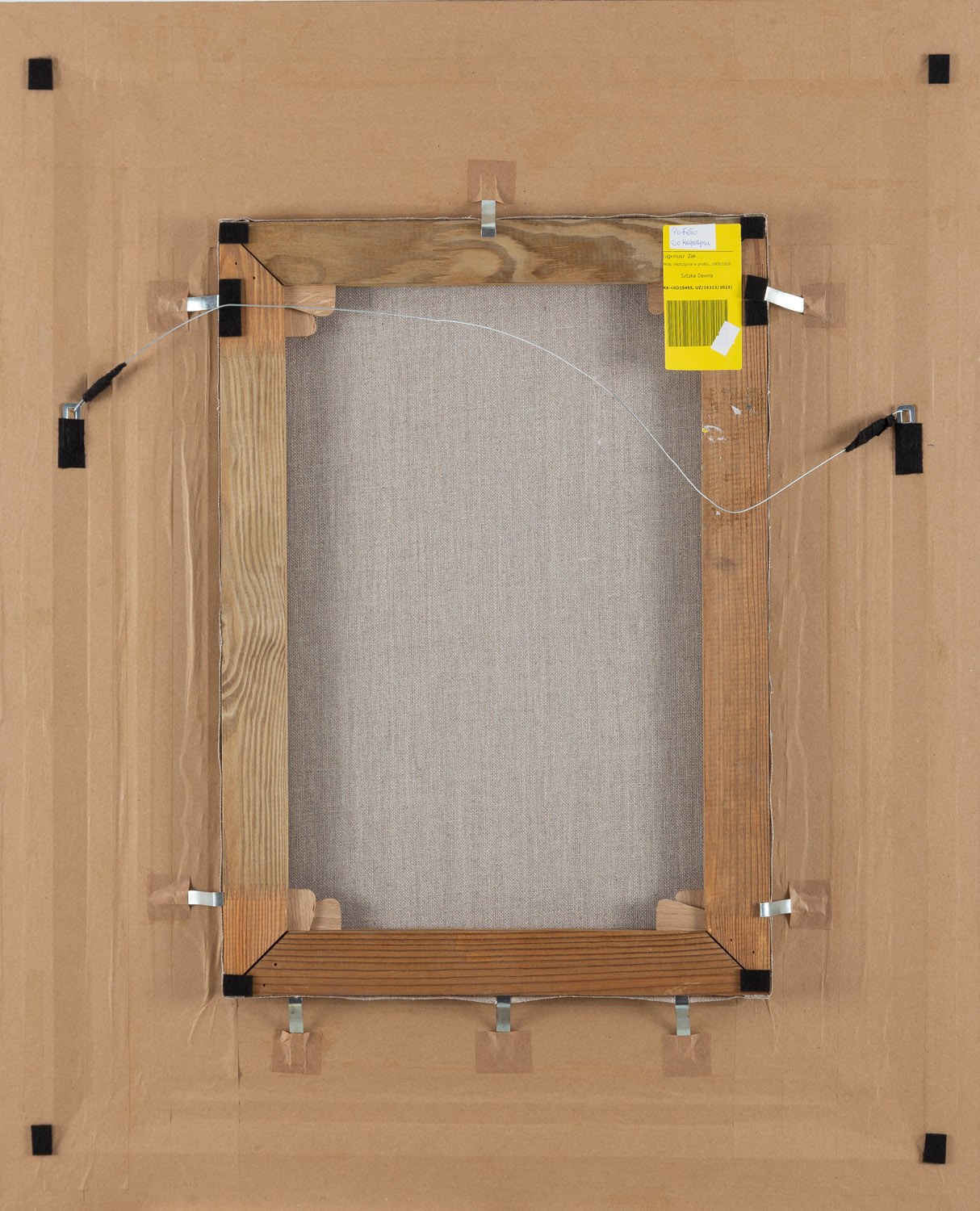
Dimensions: 54.5 x 38.5 cm
Signed p.g.: 'Eug. Zak'
Origin
Wladimir Raykis, Galerie Zak, Paris
collection of Alfred Tarski, Berkeley, California, from 1958
collection of Eva Kristina Ehrenfeucht
Skinner Marlborough auction house, Massachusetts, November 2023
private collection
Object for collection in the territory of the European Union, outside the Republic of Poland.
Object for which the seller is DESA Unicum GmbH, based in Berlin.
Object imported from outside the European Union. The Bid Price and the Auction Fee are net amounts to which German value added tax (VAT) will be added at the rate of 7%. The object is subject to free export outside the European Union.
Biography
Eugeniusz Zak, one of the most prominent Polish painters of the 1st half of the 20th century, worked mainly in France, but also in Poland and Germany. He is considered a representative of Neoclassicism in painting. He was associated with the artists of the Warsaw group RYTM (founded in 1922) and the École de Paris circle. He went to Paris to study in 1901, then to Munich and Italy. In 1904 he settled permanently in the French capital, where he exhibited at the Paris Salons: Autumn, Independent or Society of National Arts. He also exhibited extensively in the galleries of Paris, New York, Cologne or London. His work was initially influenced by the Symbolists and Nabists of Maurice Denis' circle. Later, his paintings exhibited characteristics of Neoclassical painting, Art Deco and École de Paris Expressionism. He was an opponent of the avant-garde, but one can find influences in his paintings, processed by his own creative personality of Cezanne or Matisse. The most important feature of his art was to create from the imagination, drawing on the motifs of old art and their decorative transformation. He considered the art of the early Italian Renaissance to be the most perfect. "The heroes of Zak's compositions are "free people": fishermen, shepherds, women with children, also comedians, dancers, jugglers, vagabonds, shown sometimes in an empty interior, sometimes as residents of Arcadia. The idyllic landscapes, painted by the seriously ill artist, revealed a characteristic dissonance between the beauty of the southern, human-friendly landscape and a sense of transience."


![Eugeniusz ZAK (1887-1926), Motywa z parku [Paryskiego?], 1904](https://img1.one.bid/img/10307/3219924_1w.webp?1787159737)










