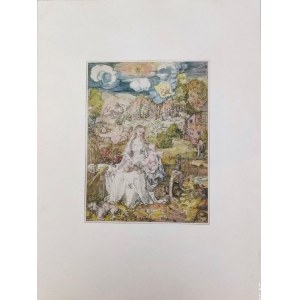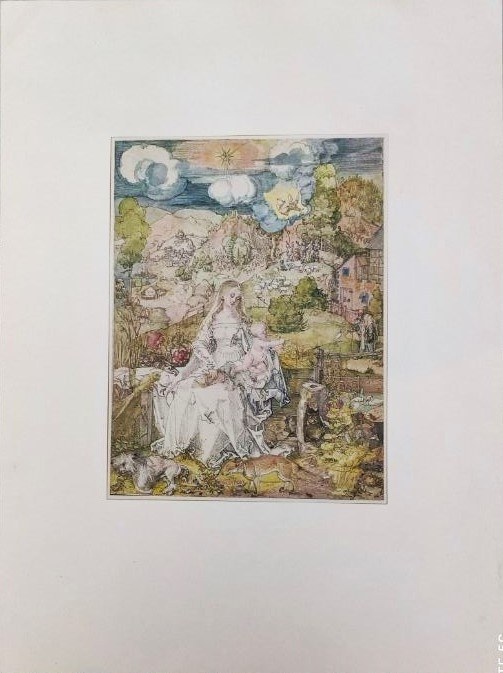
lithograph, paper, 60 x 45 cm sheet, composition 32 x 24 cm in light of the original passe - partout made in the 19th century by the museum outhouse "Albertina Facsymiles" in Vienna; a unique print from the only exceptional edition of Durer's prints published at the end of the 19th century.
This detailed copperplate engraving from 1512 by Albrecht Dürer is a true masterpiece that impresses with its symbolism and precision of execution. This unique combination of religious subject matter with nature and animals makes this painting unforgettable. It is a fascinating work of art that contains many symbols and hidden meanings.
The painting shows Mary, the protector and mother of all creatures, as an intermediary between humans and the animal world. Her calmness and dignity are in contrast to the wild nature. The animals surround Mary, but do not threaten her. This may symbolize order and peace in creation. The pear in the Child's hand is a symbol of temptation and sin. The Child holding it can signify salvation and purification. In the background we see hills, trees and a river symbolizing the balance between people and nature. The harmony between the figure of Mary and nature is unique.
Dürer was an extremely talented artist and his technical skills were exceptional. In this painting he used the copperplate technique, achieving incredible precision and richness of detail. His ability to render light, shadows and textures makes the painting extremely realistic.
The color scheme is subdued, with predominant shades of green, brown and gold creating a calm and reflective mood.
The painting is in the collection of the Museum of the Archdiocese of Warsaw.