


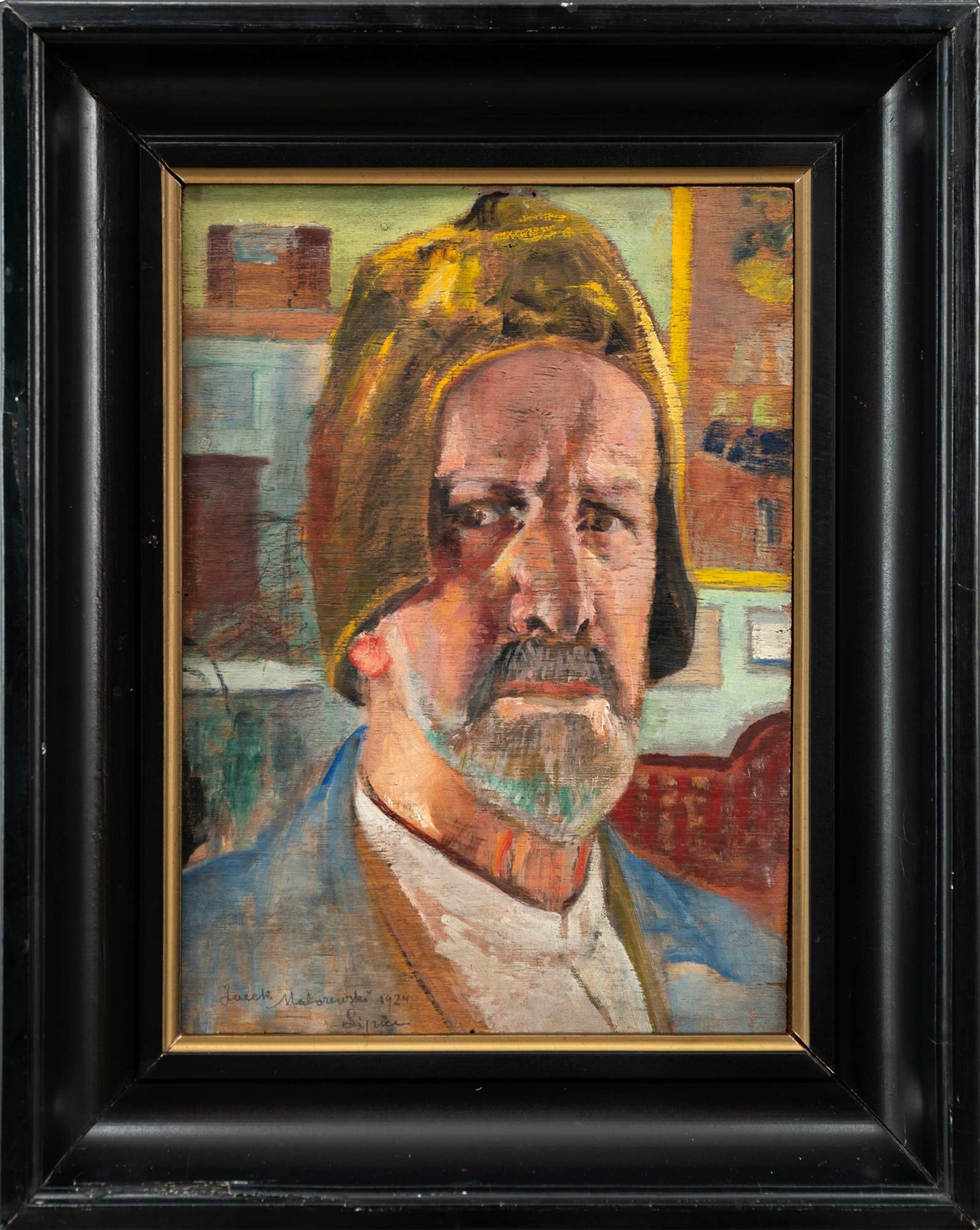
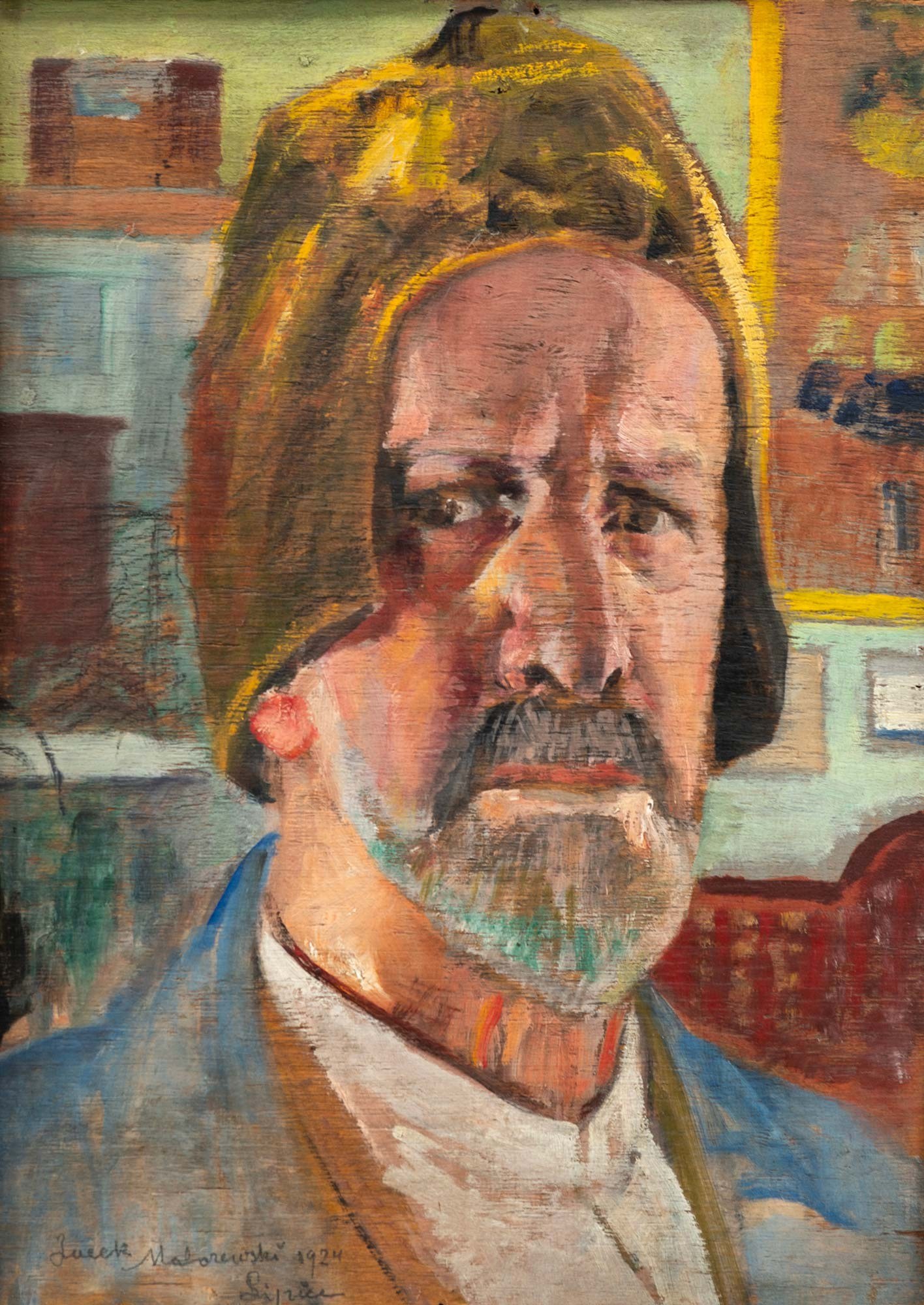
oil, dicta; 34 x 24 cm;
Signed and dated l. d.: Jacek Malczewski 1924 / July (in pencil)
Provenance:
private collection, Poland
Self-portraits are among the important thematic categories in Jacek Malczewski's paintings. Painted at different stages of his life, they reflected not only Malczewski's changing physiognomy, but above all the transformations taking place on the artistic plane. Usually they were not simple representations of his own image. The symbolism inherent in the artist's art is also clearly visible in his self-portraits. Malczewski wore various costumes, sometimes with fanciful accessories. He depicted himself as characters known from literature (such as Dante) or surrounded by mythological creatures.
Changes in this style can be seen in the 1920s, when the artist reached for a more subdued background, often making it the interiors of the manor in Luslawice, elements of nature or everyday objects. There was also less elaborate symbolism in these canvases. The offered painting is an example of this kind of self-portrait, with a depiction in a headdress, characteristic of the period. The background of the painting is the interior of the room: fragments of paintings, sofas or walls are visible. The work was created a year after the artist moved to the manor house in Luslawice. The artist stayed there permanently for three years, enjoying the charms of the quiet village. Due to his mature age, Malczewski also increasingly took up eschatological themes (an example is the triptych "My Funeral" from 1923). It is worth noting that autobiographical, reminiscence motifs in Jacek Malczewski's paintings can be observed from around 1914, when he began work on the "My Life" series. Intertwined in it are motifs of youth and the inevitability of death.











Nylig sett
Logg deg inn for å se en liste over objekter
Favorittobjekter
Logg deg inn for å se en liste over objekter