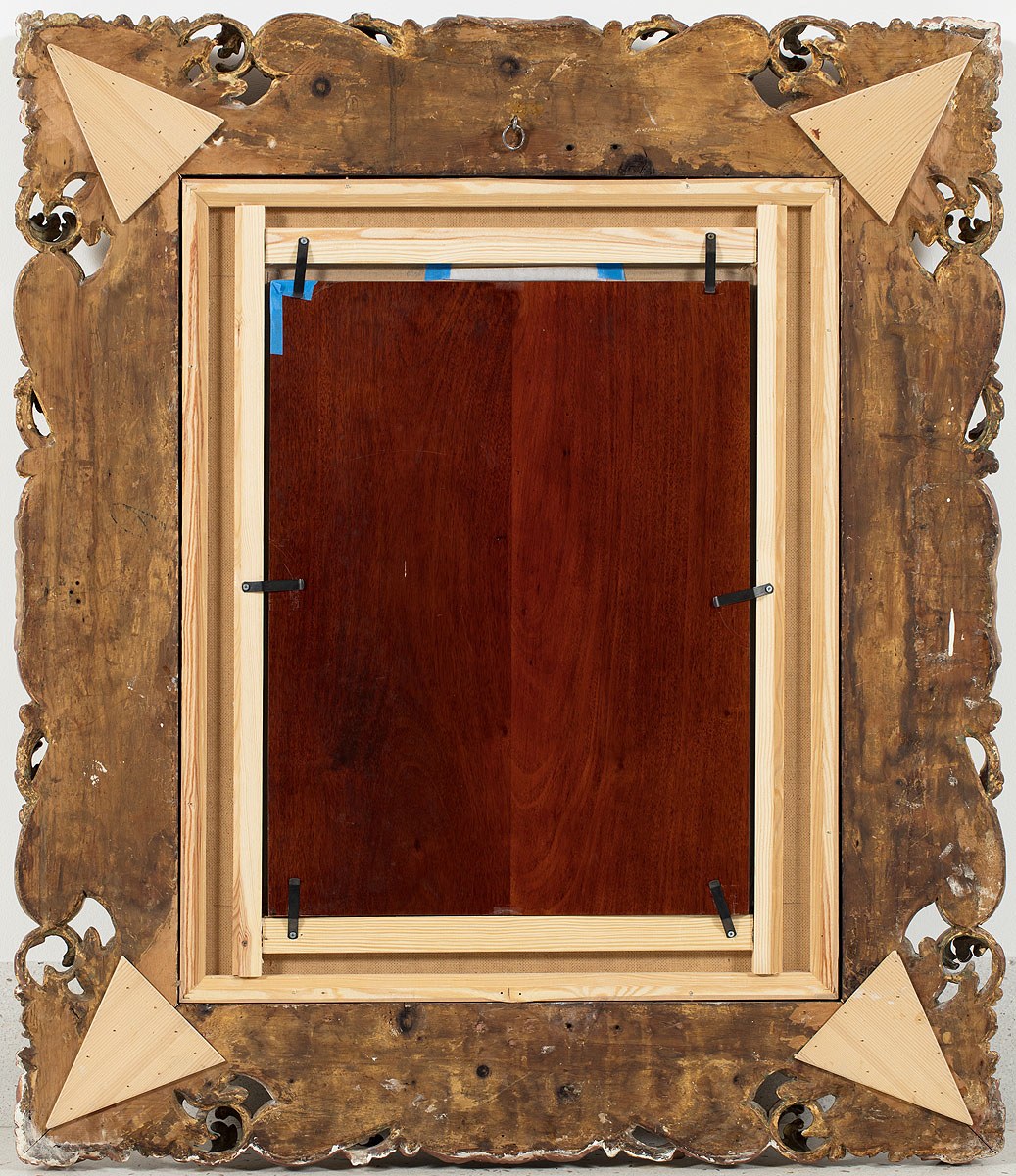
Dimensions: 62 x 46.8 cm
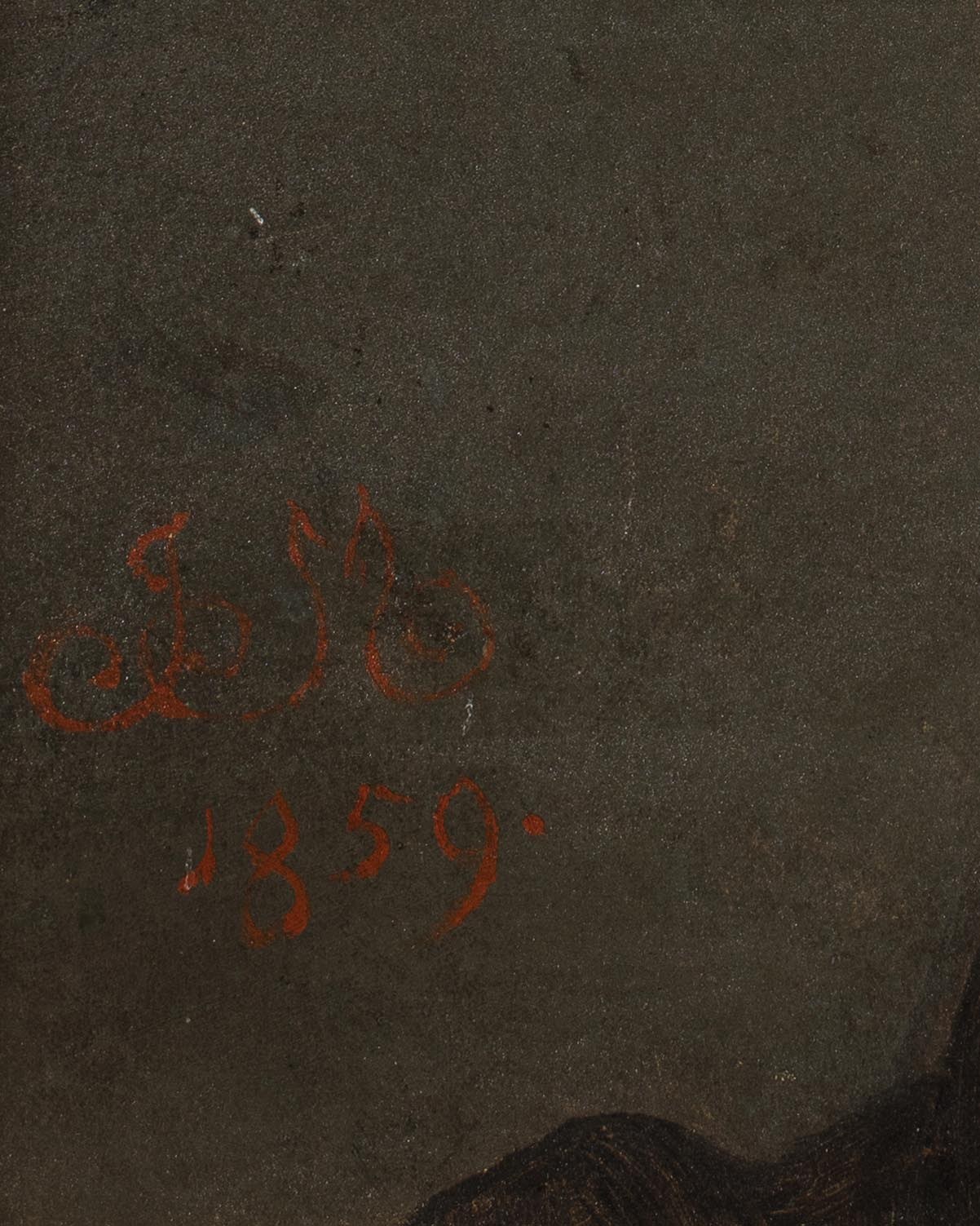
Signing: signed l. d. mogram: JM 1859
Provenance
Warsaw, private collection
Cracow, deposit at the National Museum in Cracow (for the duration of the work of the Commission of Purchase at the National Museum in Cracow, 1965).
Kraków, collection of Dr. Jan Dorawski
Kraków, collection of Jozef Dorawski (from 1910)
Cracow, collection of Jan Mierzba Matliński (pseud. Janko/Sokół) gift from the artist
Munich, collection of the artist
Exhibited
Puławy, Czartoryski Museum in Puławy, Under the Eyelids of Angels... Study of a Boy by Jan Matejko, 27.04-31.07.2025. Warsaw, Royal Castle in Warsaw, Matejko the Unknown, 05.03-26.05.2024. Opinogóra, Museum of Romanticism in Opinogóra, Matejko a Krasińscy, 12.09-29.11.2024. Kraków, Museum of the Academy of Fine Arts, Under the Eyelids of Angels, 04.04-21.04.2024. Suwałki, District Museum in Suwałki, Presentation of the painting "Portrait of Maria Matejko", June-August 2023. Siedlce, Diocesan Museum in Siedlce, Amor Deo, Amor Patriae, amor Familiae. The Matejko family thing, 05.11-15.12.2022. Cracow, Society of Friends of Fine Arts, Exhibition of female portraits, 1910.
Reproduced
Cicora B. [Research Editor], Under the eyelids of angels. A study of a boy painted by Jan Matejko, Jan Matejko Academy of Fine Arts in Krakow, Krakow 2024, cover page, p. 97.
Klarecki M. [ed.], Matejko the unknown [exhibition catalog], Royal Castle in Warsaw, Warsaw 2024, p. 111.
Ciciora B., Buyko M., Amor Deo, Amor Patriae, amor Familiae. Rzecz o rodzinie Matejków [exhibition catalog], Siedlce 2022, cover page, pp. 5, 34.
Literature
Sroczynska K. [ed.], Matejko. Oil paintings. Catalog, Warsaw 1993, item 57, p. 55 (as "Portrait Study"). Wystawa portretów kobiecych [exhibition catalog], Towarzystwo Przyjaciół Sztuk Pięknych, Kraków 1910, item 98, p. 23. Gorzkowski M., O artystycznych czynnościach Jana Matejki począwszy od lat jego najmszych to jest od r. 1850 do końca roku 1881, Kraków 1882, p. 47.
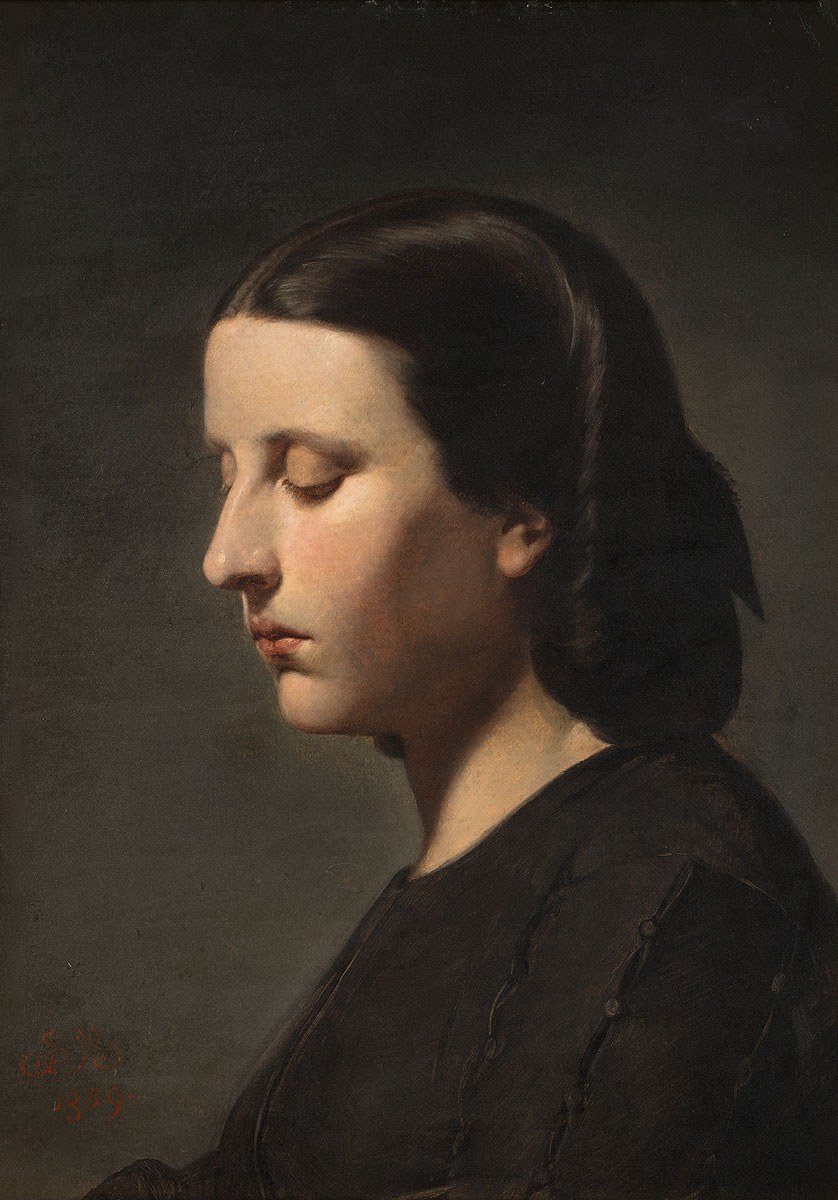
Maria Waleria Matejko (1836-1917) was two years older sister of Jan Matejko, the eighth of eleven children of Mr. and Mrs. Joanna and Franciszek Matejko, of whom only six survived: five sons and one daughter. Warm, gentle, with a gentle disposition, Maria - was a support and emotional bedrock for the family, especially after the early death of her mother. Attached to her father and brothers, she remained a maiden for a long time. She did not marry until the age of thirty-one, to the apothecary Jozef Golichowski. The young couple left for the United States, where Golichowski made his fortune. In 1872, they returned to the country and settled in Chernivtsi on the Pruth River, where they established a pharmacy. Maria bore her husband three children: Maria, Janina and Adam.
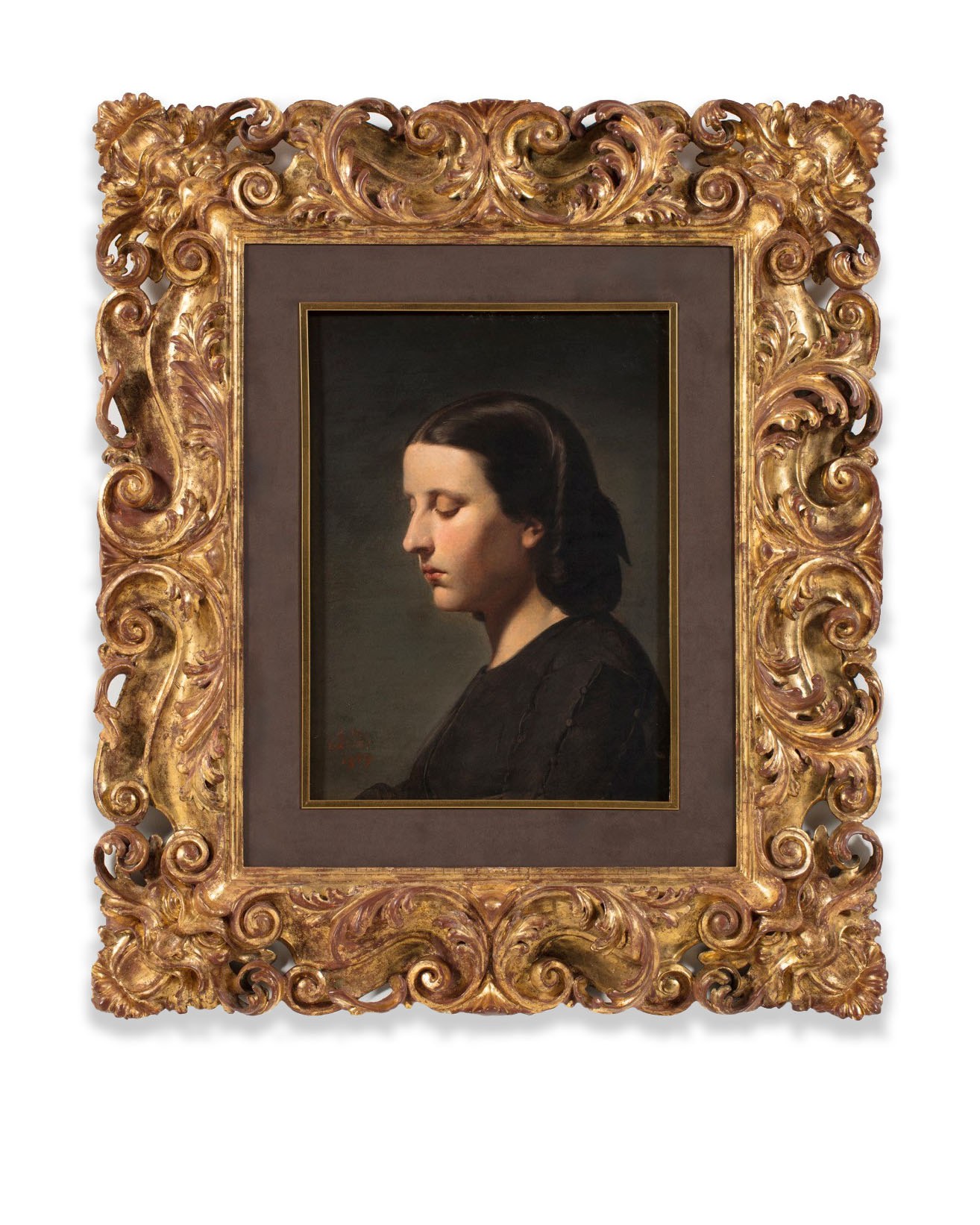
Matejko was very close to his sister, who perfectly understood his artistic sensitivity and inner needs of the spirit. The siblings shared confidences, took walks and conversations together, and Maria took care of her brother's elaborate painting needs, gathering for him various ribbons, tassels and material cuttings that he could study and paint. He, in turn, supported her, allocating part of his first modest income to her "girlish outgoings." He also painted Maria on many occasions, and she posed for him not only for portraits, but also for sketches and historical scenes, lending her face to the figures of Barbara Radziwillowna, Queen Bona or the Virgin Mary. One of the most personal testimonies of their bond and mutual devotion remains the portrait on display, from 1859, painted when John was twenty-one and Maria twenty-three.
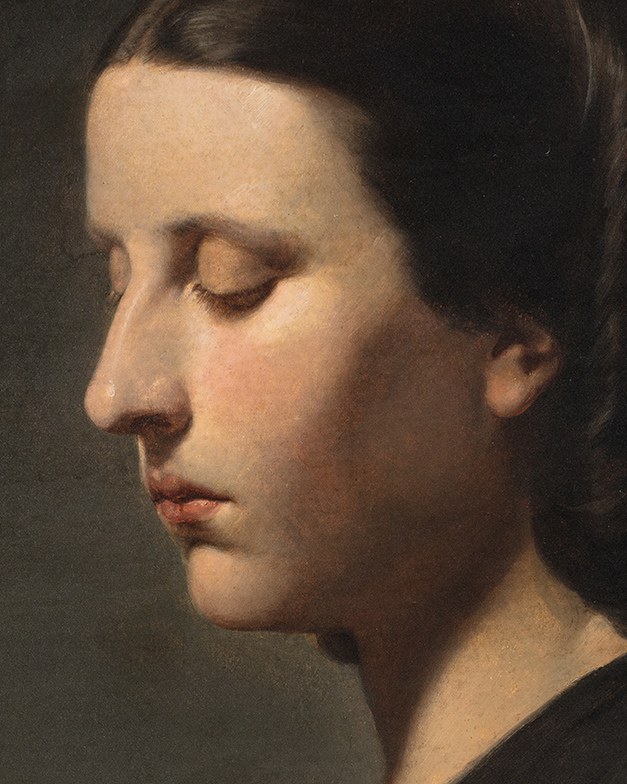
The painting exudes simplicity and silence, which fill it like a sacred aura. Mary is shown in profile, in a focused and solemn pose. Her calm, broad forehead is illuminated by soft light, giving her face harmony and brightness. Full cheeks contrast with a regular nose, in which the artist has marked a barely perceptible hump. Underneath it, sharply carved, small lips with slightly drooping corners are drawn, emphasizing the melancholic mood of the representation. The most important thing about Mary's face, however, are her beautiful, dark eyes: lowered, almost closed, conveying tenderness, depth of feeling and subtlety of interiority, which the young Matejko captured with extraordinary perspicacity. He painted not only a physical portrait, but also a spiritual one - an intimate psychological study, showing the beauty of the soul of the person closest to him.
The offered work, which belonged to a private collection, had remained unknown since 1910. Its rediscovery and identification were only recently possible thanks to the research of Dr. Barbara Cieciora of the National Museum in Cracow. The image of Mary, restored to memory, was presented for the first time years later in late 2022 at the Diocesan Museum in Siedlce at the exhibition "Amor Deo, Amor Patriae, amor Familiae. The Matejko family thing." The painting enriches knowledge of Matejko's early work and is a valuable example of his absolute mastery of portraiture.