


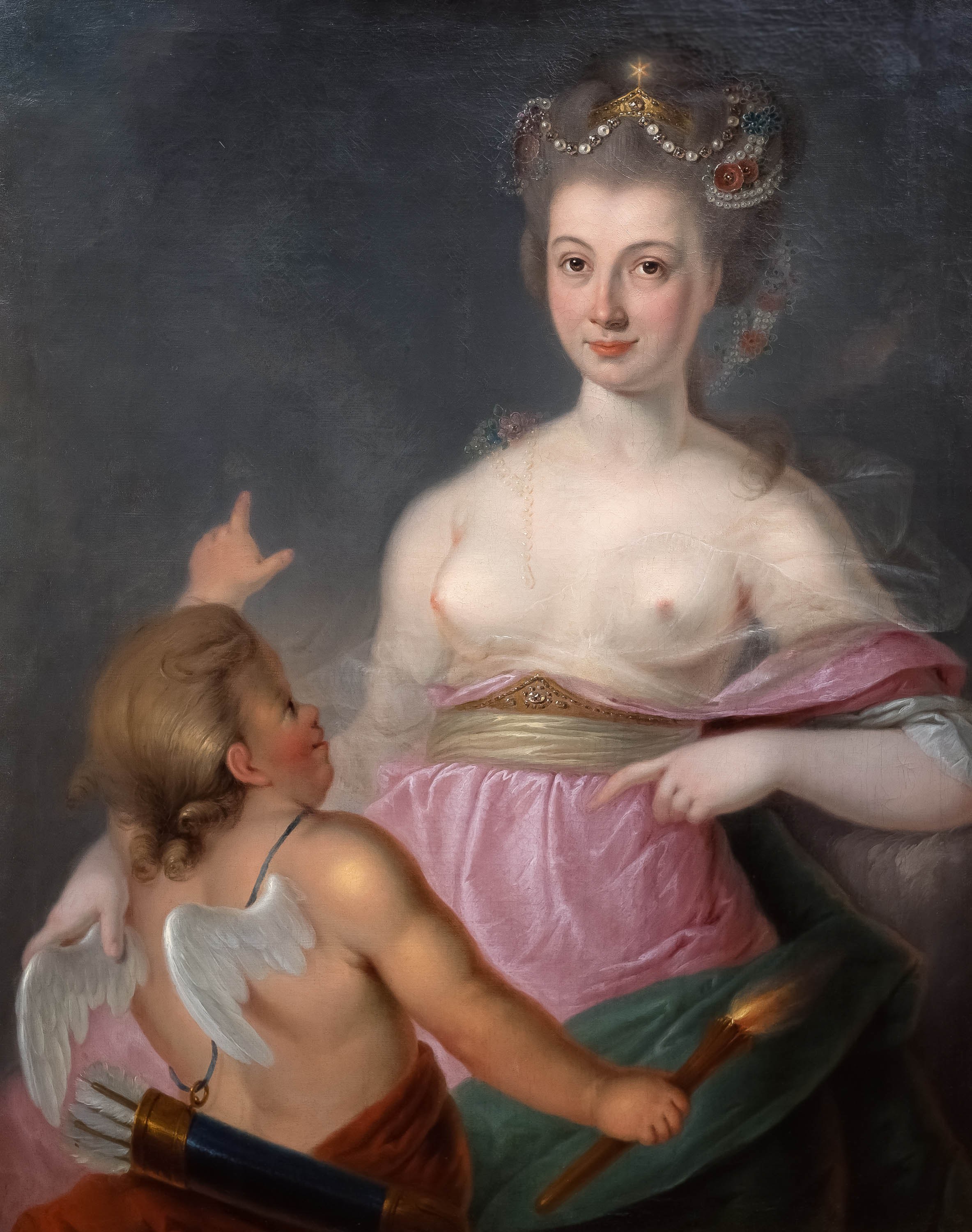
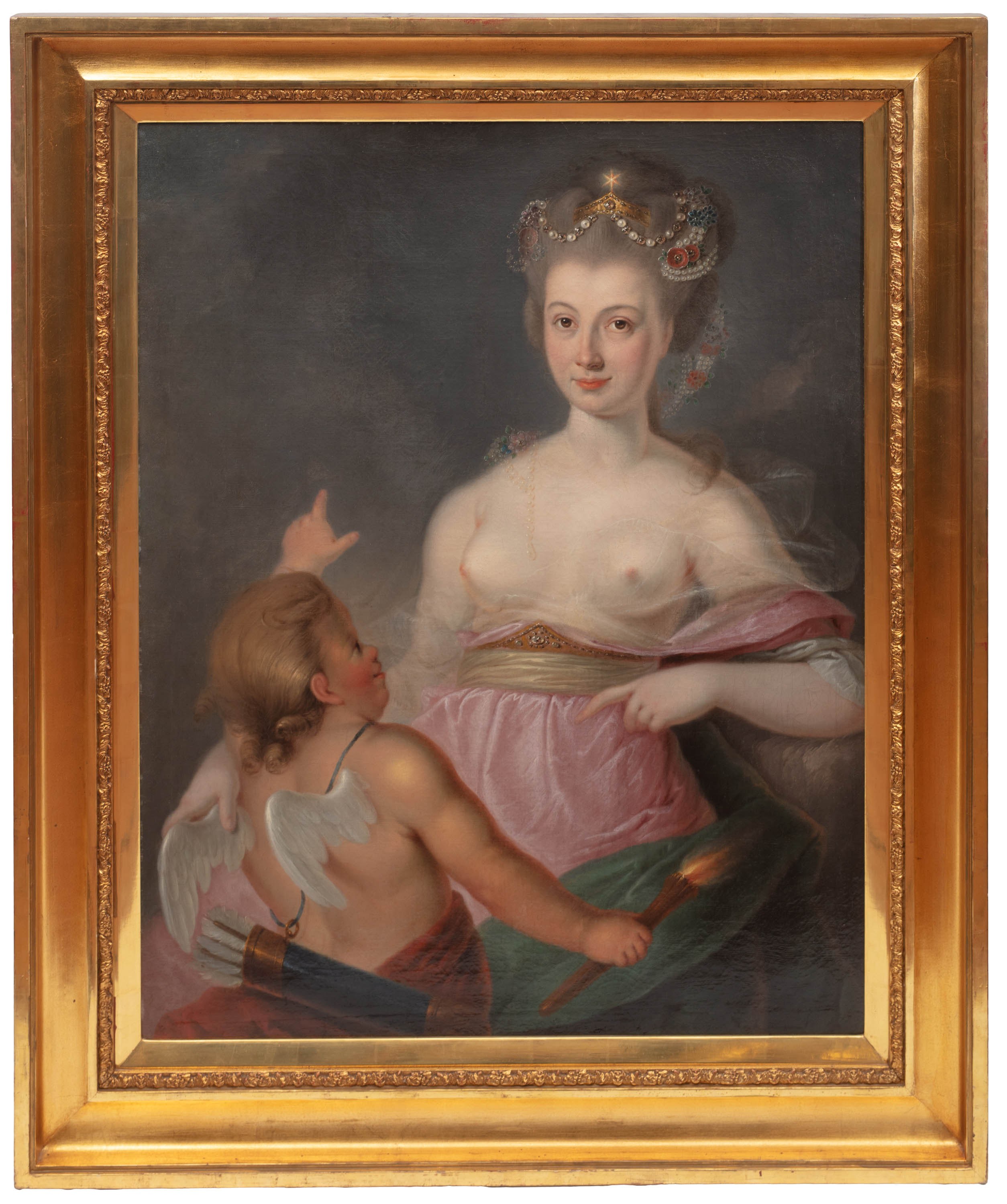
oil,canvas, 95 x 75 cm
Venus, derived from Roman mythology as the goddess of love, identified with the Greek Aphrodite, has inspired and continues to be a subject eagerly taken up by artists from antiquity to modern times. Art history decries her rich iconography, attributes and changing compositional types over the centuries. She was usually depicted in the nude (exceptions were, for example, images present in medieval paintings), standing posture (e.g. Venus Pudica) or lying down, as in Giorgione or Welazquez. When portraying Venus, the artist had a wide range of attributes to choose from, including a toilet mirror in which the goddess looked at herself, a rose flower, a myrtle, and doves. In depictions of Venus Anadyomene, the story of her birth and themes from her life were alluded to, depicting her in the aegis of, for example, the god of war Mars, with whom the goddess had an affair. An idea of the number of iconographic variations dedicated to the goddess of love is given by K. Bender's 2007 publication "The Italian Venus," which is a catalog with a list of realizations of this theme on Italian soil, arranged according to an iconographic key. The painting offered at auction depicts Venus as a beautiful woman in a half pose, assisted by winged Cupid, son of the goddess, holding a lit torch in his hand - a symbol of passion ignited by love.










Nylig sett
Logg deg inn for å se en liste over objekter
Favorittobjekter
Logg deg inn for å se en liste over objekter