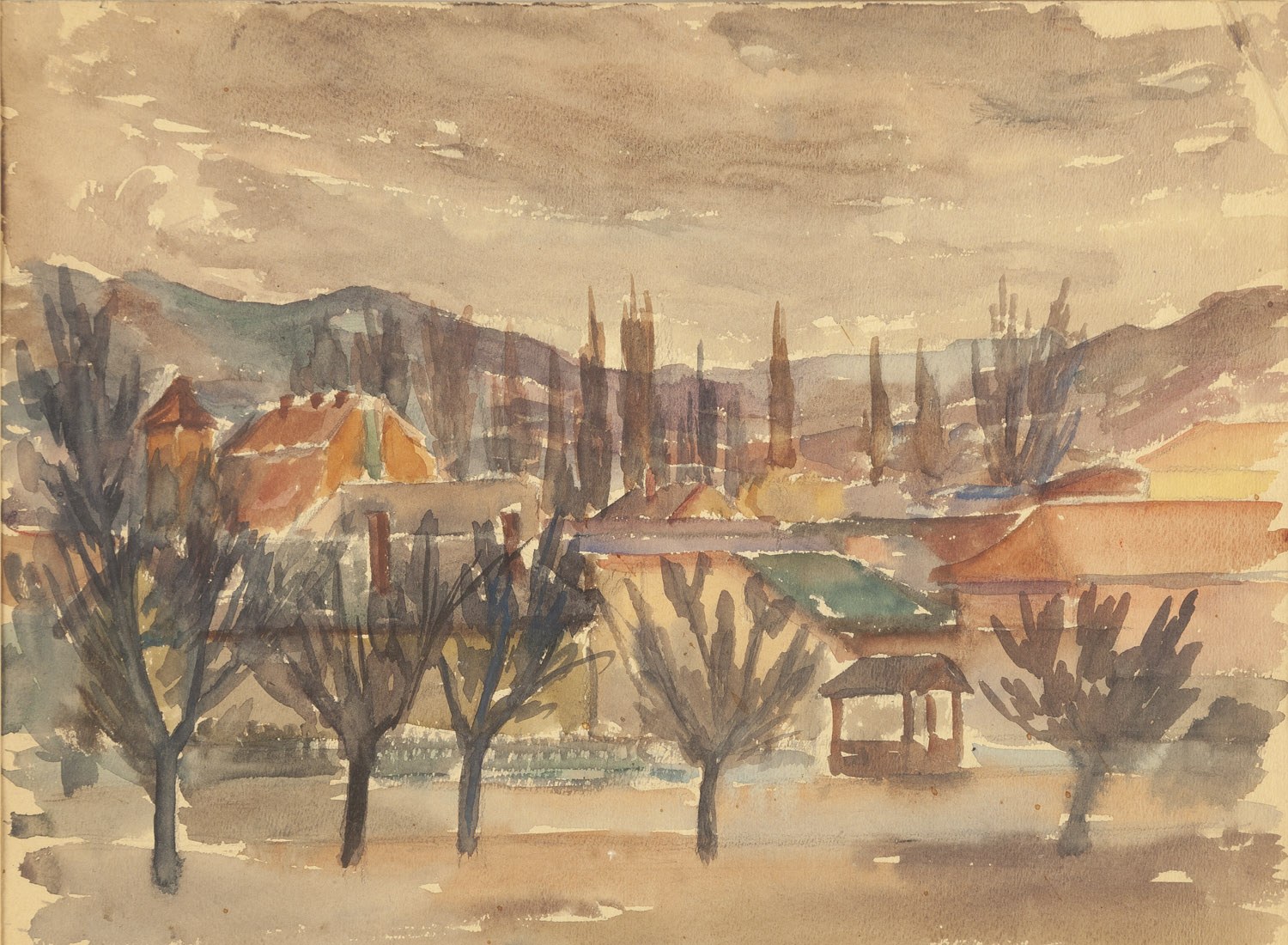
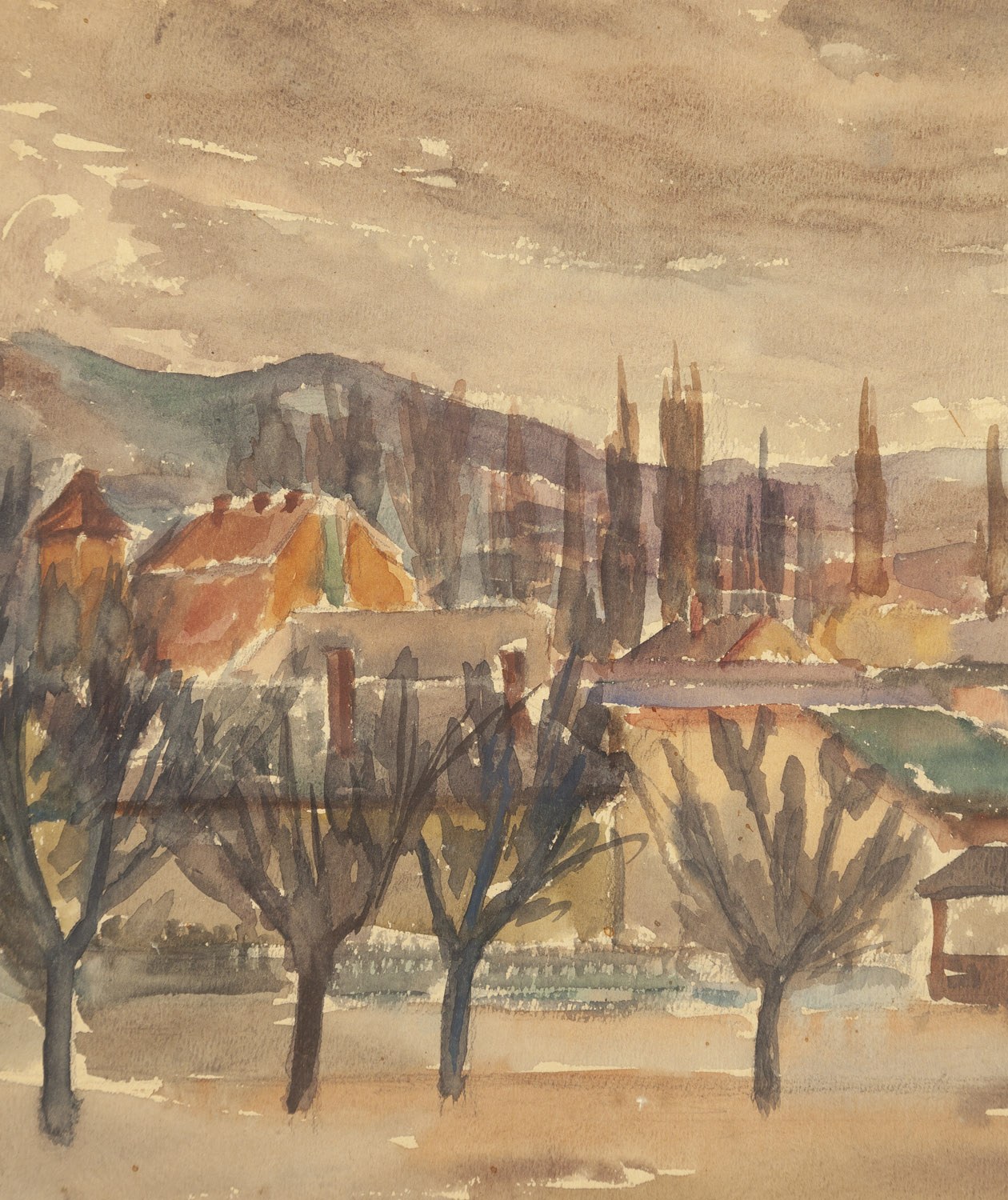
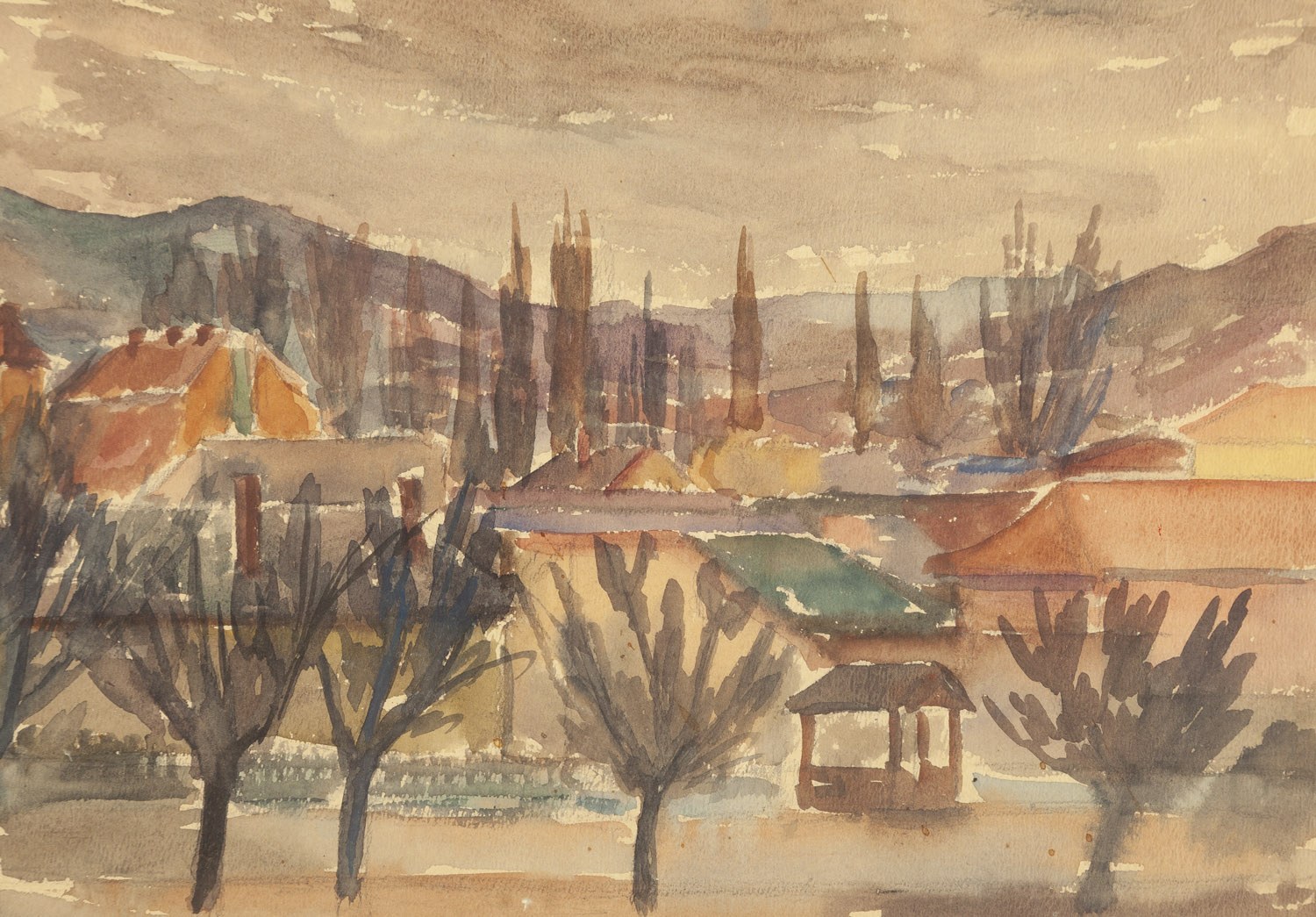
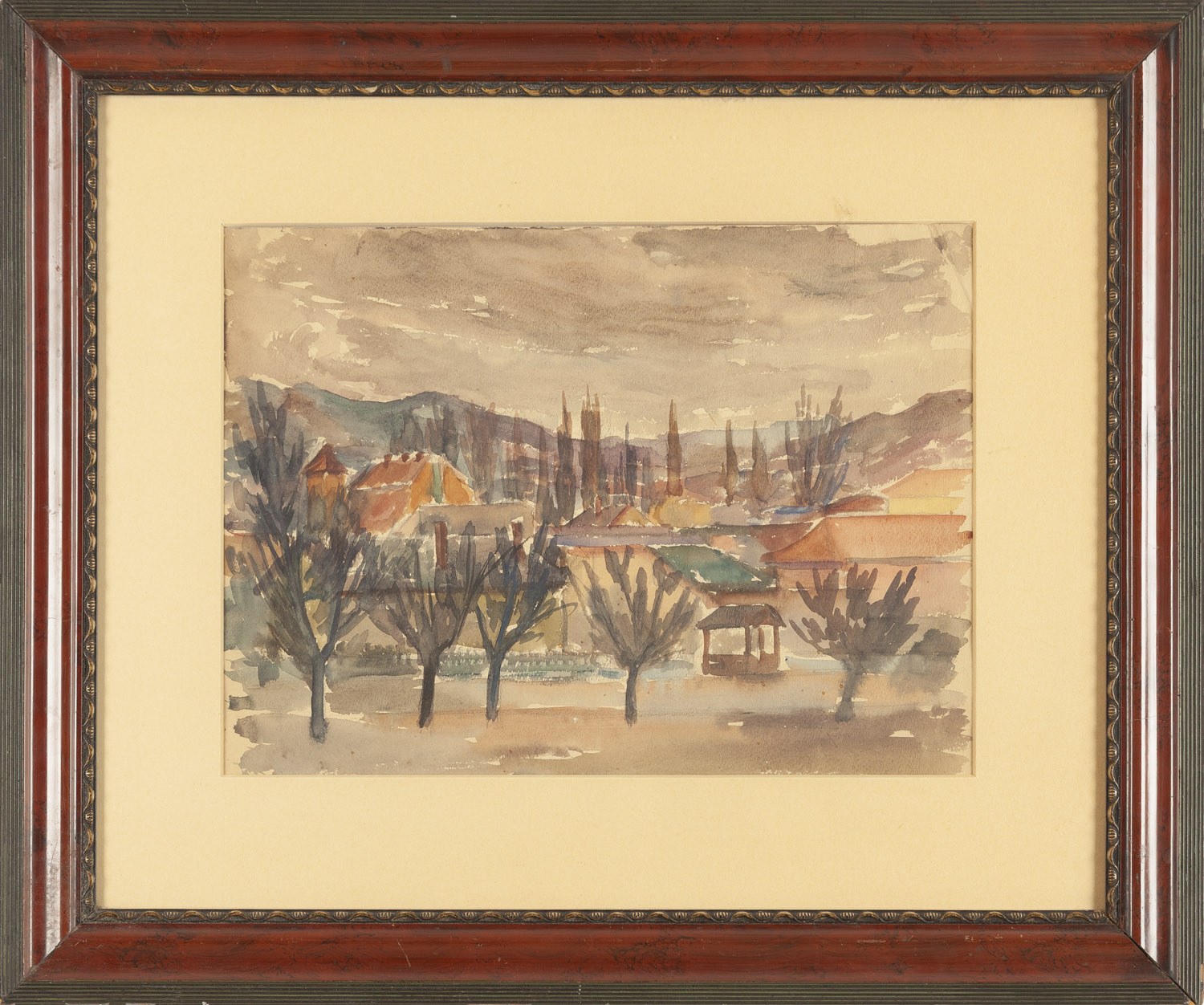
Dimensions: 28.5 x 39 cm (inside the mat)
Condition
Framed
Biography
He studied privately under P. Gajewski, and then, in the late 1920s in Kraków, at L. Mehofferowa’s Free School of Painting and Drawing and at the Academy of Fine Arts under W. Jarocki, F. Pautsch, T. Axentowicz, and S. Kamocki. During World War II, he lived in the Lviv ghetto. He was active in the underground resistance, escaped from a transport to the Bełżec extermination camp, and avoided a mass execution. In 1945, he returned to Kraków and became involved with the circle centered around Tadeusz Kantor. He was active in the Kraków Group, which was revived after the war (he had been one of its prewar founders). Throughout the 1950s and 1970s, he taught painting at the Academy of Fine Arts in Kraków. Starting in 1958, he created collages incorporating fish skeletons, small bones, and pieces of fabric; in this way, he drew viewers’ attention to the themes most significant to humanity—death and transience.