


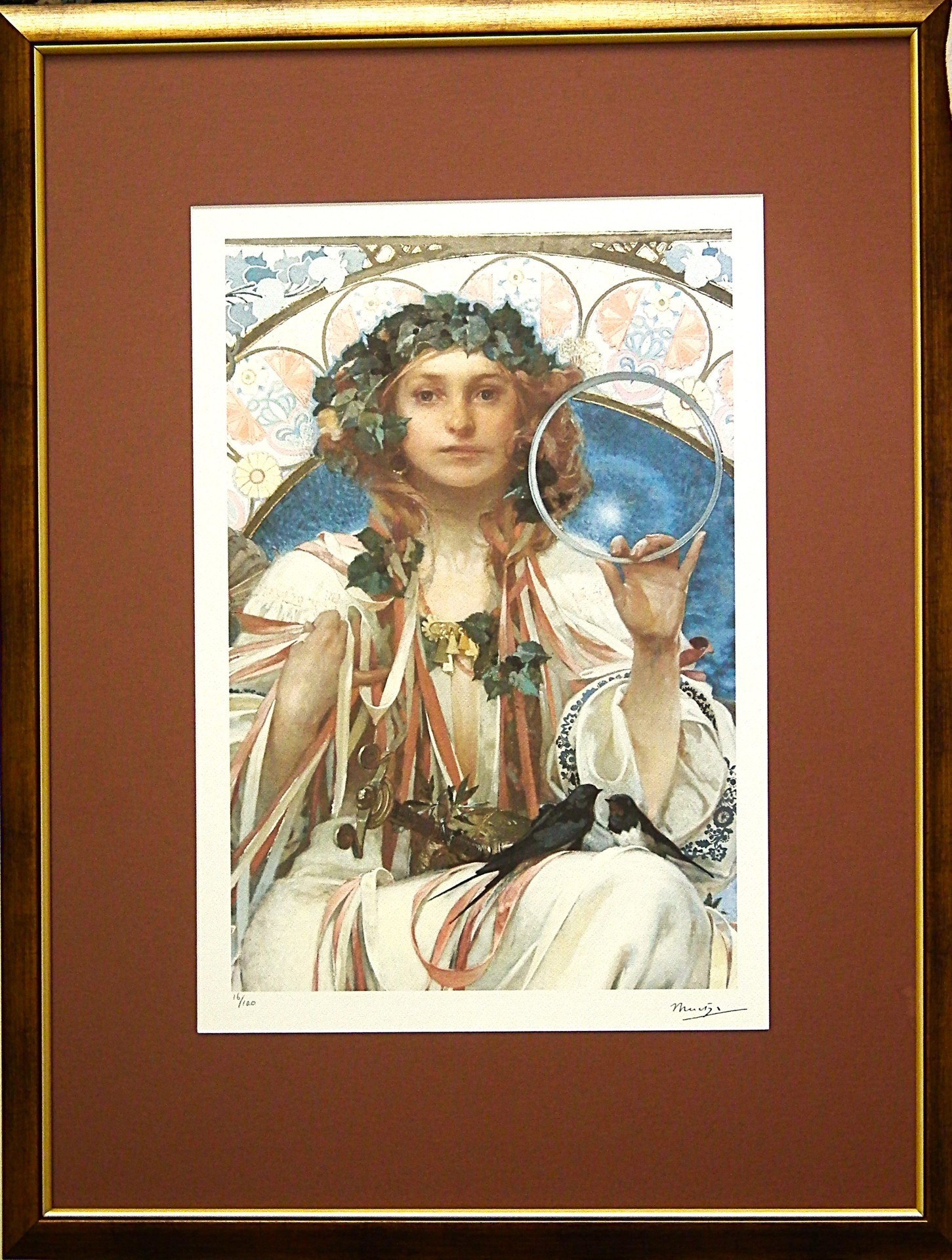
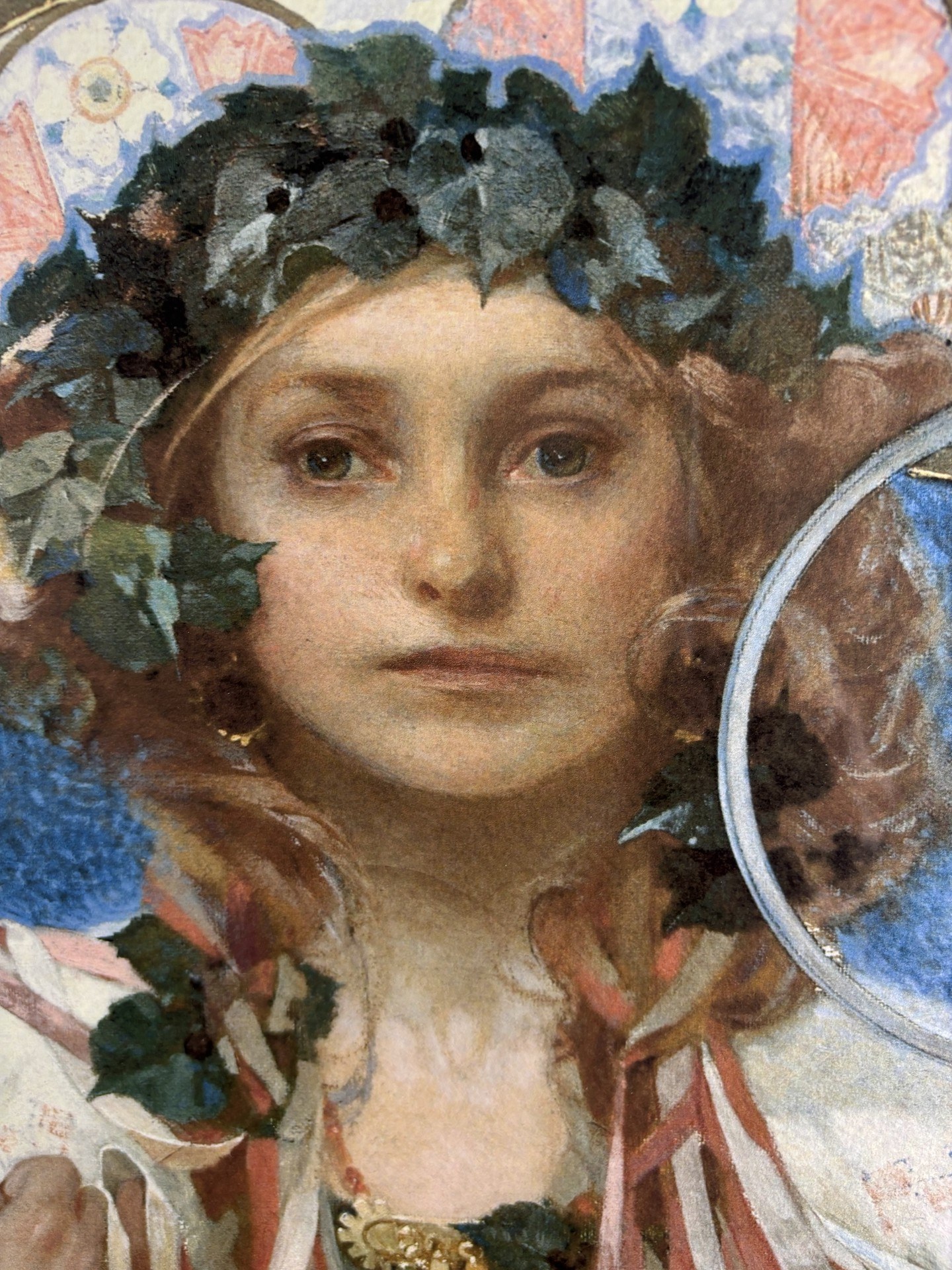
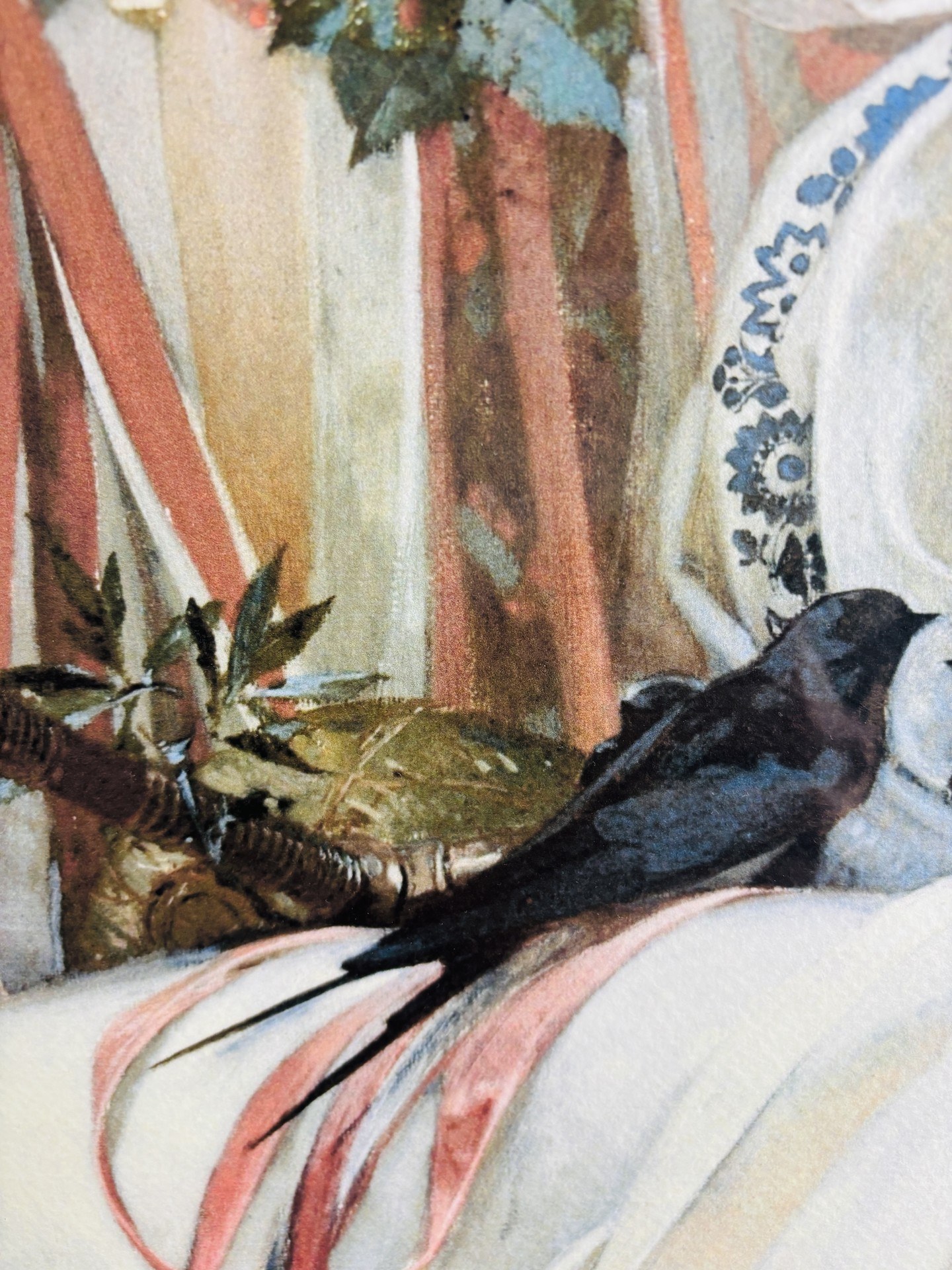
Color lithograph on heavyweight lithographic paper; 48 x 33 cm (inside the mat), mounted in a frame measuring 68 x 51 cm; signed on the stone beneath the composition with a facsimile of the signature “Mucha 41” on the left, and numbered in pencil beneath the composition “16/100.” On the lower left: the La Plume Société Anonyme logo; on the reverse, a “verification of authenticity” hologram.
Paris (La Plume Société Anonyme, Paris, was a French publishing house that played a significant role in promoting art and literature in the late 19th and early 20th centuries).
Alfons Maria Mucha was a Czech printmaker and painter, one of the leading representatives of the fin de siècle and Art Nouveau movements.
Mucha’s work combines Byzantine and modern traditions. Mucha’s hallmark is his Belle Époque-style depictions of women—the idealized figure of a beautiful woman surrounded by an armful of flowers and leaves, symbols, and arabesques.
In 1908, while in the United States, Alfons Mucha—an icon of European decorative art—painted the symbolic figure of the goddess Slavia (the Slavic woman), or rather, the foremother of the Slavs, the personification of Slavic identity. The face was modeled after the daughter of American multimillionaire Charles Richard Crane, who made his fortune in the plumbing industry. Josephine was just about to marry Harold C. Bradley, and to mark the occasion, her father commissioned Mucha to paint this special portrait, which he hung in the mansion built for the newlyweds.
Ten years later, Josephine-Slavia (slightly altered, it’s true, with somewhat fuller curves) appeared on the 100-koruna banknote of the newly formed state. In 1918, Alfons Mucha devoted all his creative energy to the nascent Czechoslovakia, designing (without a fee!) the first postage stamps and the first banknotes.










Nylig sett
Logg deg inn for å se en liste over objekter
Favorittobjekter
Logg deg inn for å se en liste over objekter