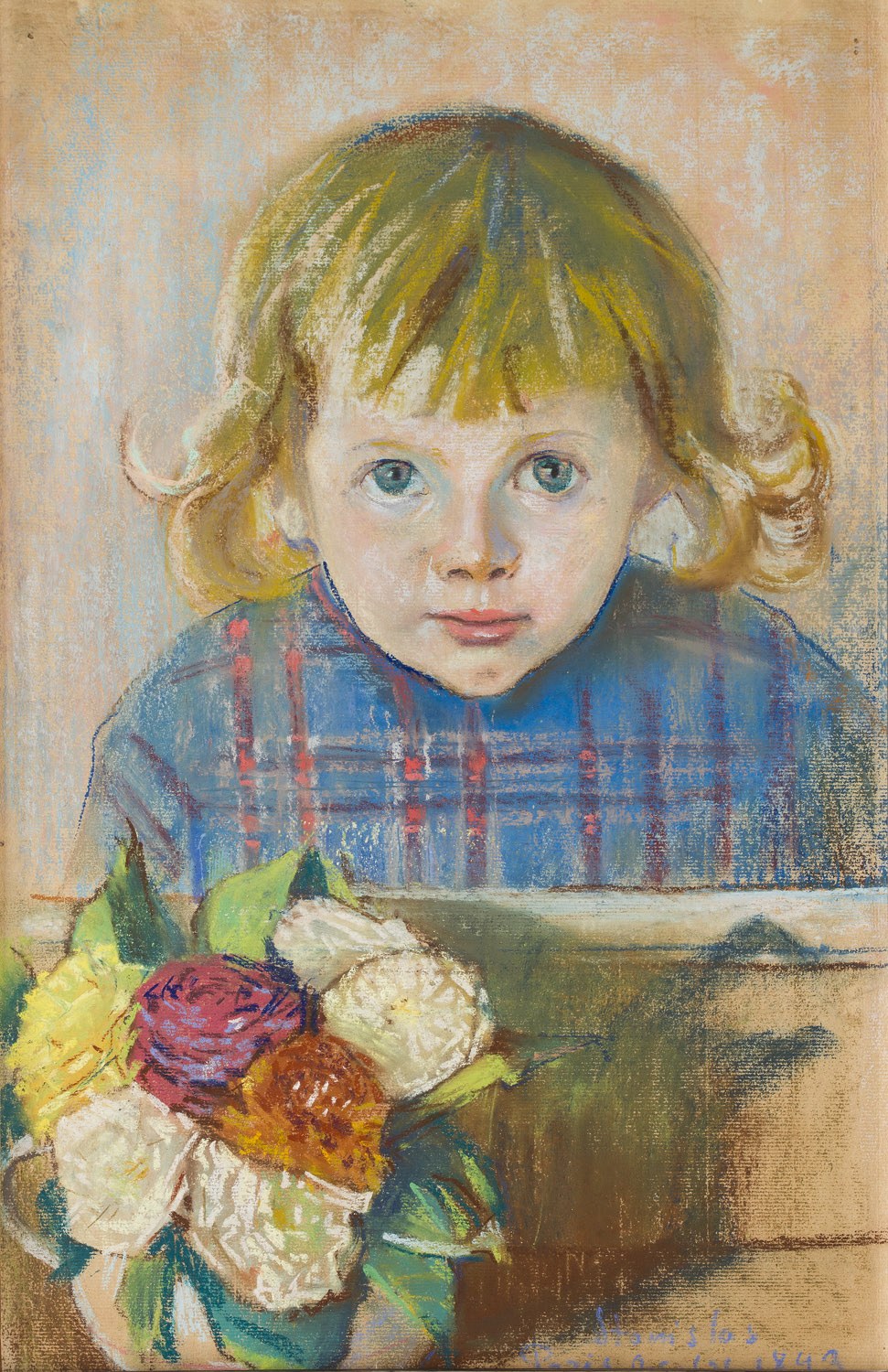
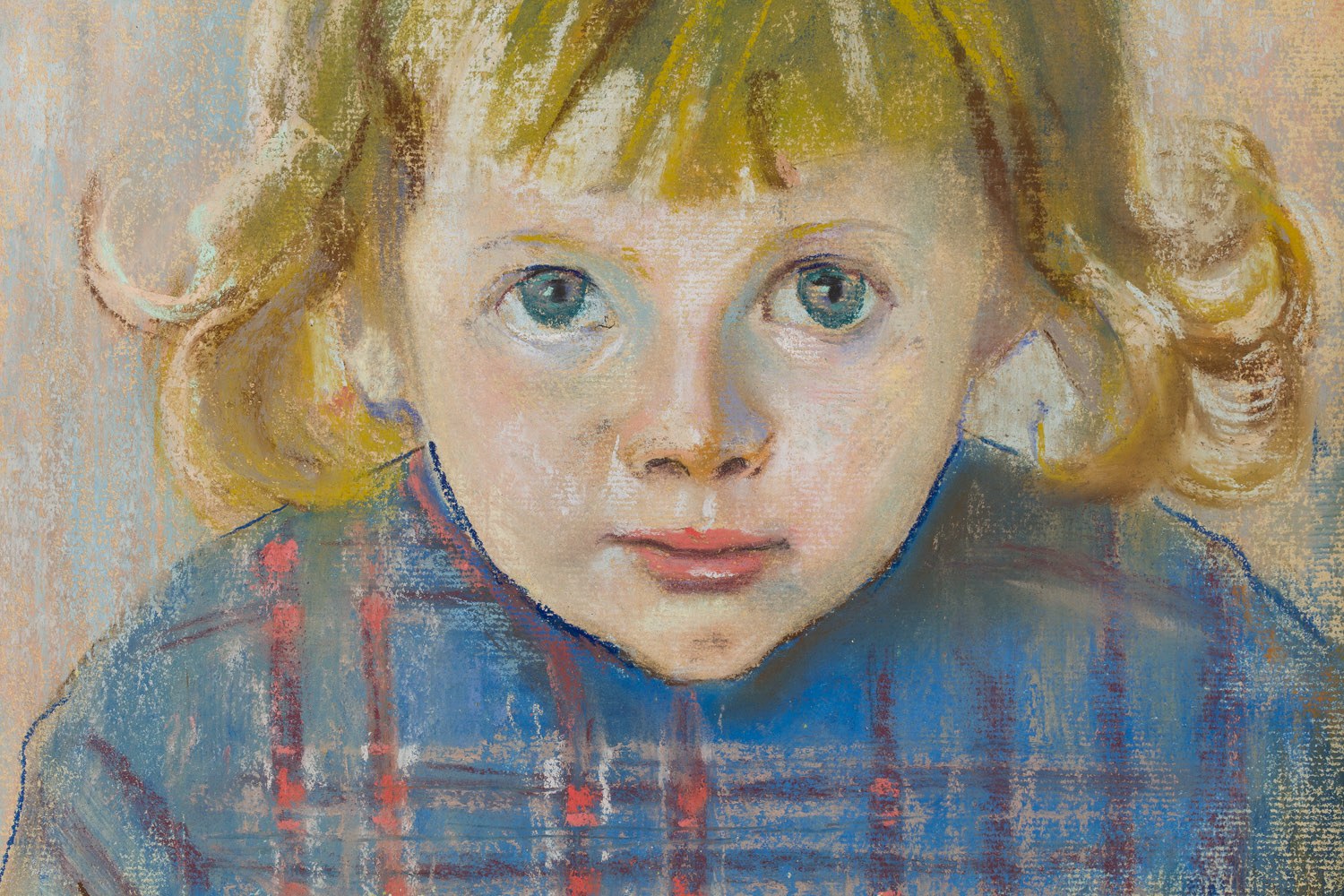
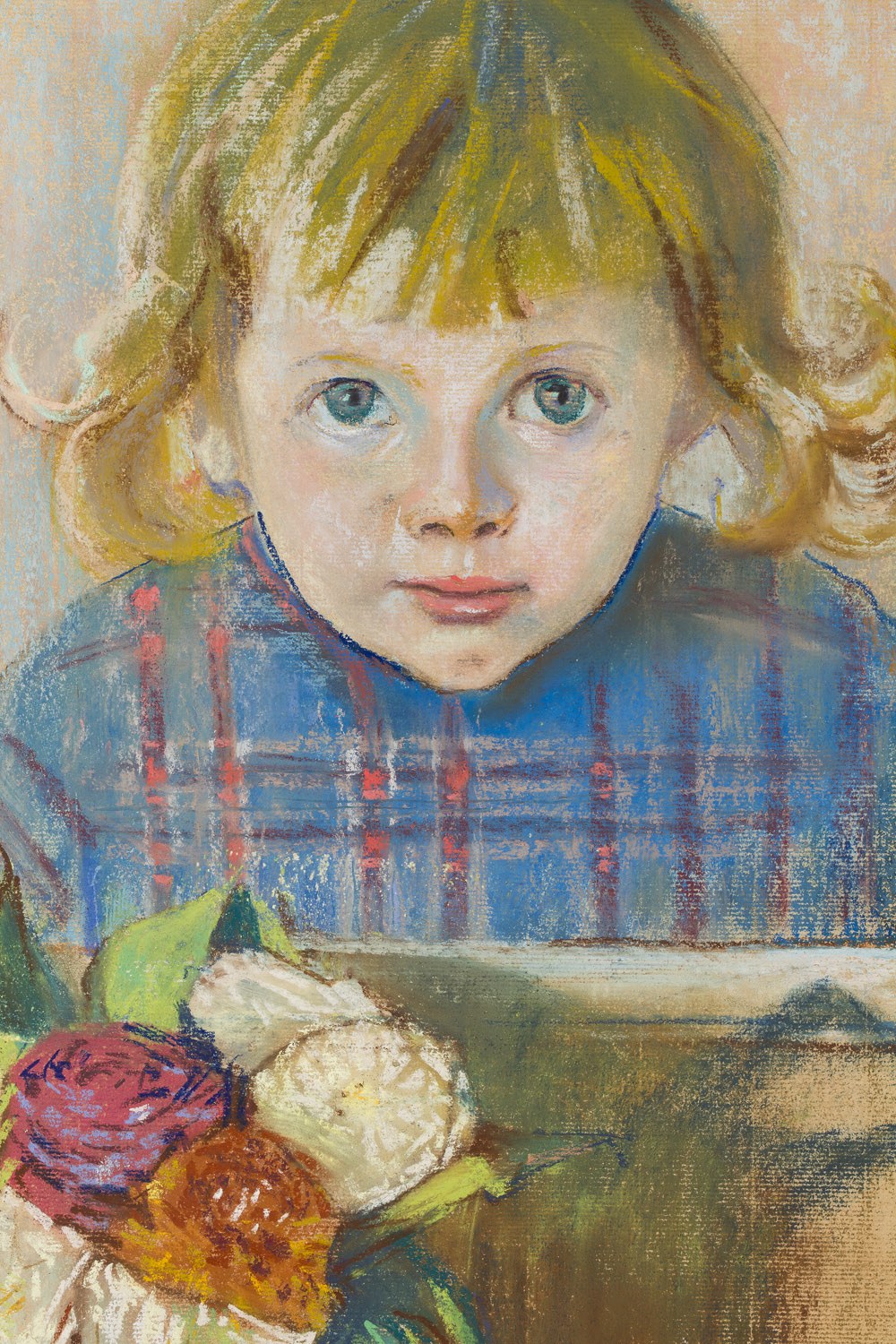
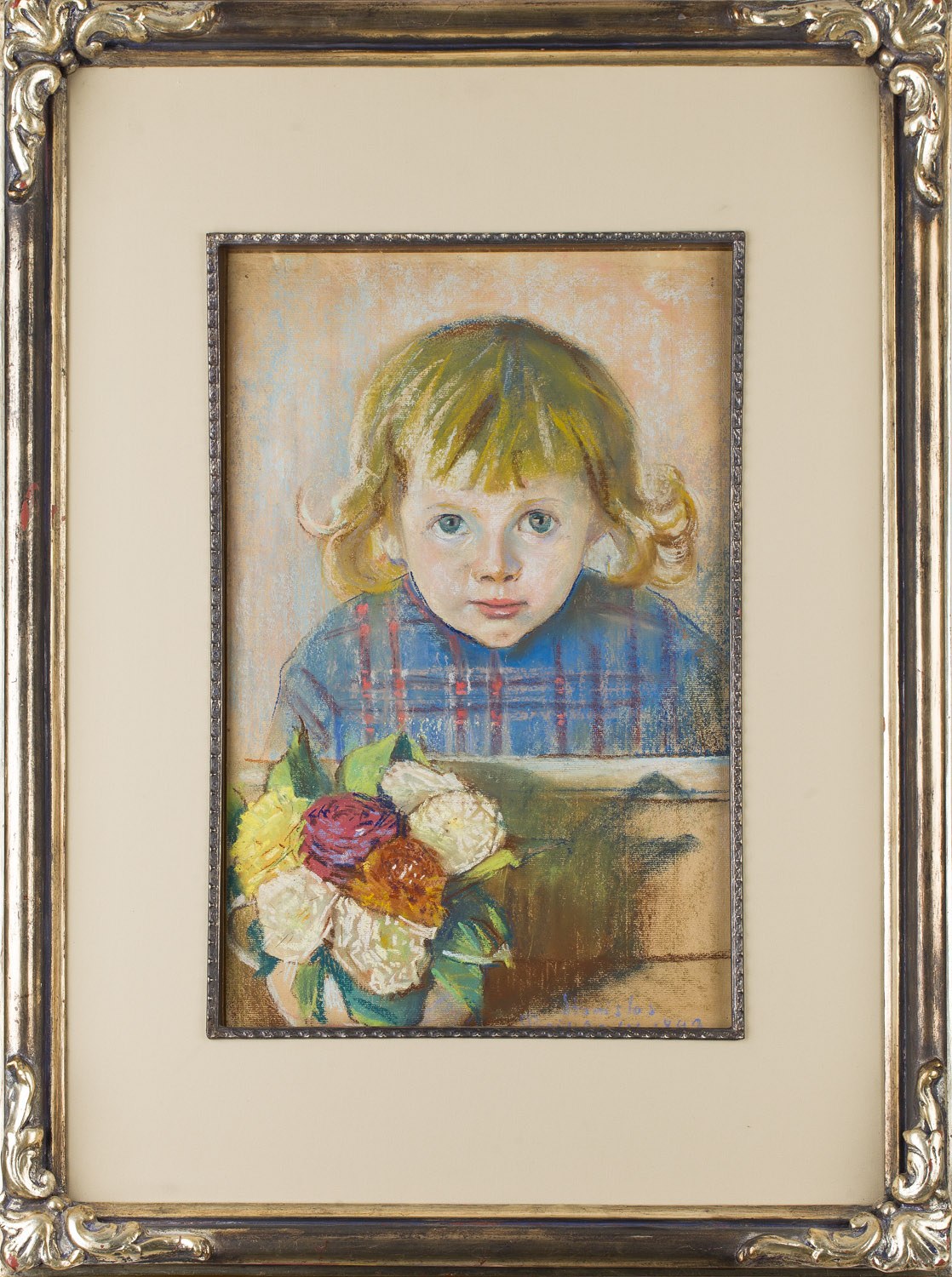

Dimensions: 46.5 x 30.3 cm
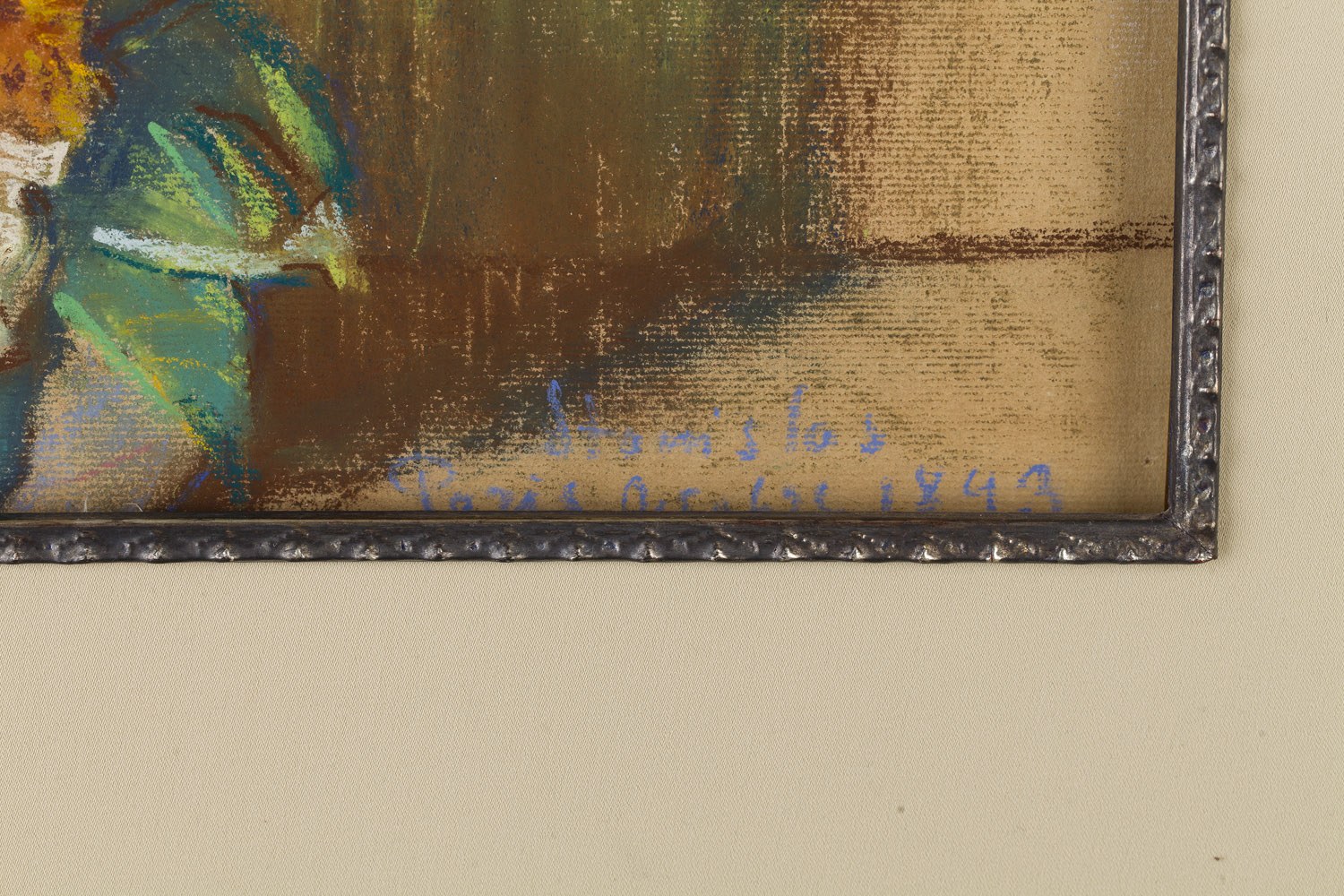
Signed, dated and inscribed p.d: 'Stanislas | Paris octobre 1893'
on the reverse a paper auction sticker
Origins
in historical collection of Lange family in Cracow
Agra-Art, October 2023
Exhibited
Stanisław Wyspiański 1869-1907. jubilee exhibition 1907-1957, National Museum in Kraków, December 1957-November 1958
Literature
Stanislaw Wyspianski 1869-1907 Jubilee Exhibition 1907-1957, National Museum in Cracow, vol. 1: Biography - Fine Arts, p. 45, cat. no. 9 (as Girl with Flowers; owned by Maria Lange in Kraków)
Stanisław Przybyszewski, Tadeusz, Żuk-Skarszewski, Stanisław Świerz, Stanisław Wyspiański. Paintings, Cracow, Warsaw, Bydgoszcz 1925, p. 107, cat. no. 75 (as Study of a Girl; property of Dr. Langie in Cracow)
Biography
Playwright, poet, painter and theater reformer. In 1884-85 and 1887-95 he studied at the School of Fine Arts in Cracow (he was, among other things, a student and collaborator of Jan Matejko) and at Jagiellonian University. In 1890-94 he spent time abroad, mainly in Paris, where he was influenced by the art of Paul Gauguin, the Nabists and Japanese woodcut. In 1898-98 he was the graphic manager of the Cracow magazine "Life." In 1898-1905, among other things, he was active as a stage-manager at the Cracow theater. In 1906 he became a docent at the School of Fine Arts in Cracow. From 1897 he was a member of the Art Society. Stanislaw Wyspianski's favorite technique was pastel. He was also involved in graphic design (including illustrations for The Iliad, vignettes and layouts for the Cracow weekly "Life" and his own published dramas). An important place in his activity, which began with his cooperation with Jan Matejko and Jozef Mehoffer on the polychrome of St. Mary's Church, was occupied by stained glass and interior polychrome designs: e.g. in Lviv's Franciscan Church 1897-1905, Lviv Cathedral 1892-94 and Wawel Cathedral 1900-02 (not completed). Wyspianski's artistic output was dominated by portraiture, in the field of which he represented Expressionism (e.g., portraits of Kazimierz Lewandowski and Lucjan Rydel 1898) and landscape (e.g., a series of views of Kopiec Kościuszki 1904-05). Wyspiański developed stage designs for his own dramas, designs for interior decorations (e.g., for the Medical Society in Cracow), furniture and textiles, and architectural designs. He was one of the creators of the program and practice of so-called applied art in Poland, and a reformer of book graphics. His style shows both the lasting influence of Matejko, as well as vivid connections with Art Nouveau (decorativeness, characteristic flexible and whimsical lines, floral stylizations) and the influence of Impressionism.