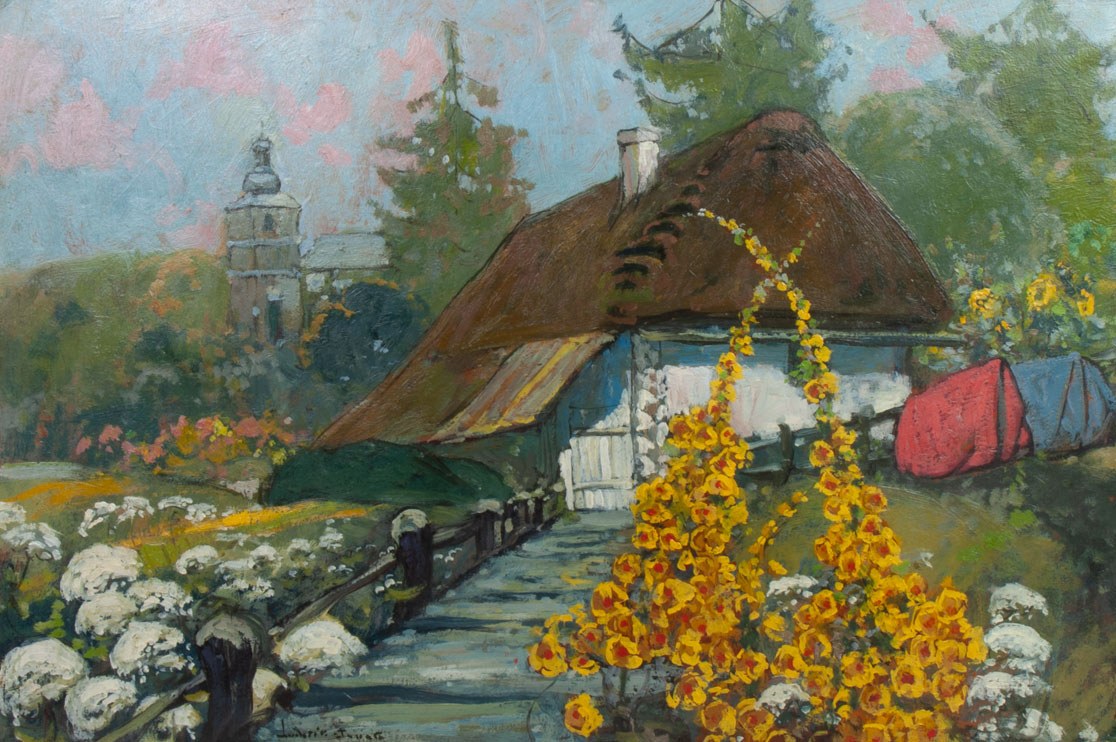
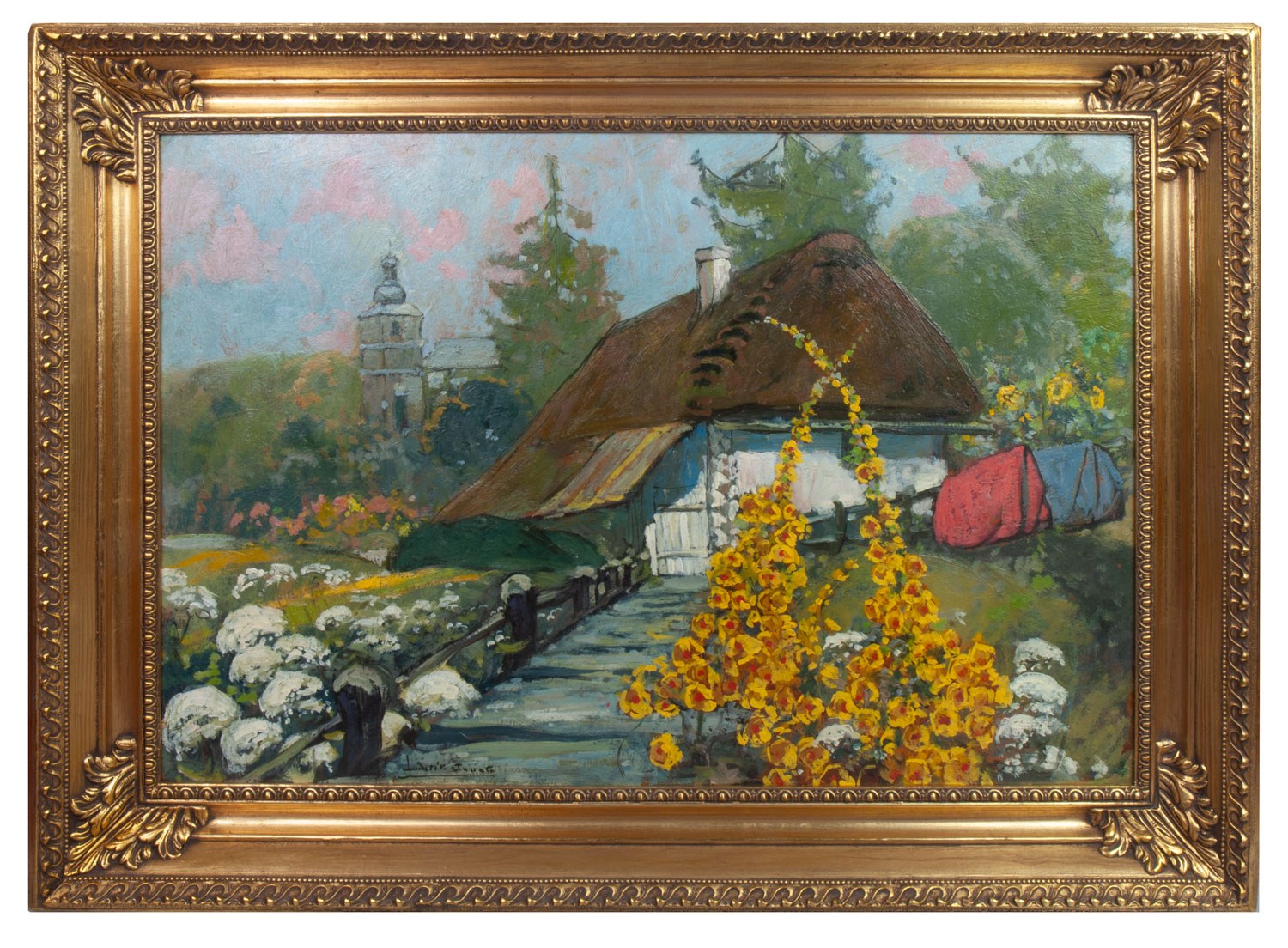
Oil on cardboard, signed lower right "Ludwik Stasiak".
Dimensions with frame: 64x87 cm (49x73 cm)
Ludwik Stasiak (Bochnia 1858 – 1924 Kraków) studied painting, among other places, in J. Matejko’s studio. He also studied in Vienna and Munich. He visited Venice and Nuremberg. Around 1895, he settled in Bochnia. His studio in Bochnia, furnished in the Munich style, was a frequent gathering place for friends and artists from Kraków (Wincenty Wodzinowski, Włodzimierz Tetmajer, Kasper Żelechowski, and others, such as Edmund Ciećkiewicz, Tadeusz Okoń, Władysław Skoczylas, Antoni Broszkiewicz, and Antoni and Tadeusz Waśkowski). In 1901, he unexpectedly abandoned painting, first turning to journalism, then to art criticism and art history; at the same time, he became a popular author of novels, short stories, and humorous sketches, as well as a playwright. As early as his student years in Kraków, Ludwik Stasiak had already received prestigious awards from the Society of Friends of the Fine Arts. He owed his subsequent successes as a painter to the patronage of Count Ignacy Milewski, a well-known collector. He created genre, historical, symbolic, allegorical, landscape, and religious compositions, as well as portraits and self-portraits. He gained true fame for his paintings of flowers, which he produced in entire series, and for his views of the old part of the Bochnia mine. The early phase of his work showed a strong dependence on Munich influences, while his later work was associated with realism, modernism, and Art Nouveau stylization. Talented, extremely hardworking, and persistent in the face of adversity, he lived and created while earnestly seeking his own artistic voice during very difficult times, in a transitional period between realist and historical painting, and the work of proponents of new artistic movements.