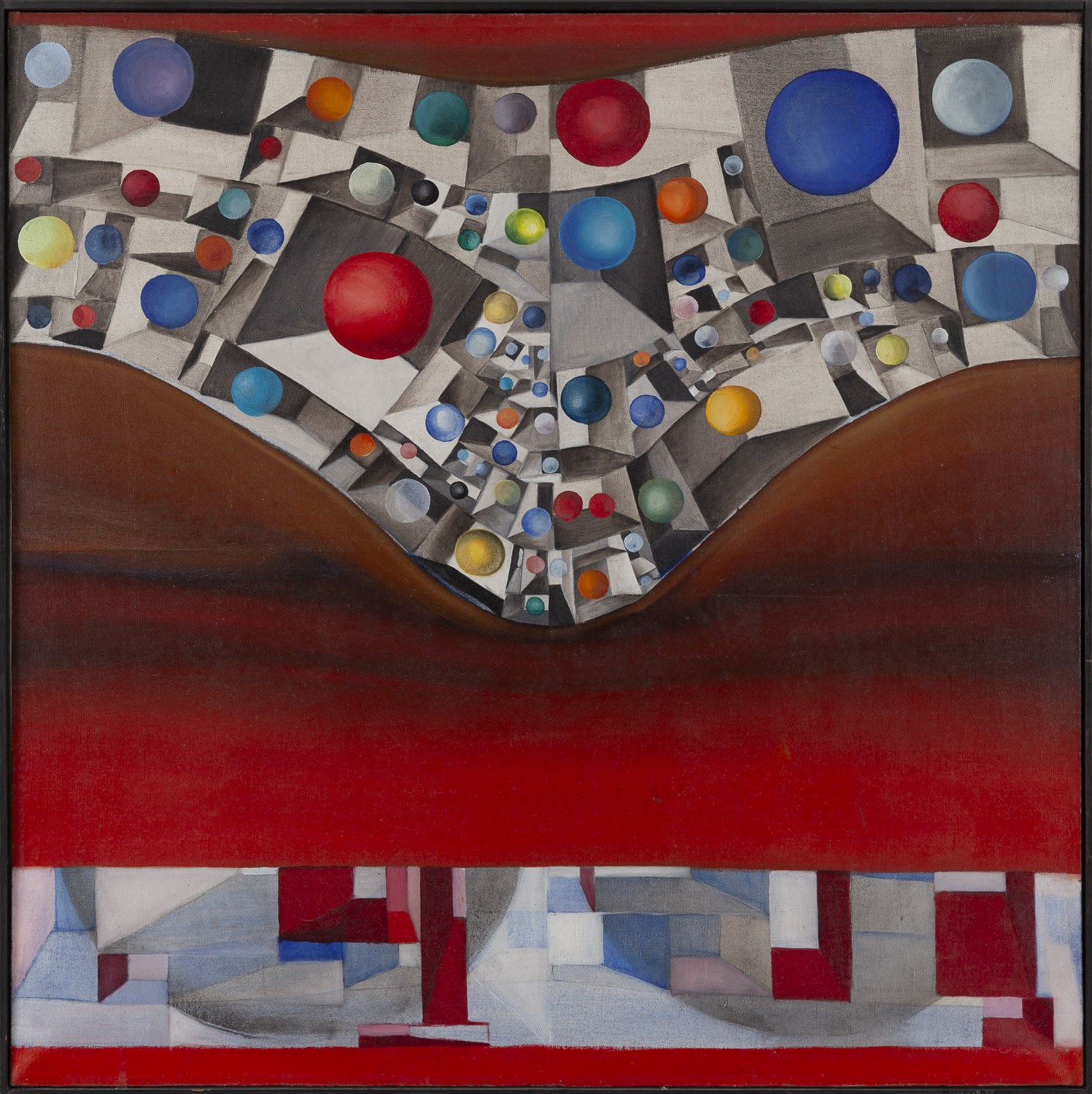
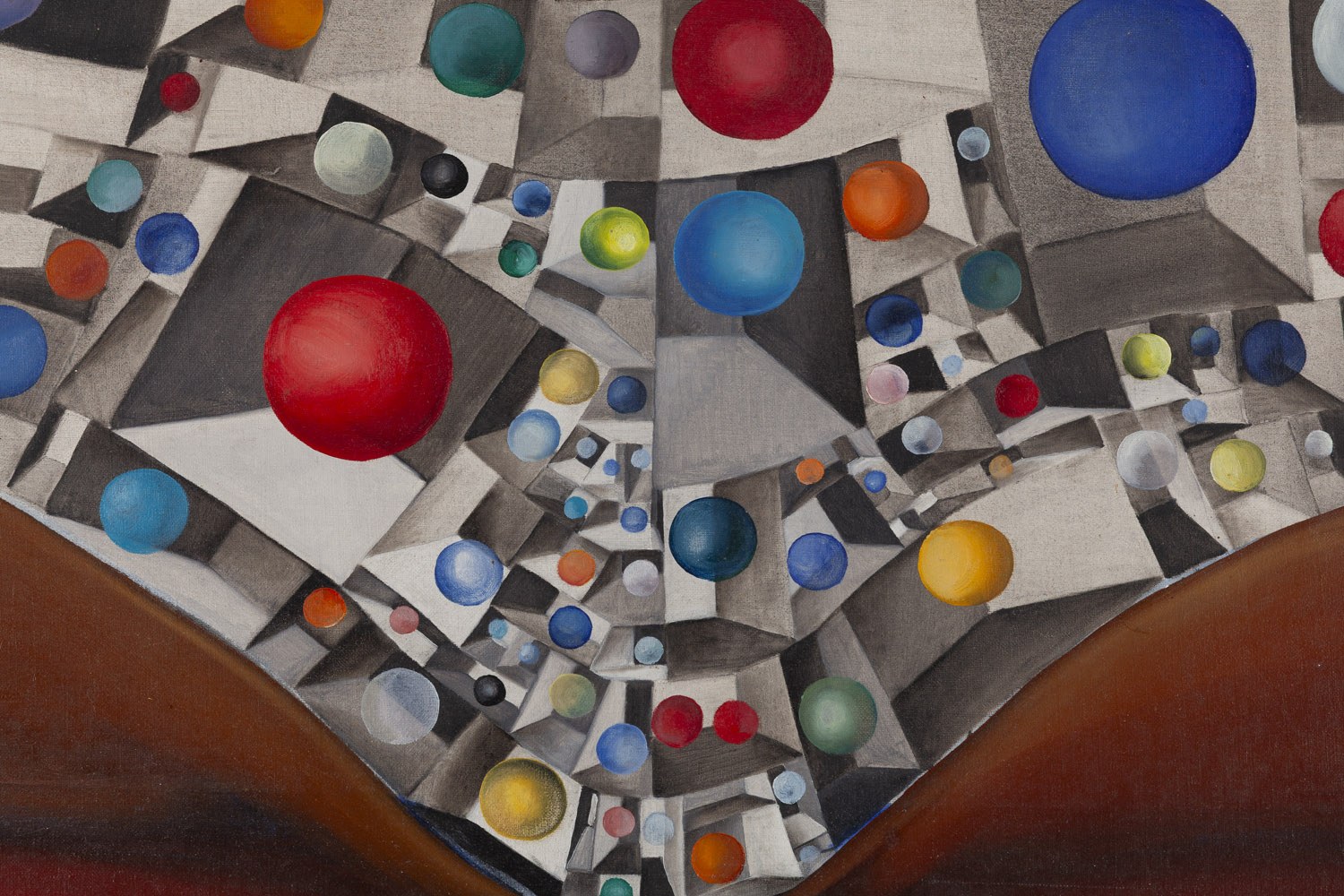
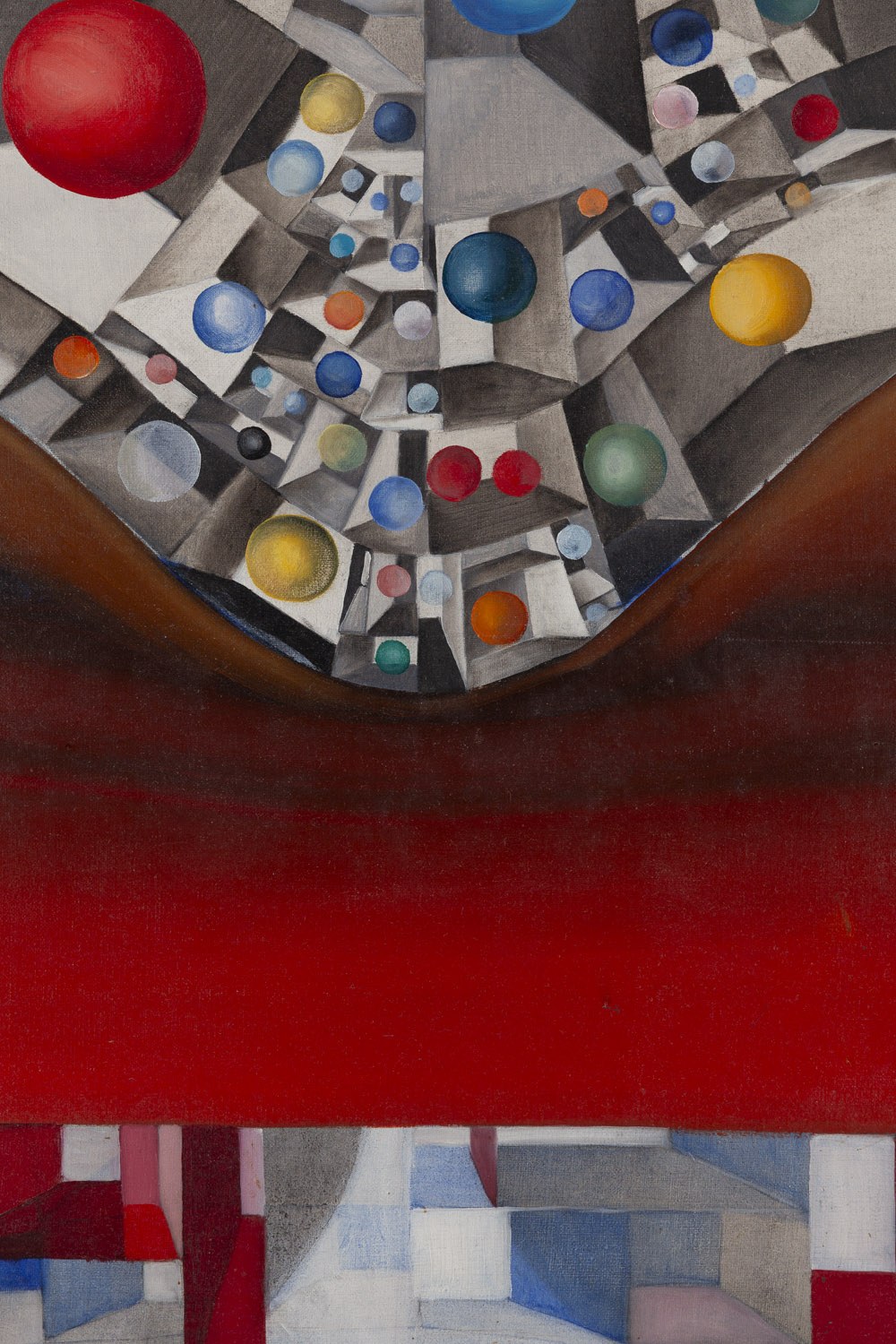
Dimensions: 73 x 72.5 cm
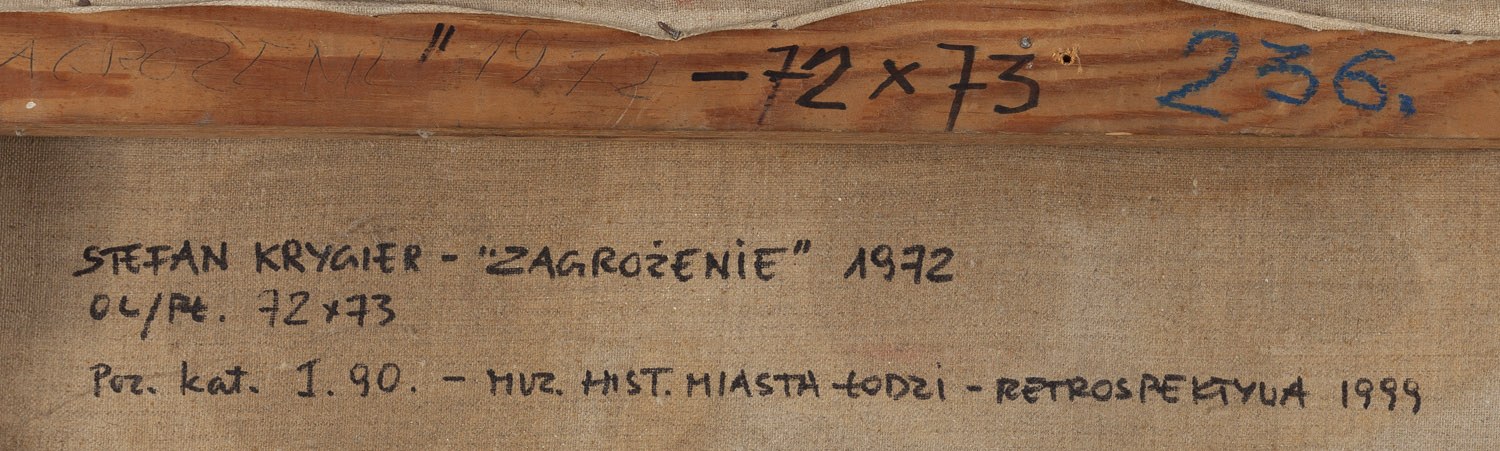
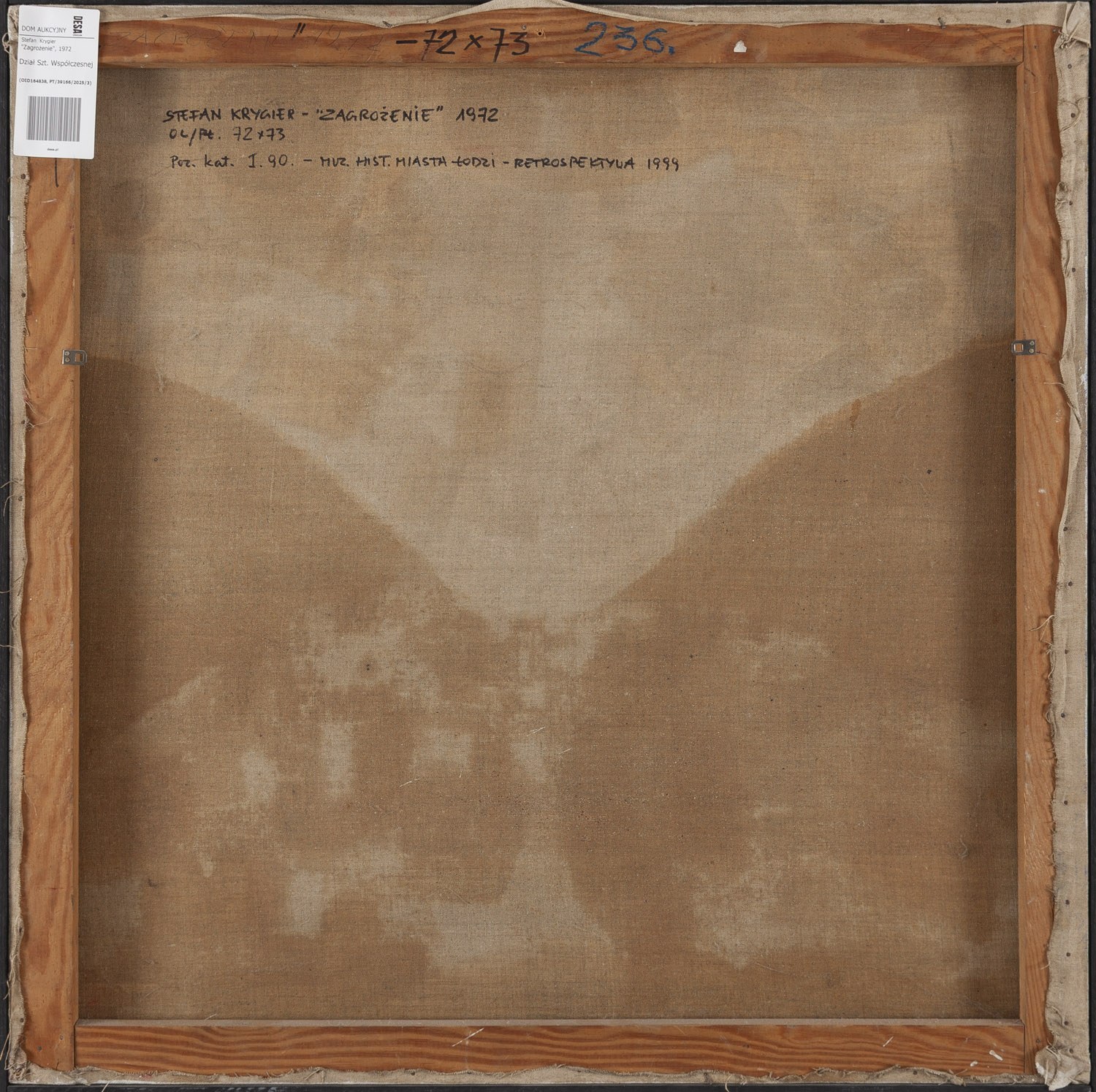
signed, dated and described on the reverse: 'STEFAN KRYGIER - "DANGER" 1972 | OL/P£. 72x73 | pos. cat. I. 90 - MUZ. HIST. CITY OF LODZ - RETROSPECTIVE 1999'
dated, described and numbered on the painter's loom: '"DANGER" 1972 - 72x73 236.'
Biography
Painter and printmaker. In 1945-50 he studied at the Academy of Fine Arts in Lodz. In 1963 he received a diploma in architecture from the Warsaw University of Technology. He was a co-founder of the ST-53 GROUP, which was established in Katowice in 1953. Paintings from the early 1950s were an attempt to transpose the inspiration of ancient Egyptian art into the language of modern art. He also created compositions based on geometric rhythms. In time, he introduced organic shapes into them (CENTER OF CONDENSION OF FORM, 1970). In the 1970s he undertook explorations from the field of constructivism and conceptualism. The artist was awarded the Silver Cross of Merit (1972) and the Prize of the Minister of Culture and Art of the second degree (1973). He studied at the Academy of Fine Arts in Lodz with W. Strzeminski and S. Wegner. In 1947, together with W. Strzeminski, he published "Seeing the Gothic". In the 1940s, he belonged to the Club of Young Artists and Scientists in Warsaw, as part of which he participated in exhibitions at the Salon "Simply", "Zachęta", the Writers' Club. During his studies, he organized a club under the auspices of the YMCA in Lodz, and in 1953 he cooperated with the "St - 53" group in Katowice. From 1957 to 1997 he taught composition, printmaking and design at the Academy of Fine Arts in Lodz. In 1990, he became a professor. Since 1975, while continuing to work at the PWSSP, he created a sculpture and composition studio at the Institute of Architecture and Urban Planning at the Technical University of Lodz. Paintings from the period of his studies refer to Strzeminski's cubism and solarism. Paintings from the 1950s are inspired by the art of Egypt and Greece. The artist also created Tascist works. The 1960s include matter painting, wood sculpture and printmaking. The late 1970s are oil paintings, ascetic in content, referring to constructivism. This period of creativity secured the artist a permanent place in the history of Polish art. The 1980s and 1990s were a period of simultaneous painting. In addition to paintings that were purely geometric in form, the artist painted paintings that referred to iconography and European culture, including "Judith with the Head of Holofernes," "Kidnapping of Europe," and "Before the Cathedral."