


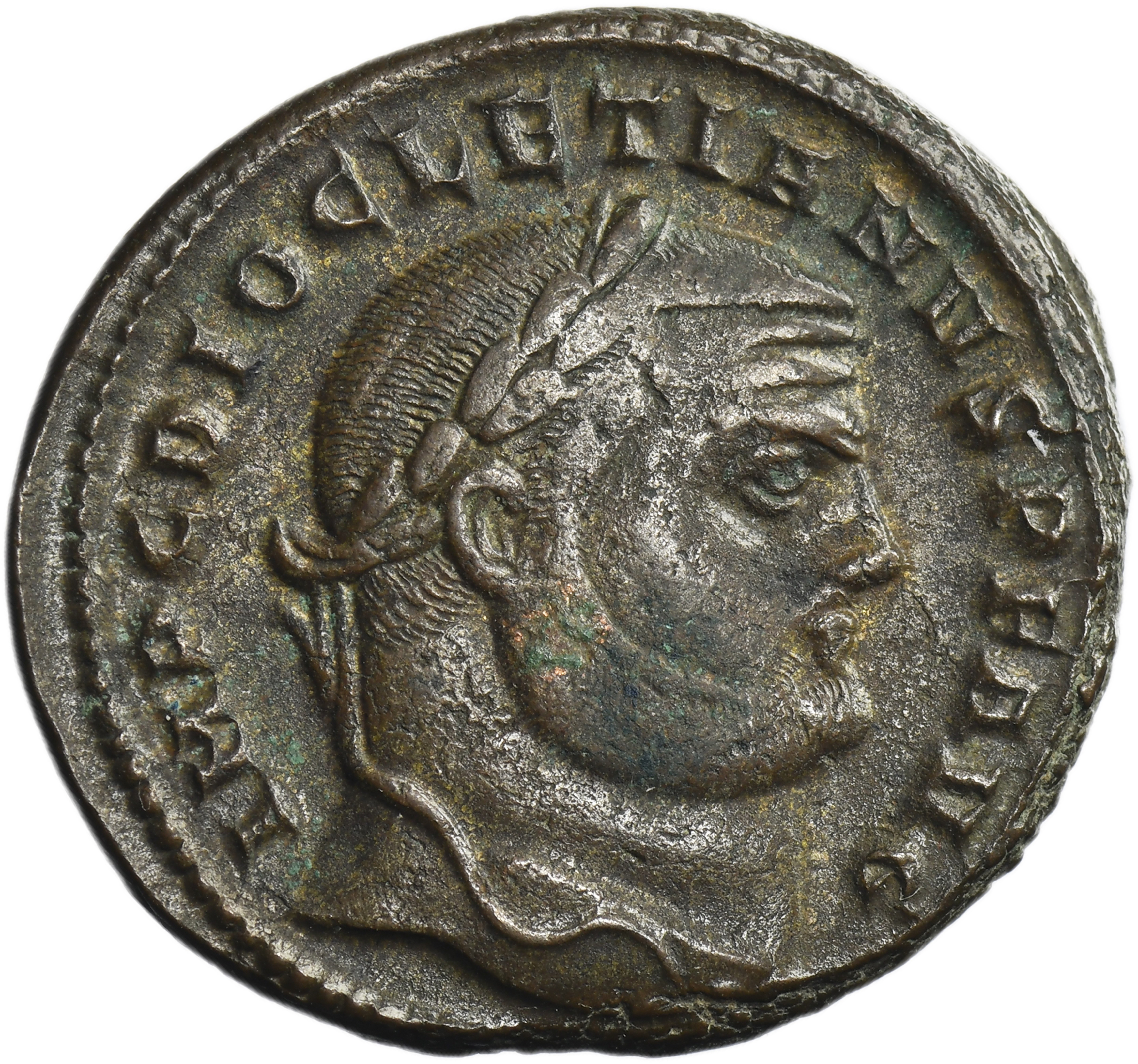


Follis of Diocletian (AD 304–305), struck at the Antioch mint, belongs to issues connected with the late 3rd-century monetary reform, one of the key measures aimed at restoring the economic structure of the Roman Empire.
The obverse presents a laureate head of the emperor facing right, with the legend IMP C DIOCLETIANVS P F AVG, giving his full titulature as pius felix augustus.
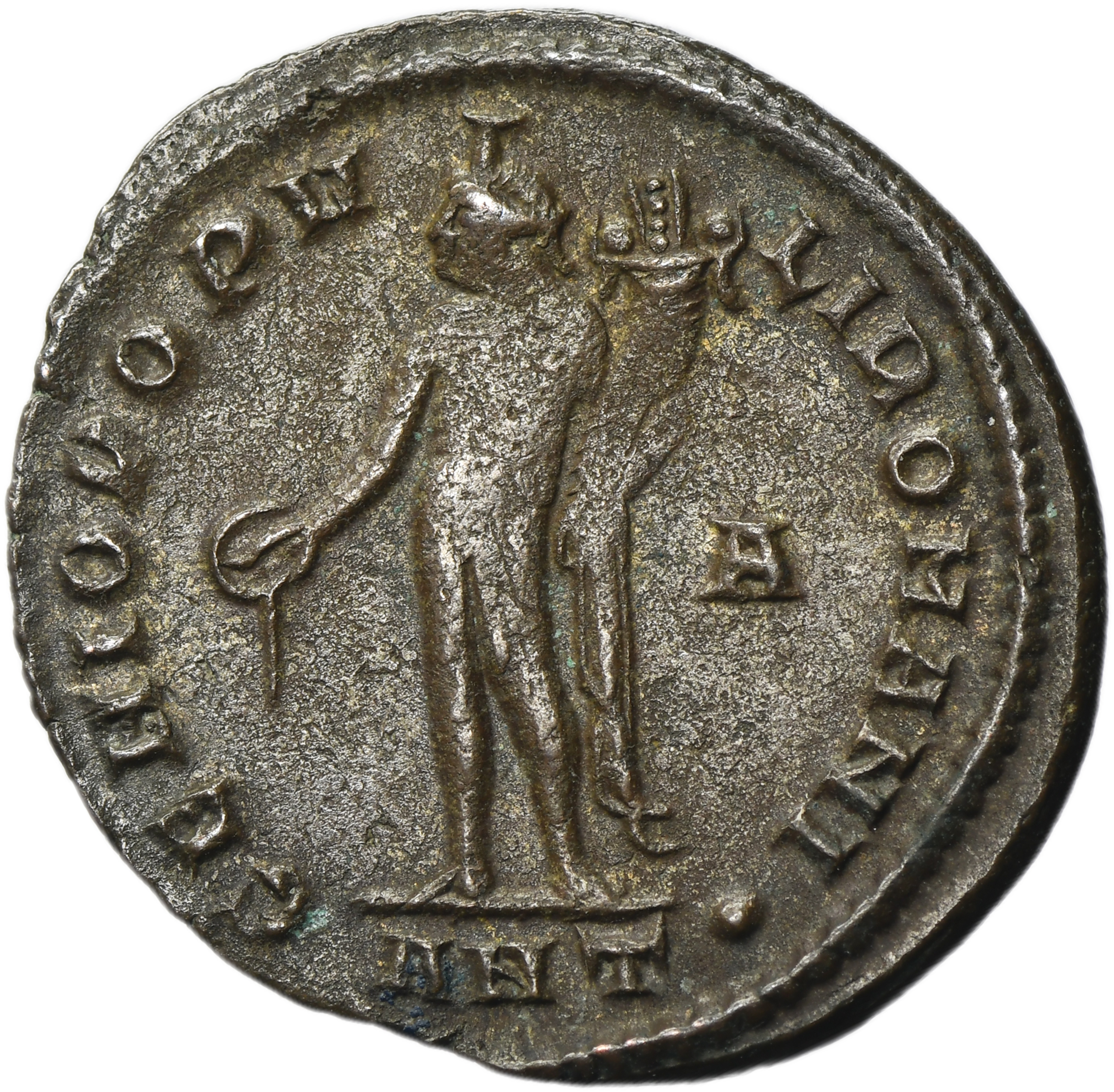
The reverse depicts Genius standing left, holding a patera and cornucopia, with the legend GENIO POPVLI ROMANI. The Genius Populi Romani, as the protective spirit of the Roman people, was one of the central motifs of tetrarchic propaganda, symbolizing renewal and the prosperity of the state.
The patera refers to sacrificial rites, while the cornucopia represents abundance and economic stability. Together, these attributes form a clear ideological message emphasizing the restoration of prosperity under the tetrarchic system.
In the right field appears the letter A, while the exergue bears ANT•, identifying the Antioch mint and its officina. This marking system is characteristic of Diocletian’s reform coinage and allows precise attribution of production.
Issues bearing the legend GENIO POPVLI ROMANI are among the most recognizable types of tetrarchic folles and constitute a core element of the ideological program stressing renewal, stability, and the protection of the Roman people.
Roman Imperial
Diocletian (284-305), Follis 304-305, Antioch mint
Obverse: laureate head right
IMP C DIOCLETIANVS P F AVG
Reverse: Genius standing left, holding patera and cornucopiae, A in right field, ANT• in exergue
GENIO POPVLI ROMANI
Diameter 29 mm, weight 10.26 g











