


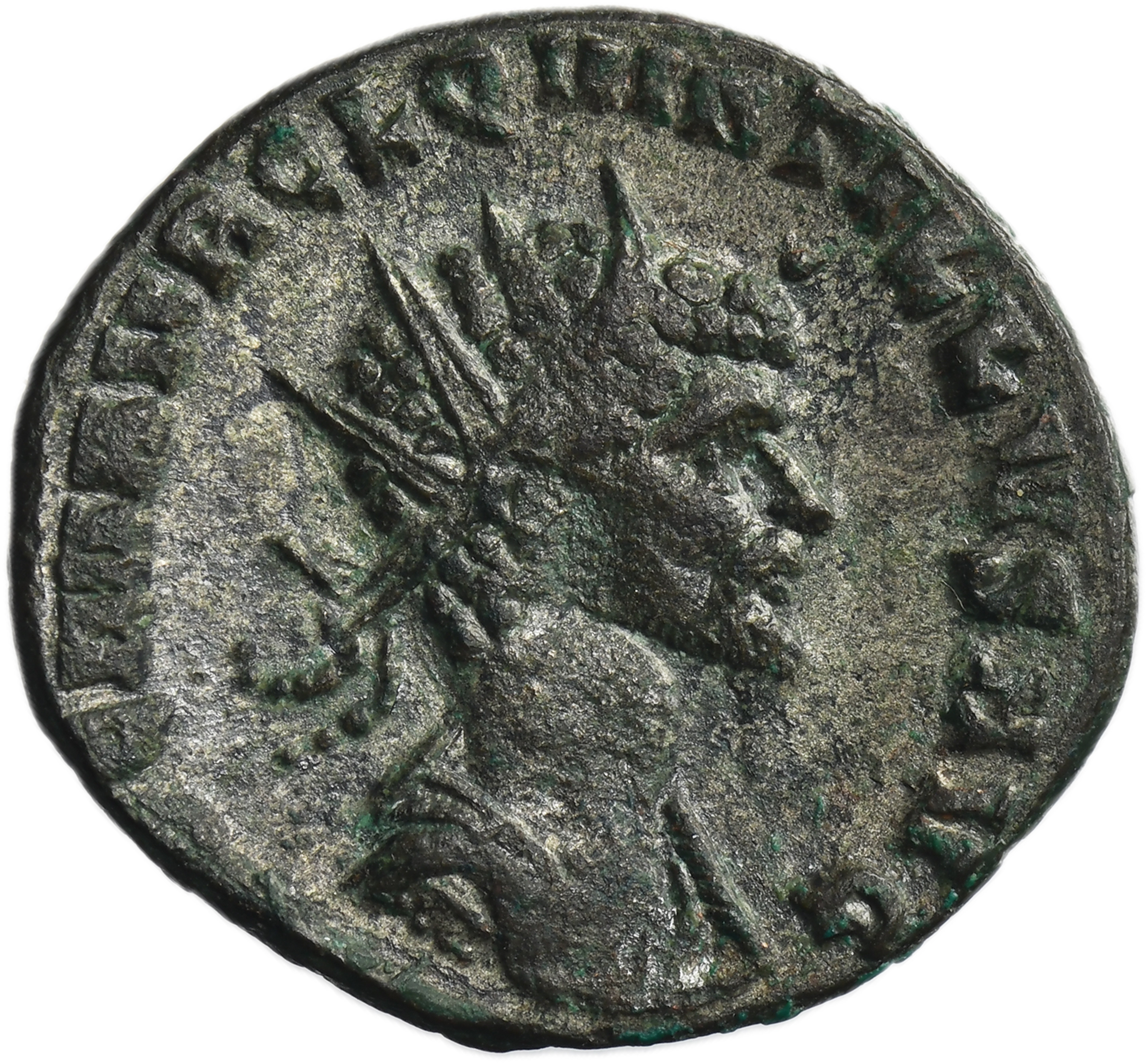
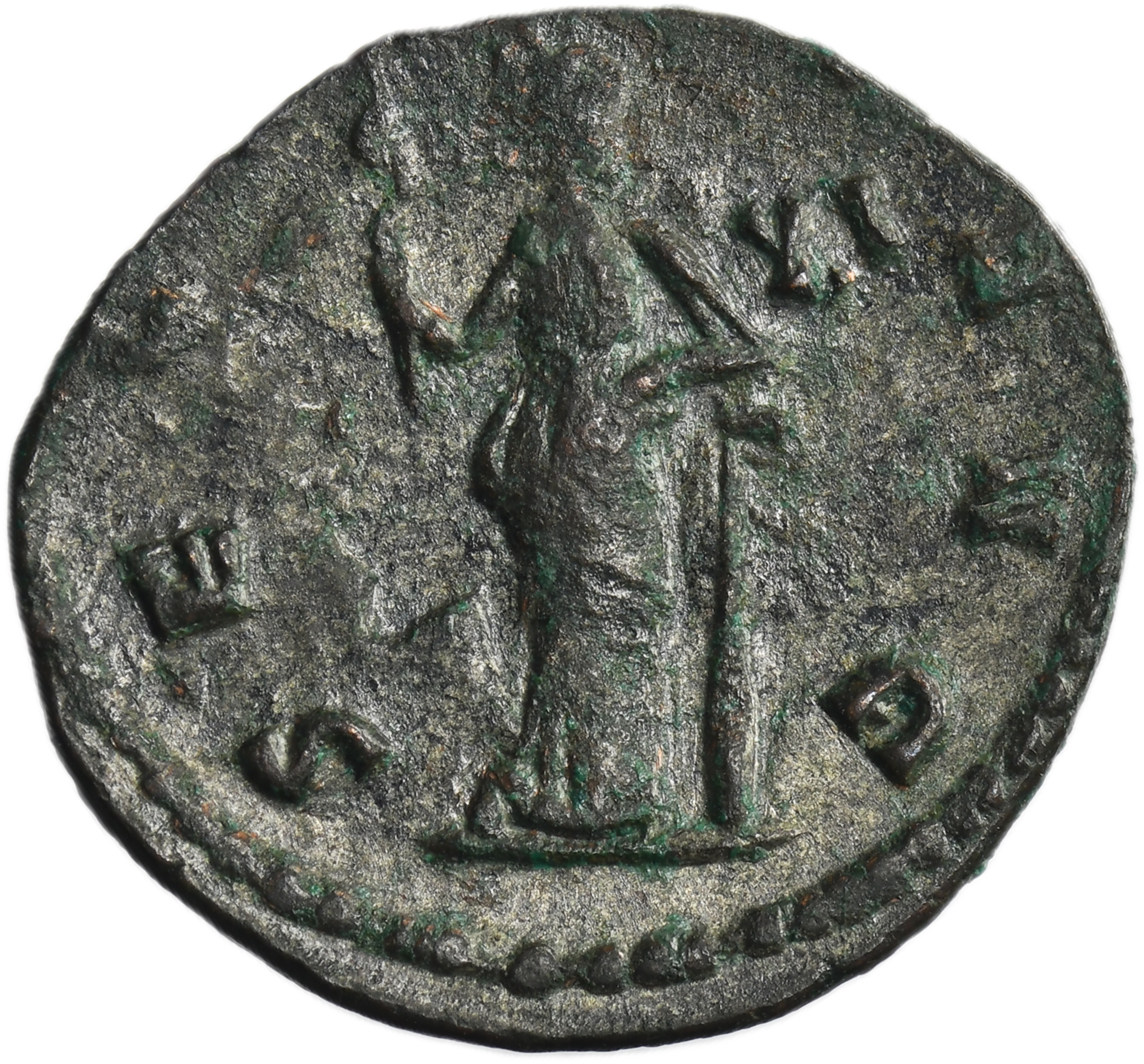


Scarcer antoninianus of Quintillus (270 AD), struck at the Rome mint, belonging to issues produced during the short transitional period following the death of Claudius II Gothicus. Ancient sources suggest his reign lasted from a few days to several months, while the volume of surviving coinage rather supports a rule of at least a few months.
The obverse depicts the radiate and draped bust of the emperor facing right, with the legend IMP C M AVR CL QVINTILLVS AVG, presenting his full titulature as Marcus Aurelius Claudius Quintillus Pius Felix Augustus. The adoption of the names “M. Aurelius” and “Claudius” follows the 3rd-century convention aimed at emphasizing dynastic continuity and legitimizing authority after his deceased brother.
The reverse shows Securitas standing left, leaning on a column and holding a sceptre, with the legend SECVRIT AVG and the mark XI in the right field. Securitas, as the personification of security and stability of the state, was one of the key motifs of imperial propaganda, especially relevant in times of political uncertainty.
The legend SECVRIT AVG refers to the security guaranteed by the emperor and fits within the broader ideological repertoire of Roman coinage. In the context of Quintillus’ brief and uncertain reign, this message held particular propagandistic importance, serving as an attempt to emphasize stability and continuity of power during a succession crisis.
Roman Imperial
Quintillus (270), Antoninianus 270, Rome mint
Obverse: radiate, draped bust right
IMP C M AVR CL QVINTILLVS AVG
Reverse: Securitas standing left, leaning on column, holding sceptre, XI in right field
SECVRIT AVG
Diameter 20 mm, weight 2.32 g











