


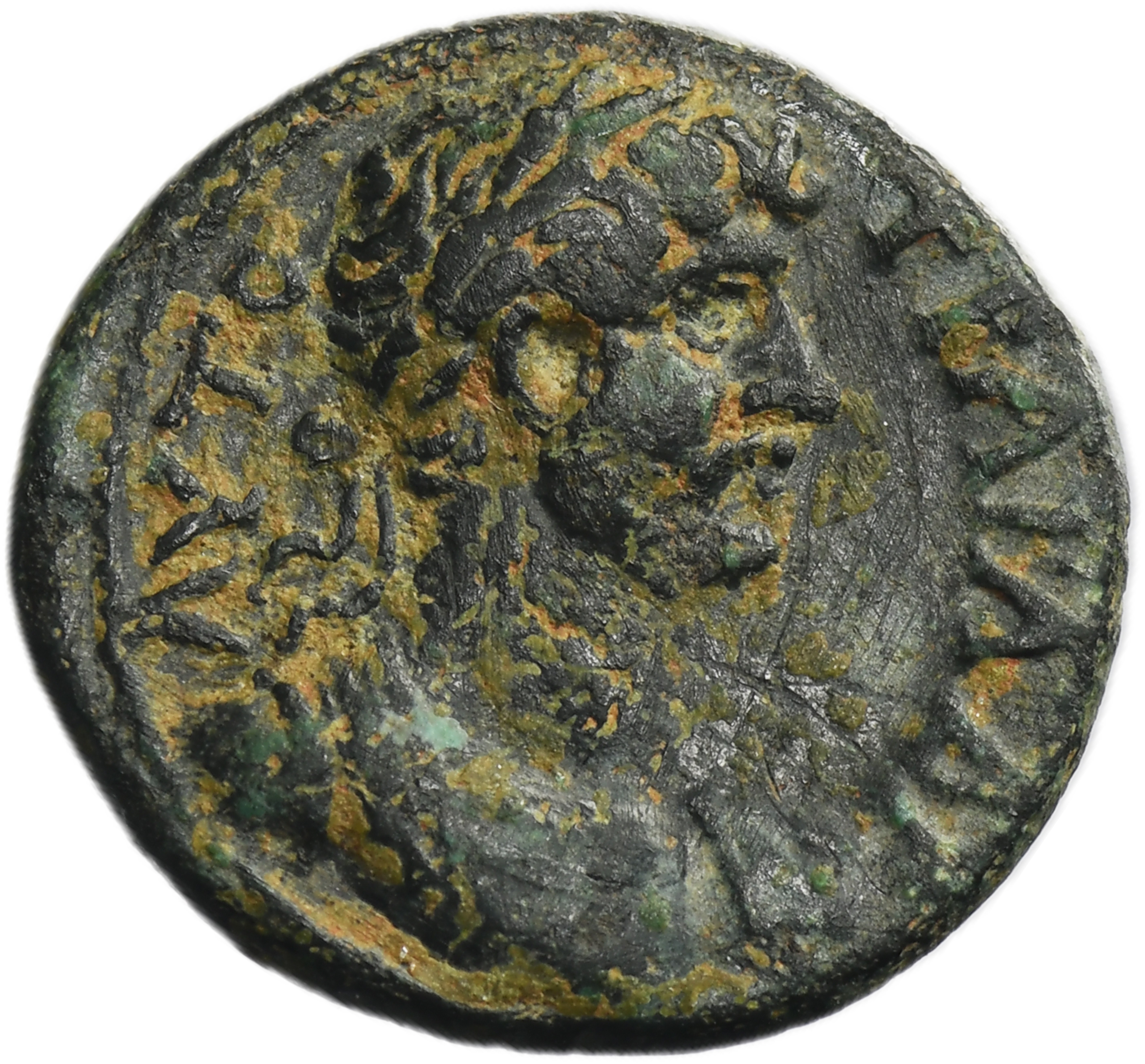
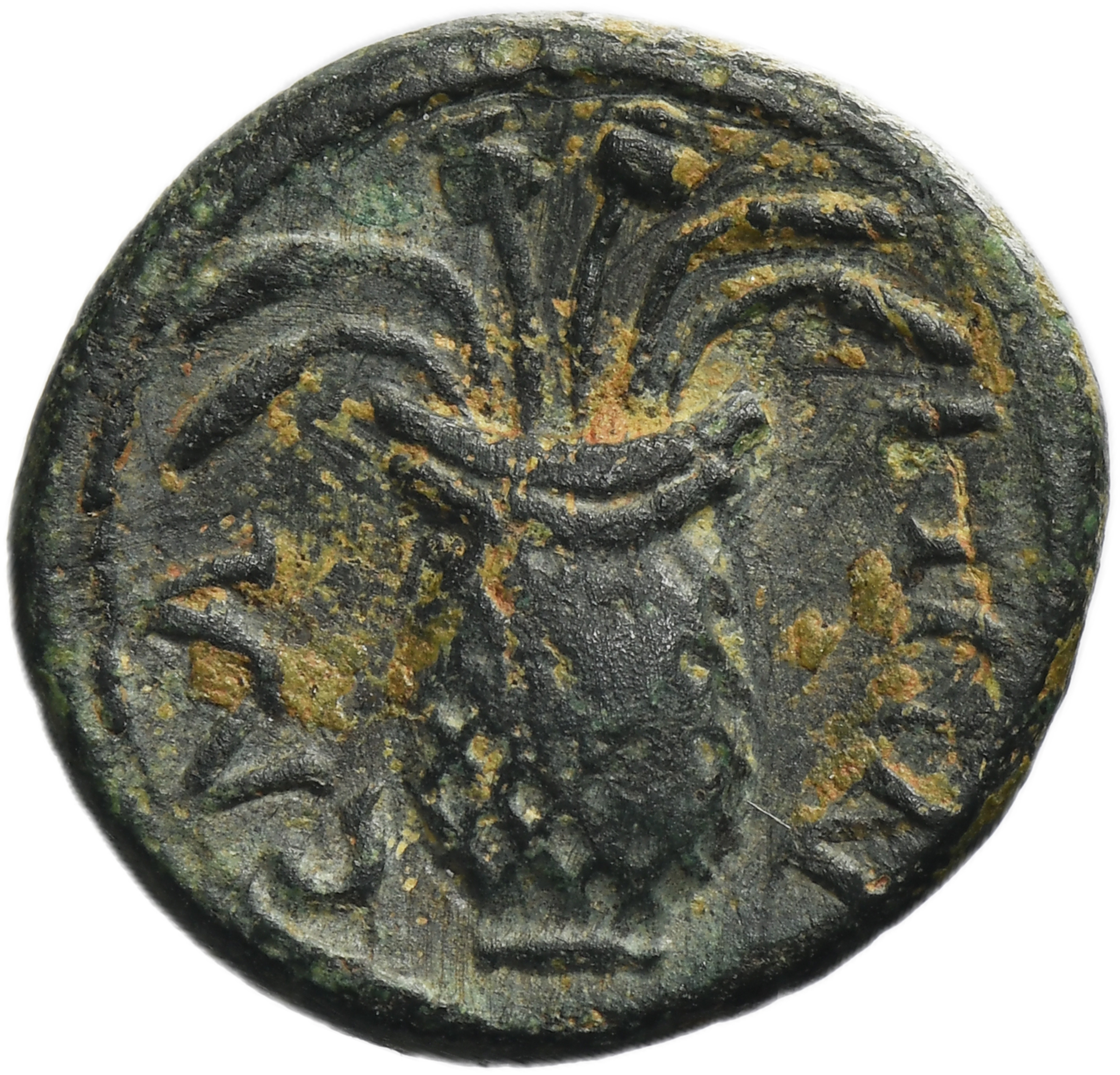


Provincial bronze issue of Hadrian (AD 117–138), struck at Elaea in Aeolis, belongs to the local civic coinage of western Asia Minor during the mature phase of the Roman Empire. Elaea, located near Pergamon and serving as its principal harbor, was an important regional center, as confirmed by ancient sources and numismatic evidence.
The obverse features a bust of the emperor facing right, laureate and wearing a cloak and cuirass, with the Greek legend AVTO TΡAIA AΔ, a shortened form of his name and titulature (Autokrator Traianos Hadrianos). This armored portrait type emphasizes the emperor’s role as supreme military commander, a motif also present in provincial coinage.
The reverse depicts a cista (basket) filled with grain ears and poppies, with the legend EΛAITΩN, referring to the community of the citizens of Elaea as the issuing authority. This motif is characteristic of agrarian symbolism associated with fertility and abundance, often linked to the cults of Demeter and Kore (Persephone). In the Aeolis region and neighboring Pergamene territory, such representations of produce-filled baskets are well attested in local coinage, reflecting the importance of agriculture and the fertility of the land as key elements of regional identity.
Roman Provincial
Aeolis, Elaea, Hadrian (117-138), AE
Obverse: laureate, draped and cuirassed bust right
AVTO TΡAIA AΔ
Reverse: basket containing ears of corn and poppy-heads
EΛAITΩN
Diameter 15 mm, weight 2.71 g











