


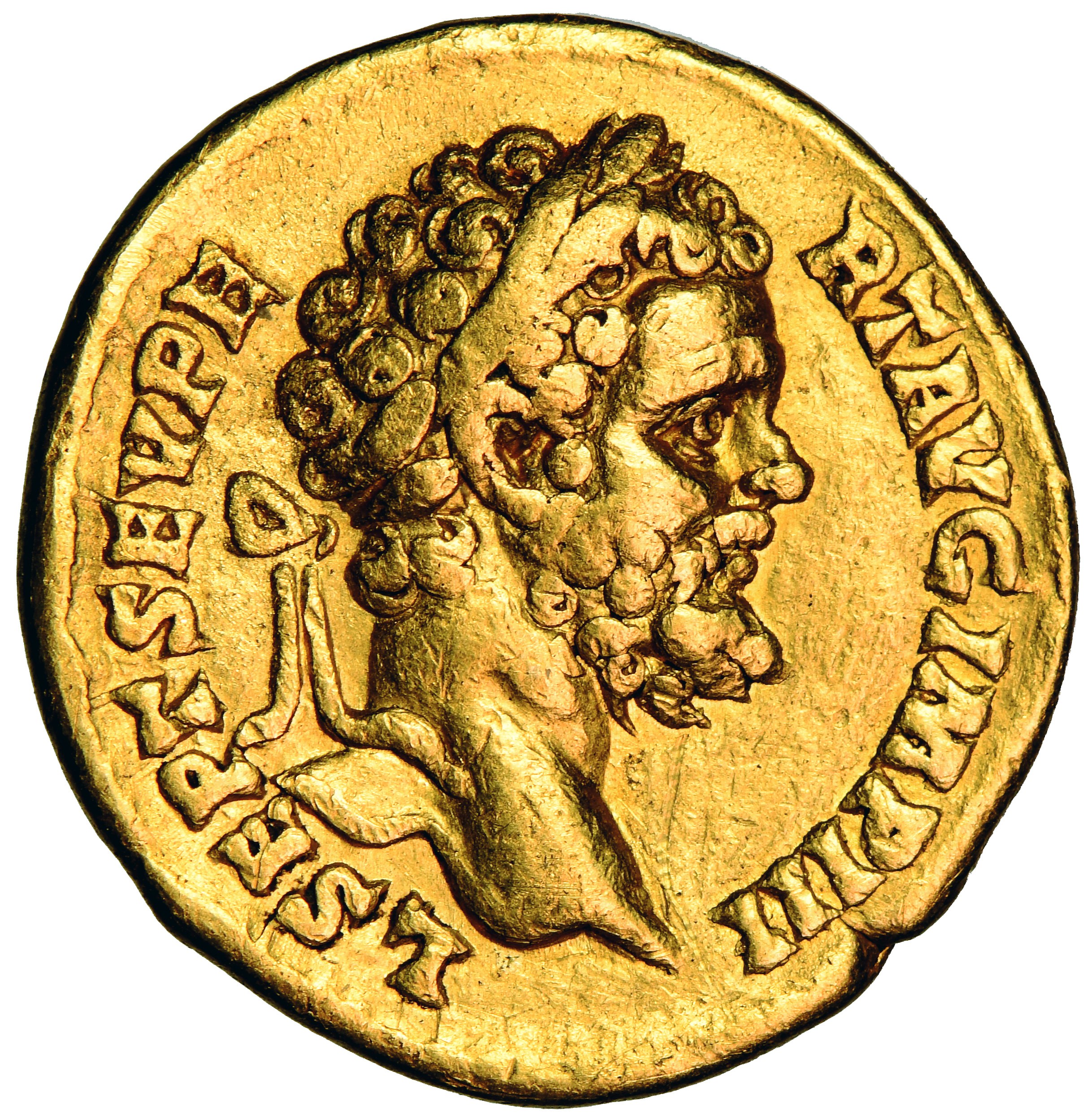
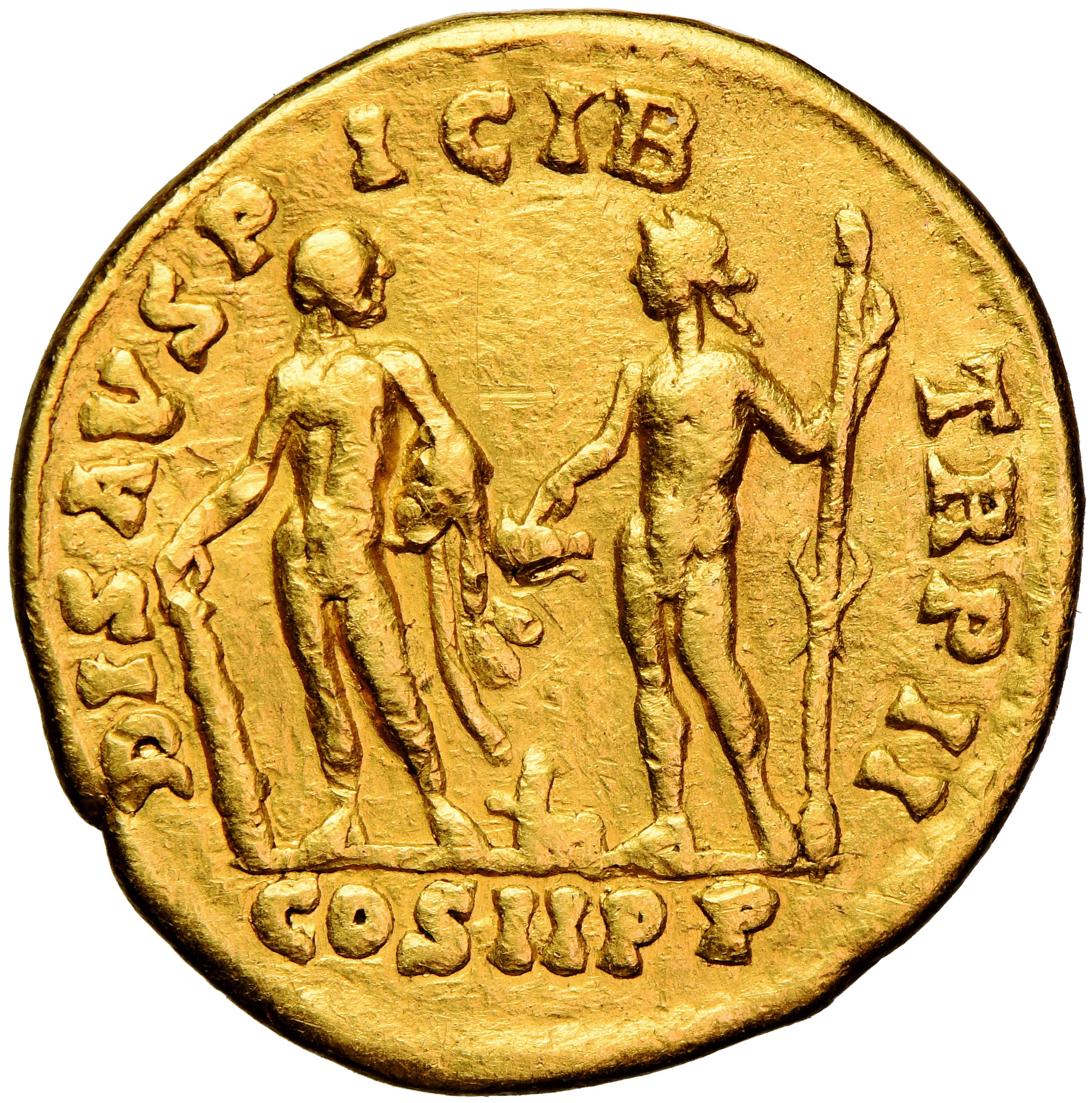
Roman Empire, Septimius Severus, aureus, 194, minted in Rome.
Obv. L SEPT SEV PE-RT AVG IMP III, head of Septimius Severus in a laurel wreath facing right.
Rev. DIS•AVSPICIB TR P II, Hercules (left), nude, standing facing forward, head to the right, holding a club resting on the ground with his right hand, an apple in his left hand, a lion’s skin on his left shoulder; on the right, Bacchus, naked, standing facing forward, head to the left, holding a thyrsus in his left hand, raising an oinochoe with his right hand, above a crouching panther between the figures.
Gold, 6.83 g, 19.9 mm, h 11. RIC IV.I 31 var. (Hercules with head to the left); Calicó 2446a.
Condition III, very rare coin
Septimius Severus was the first Roman emperor of African descent, and this type of aureus indirectly alludes to his origins. Minted in 194, the reverse depicts the demigods Hercules and Bacchus, the patron deities of the emperor’s hometown, Leptis Magna, on the North African coast. Severus had a special fondness for his home province, and in particular for his city. The impact of his generosity, in the form of a massive building campaign, can still be seen today in the well-preserved ruins of the city. Hercules and Bacchus were also known as the “Divine Heralds” (Dis Auspibus), who acted as intermediaries between humanity and the Olympian deities, and were thus named in the legend.









