Jacques Zucker (1900–1981)
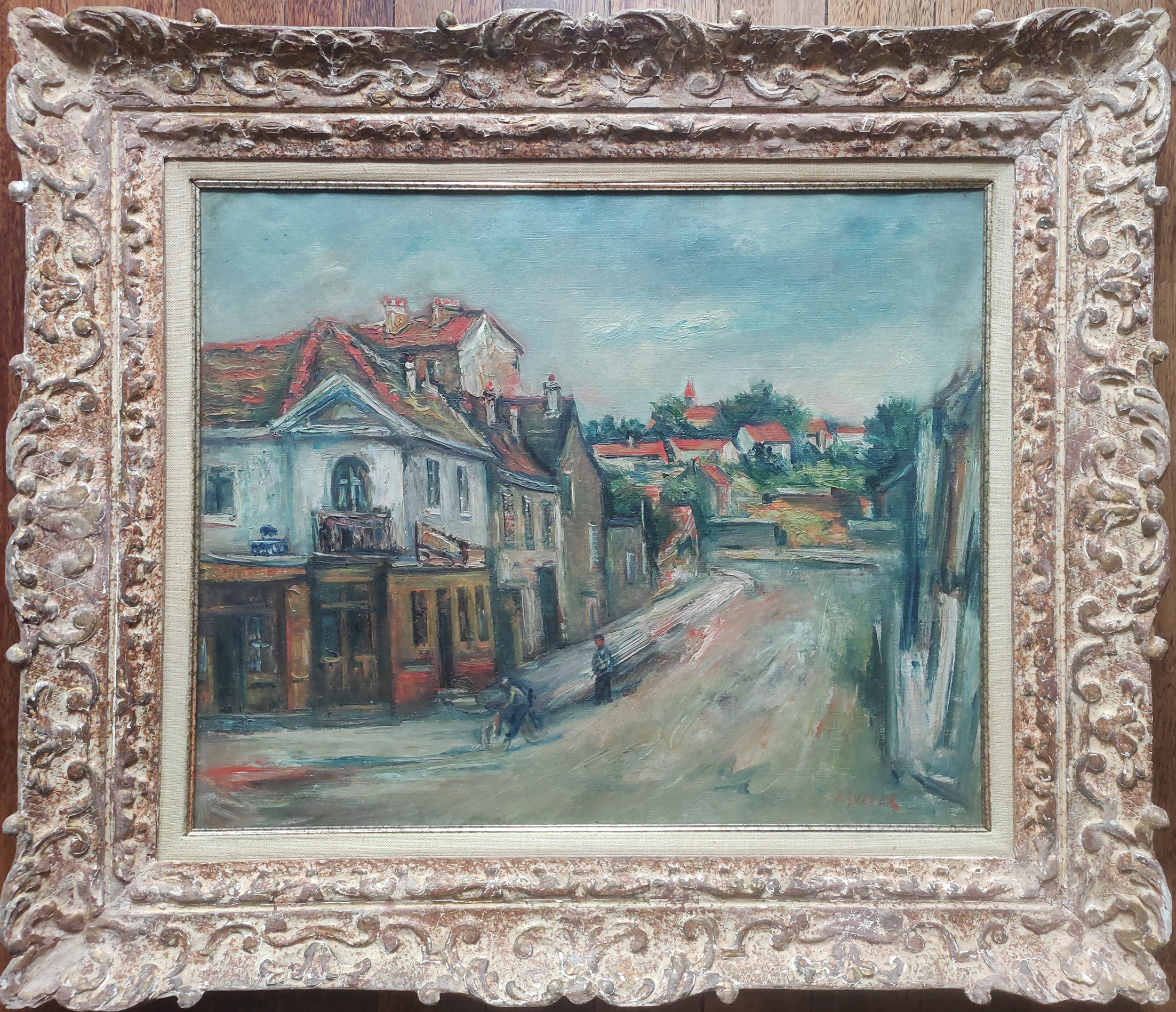
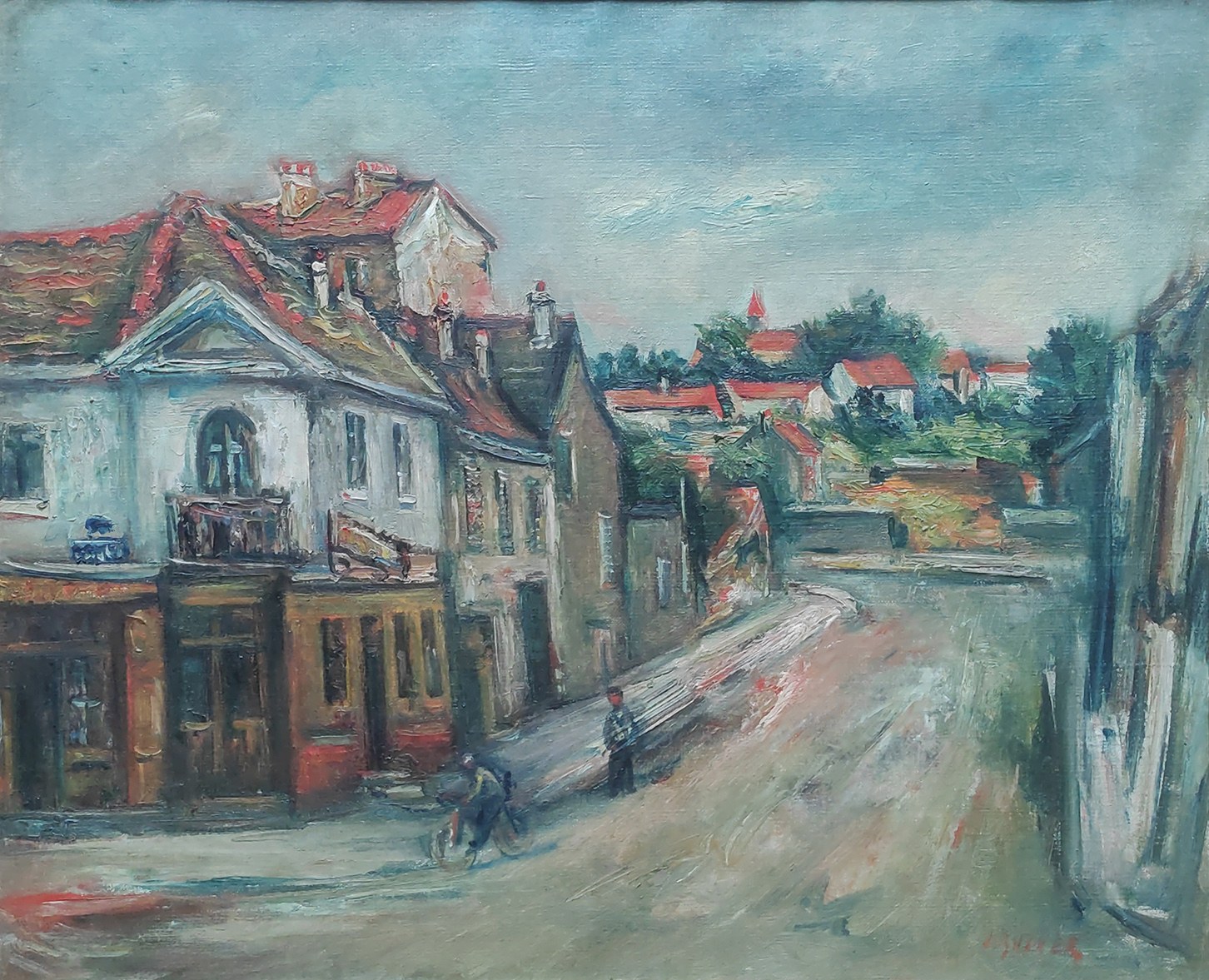
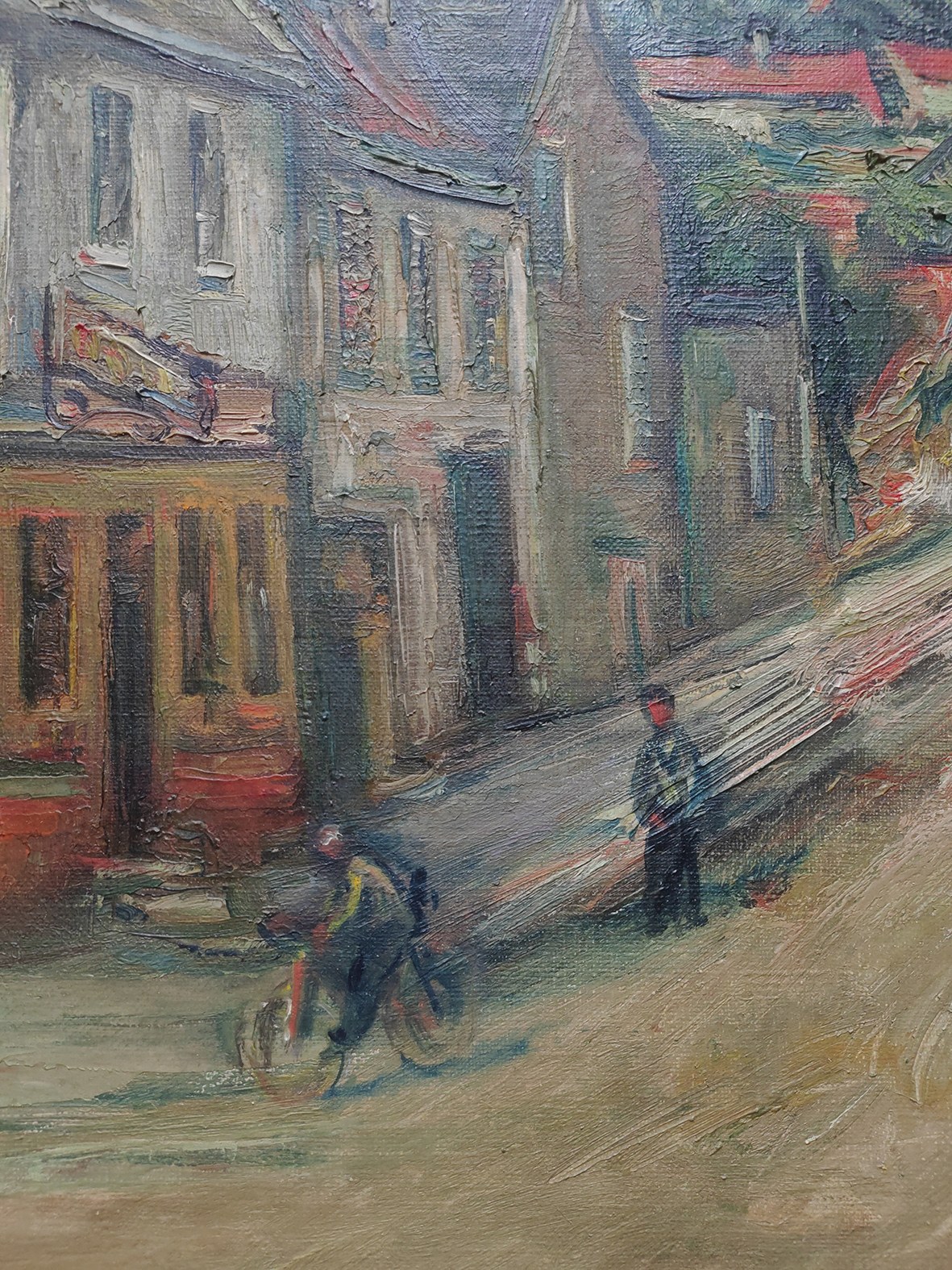
Title: Street Scene
Medium: oil on canvas
Dimensions: 65 × 54 cm, 88 × 77 cm (with frame)
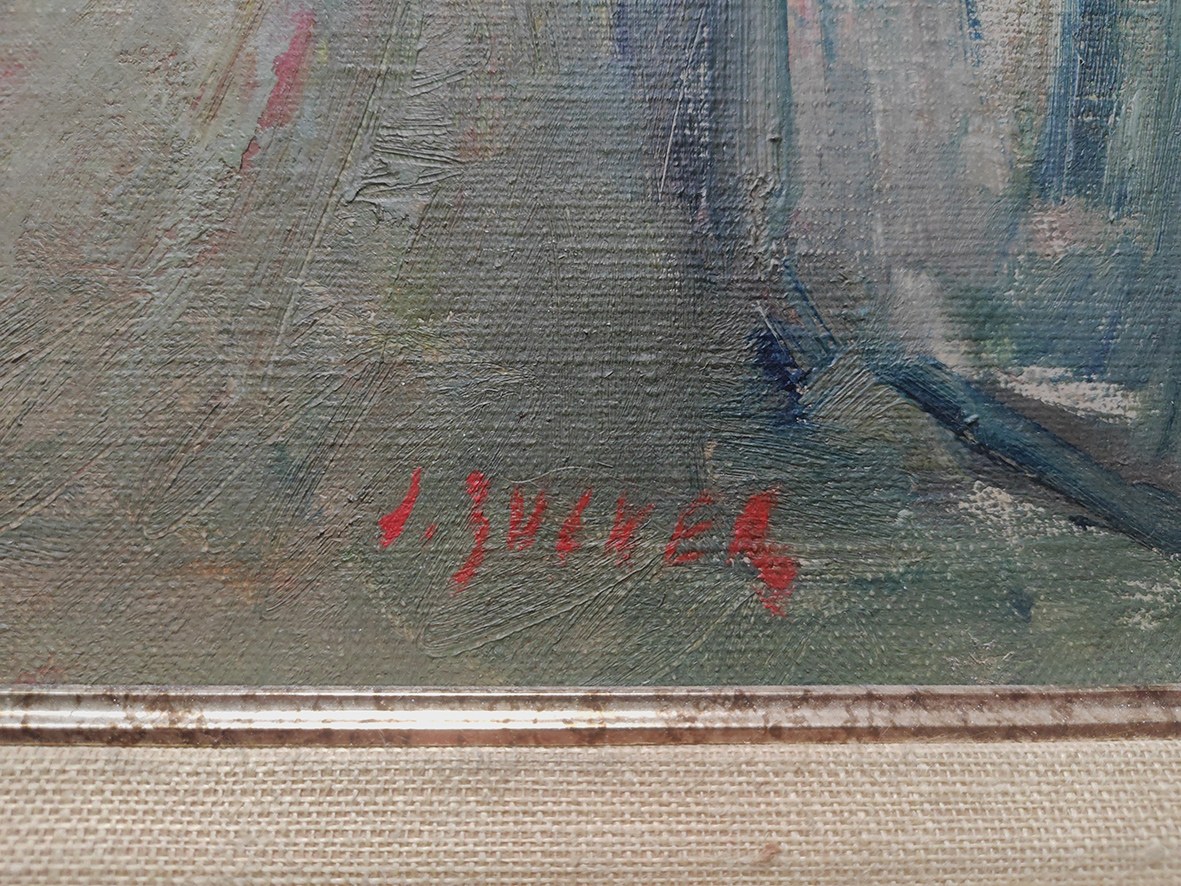
Signature: signed in red, lower right: J. Zucker
Condition: very good, canvas stretched on the original stretcher,
framed in a stylish frame (minor losses)
Jakub Zucker, born in Radom, Poland, in 1900 and also known as Jacques Zucker, was an outstanding painter, illustrator, and writer.
At the age of 13, Zucker fled to Palestine and, after 1913, attended the Bezalel Academy of Arts and Design there. In 1925, he moved to Paris, where he studied at the Académie Julian and the Académie Colarossi. Starting in 1927, he exhibited his works at the Salon d’Automne and the Salon des Tuileries. After World War II, he moved to New York, where he continued his artistic career, creating genre scenes related to Jewish folklore, landscapes, portraits, and still lifes.
During World War I, Zucker joined the British Jewish Brigade, fighting for the liberation of Palestine. After the war, in 1922, he emigrated to the United States, where he continued his artistic career, gaining recognition for his landscapes, portraits, and figurative compositions, which often drew on Jewish motifs.
Zucker was celebrated for his Expressionist style, inspired by both German and Austrian Expressionists—such as Oskar Kokoschka and Ludwig Kirchner—as well as the landscapes of Chaim Soutine and French painters like Vuillard and Bonnard. His works were exhibited in major galleries and museums in the United States and Europe, and his paintings are held in the collections of many prestigious institutions, including the Museum of Modern Art in New York and the Israel Museum in Jerusalem.
Zucker’s artistic credo is best expressed in his own words: “I do not paint for money, nor out of a sense of duty, nor to achieve success and fame. I paint for the glory of God, in gratitude for all the blessings He has bestowed upon me. I paint for myself, because art is the surest path to freedom, an escape from life’s problems.”
Zucker died in New York in 1981, leaving behind a rich artistic legacy that continues to inspire subsequent generations.
Today, Zucker’s paintings are found in private and museum collections around the world, and his work is gaining in market value.