


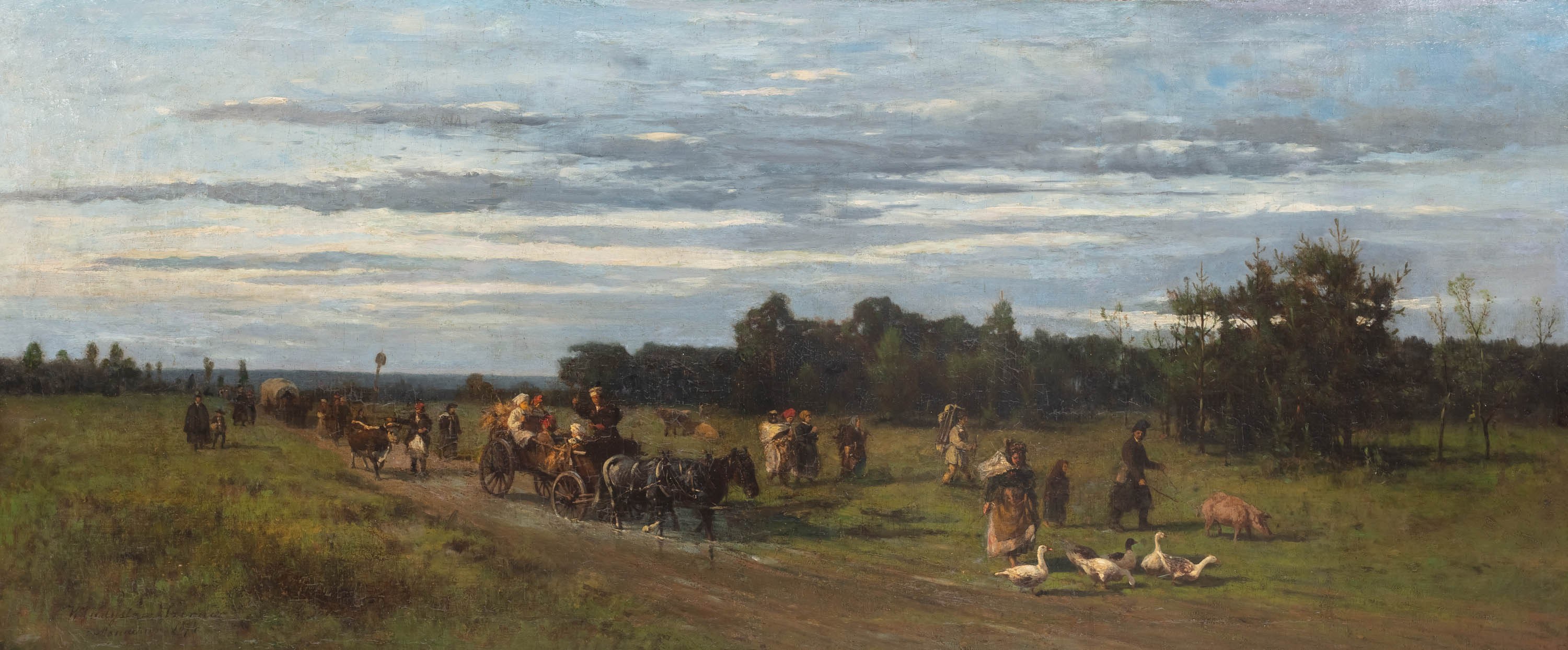
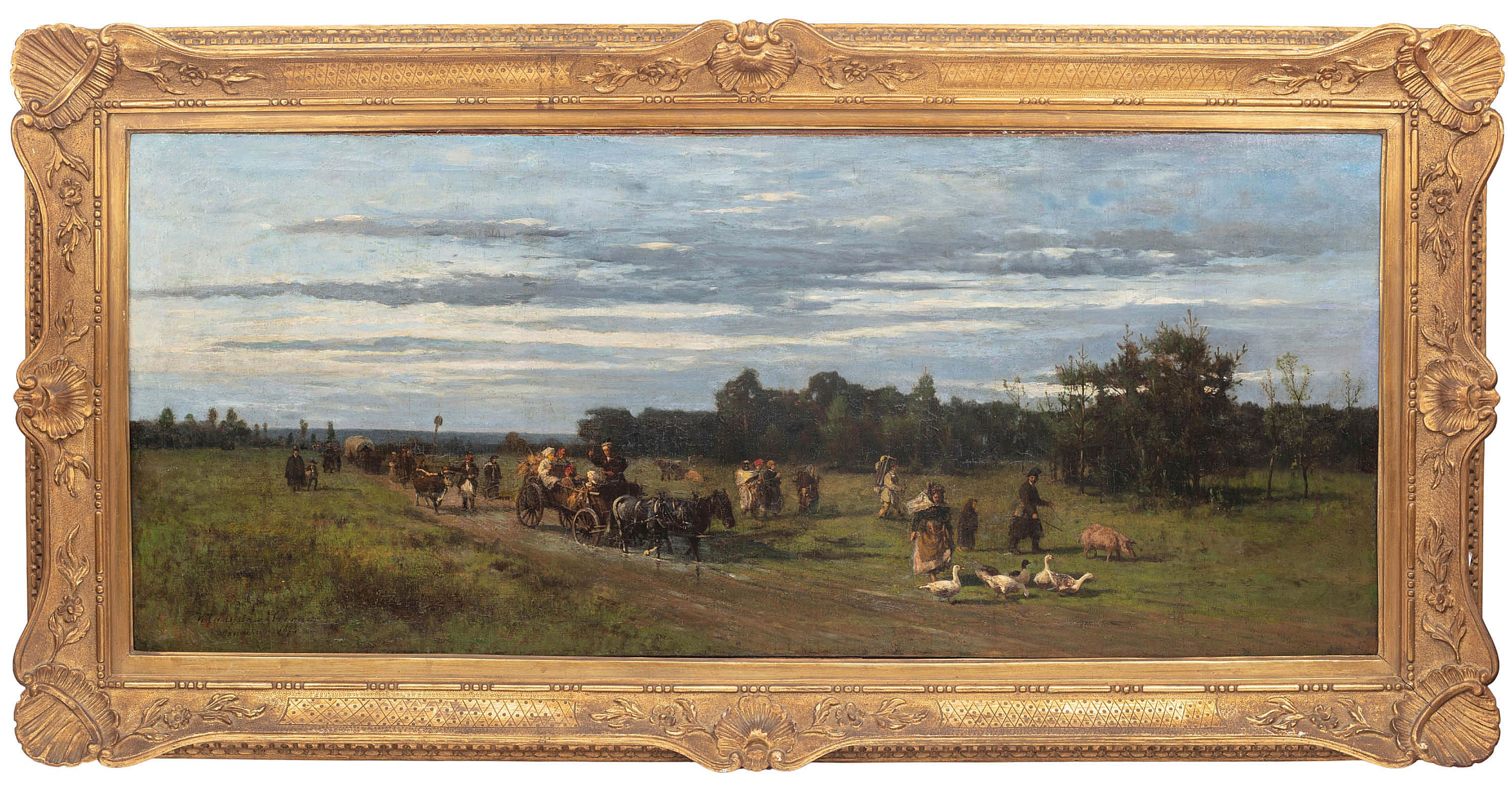
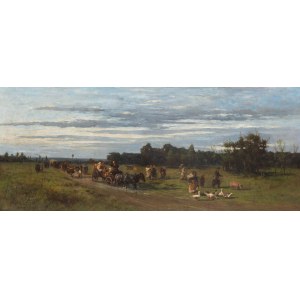
oil on canvas, 55.5 × 132 cm
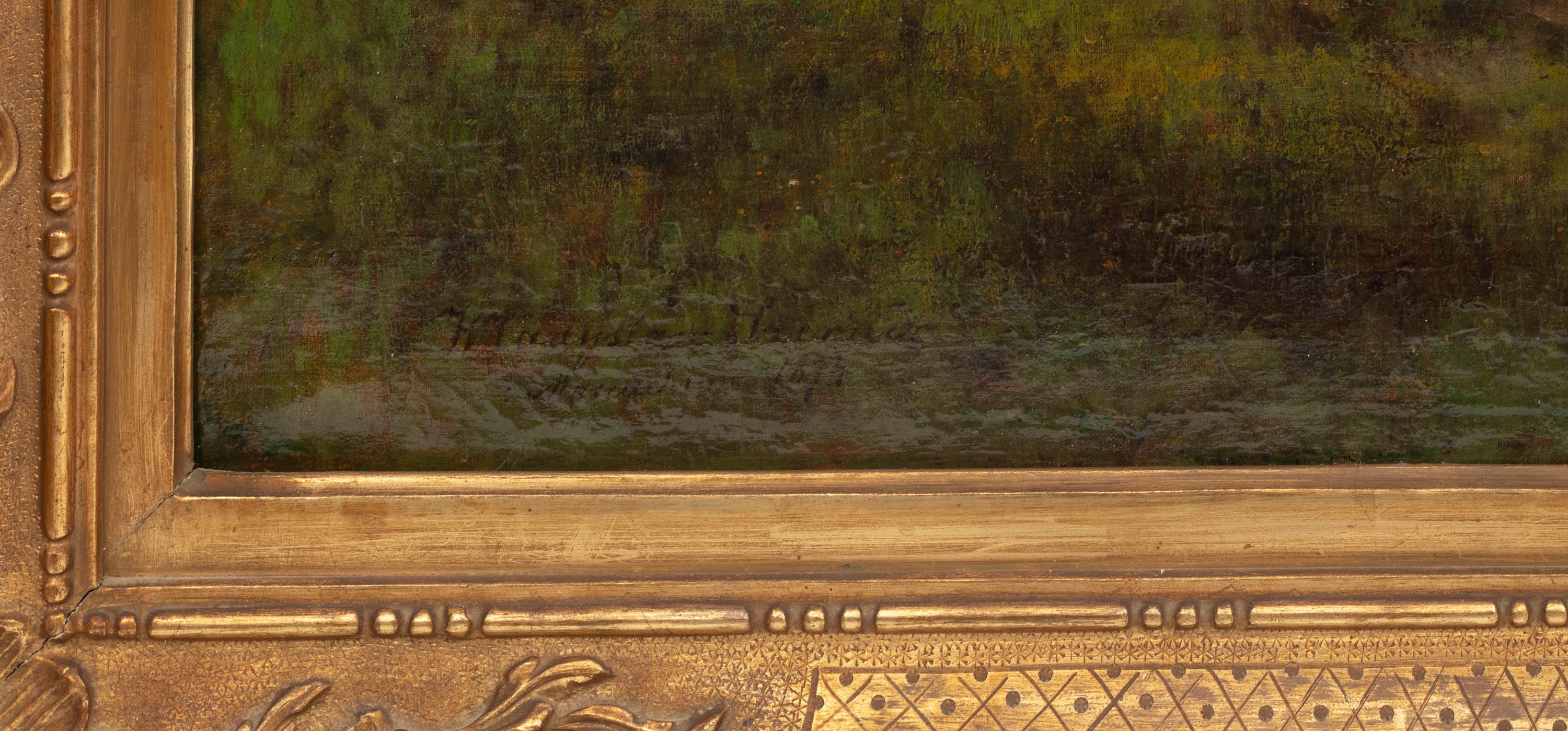
signed and dated lower left: “Władysław Szerner/ Munich 1874”
“In Brandt’s studio, we also had the unexpected pleasure of becoming acquainted with the works of Mr. Władysław Szerner. These are genre scenes, full of truth and charm; our market towns, taverns, and rest stops, happily captured from life, which would gracefully adorn any salon or collection.”
J. I. Kraszewski, “Letters. Munich in October 1876,” in *Kłosy* 1876, no. 591, p. 275.
“Landscape was the dominant theme in the work of Polish painters in Munich. Hunting, courtship, scenes of the uprising, or a group of peasants heading to the market were depicted against the backdrop of the Polish landscape. The canvases depicted authentic Mazovian or Kraków-area floodplains, sandy paths through fields and forests, and villages lost in the boundless expanse of flat land. A cottage, a horseman, or a traveler pausing by the roadside became an integral part of the landscape. They were neither “above” nor “within” the landscape. They were a splash of color, inextricably linked to its other elements. They were symbols that, together with a tree, the line of a field, or a forest, created the mood of a landscape experienced and rendered by the artist with the full depth of his sensitivity. The atmosphere of Munich, the strength and value of its artistic milieu, and the kindness and interest in art felt at every turn by the Poles unleashed deep reserves of creative activity within them. At another time and in another place, this might not have been possible for them. It is therefore worth remembering that “the Polish Munich artists”—as Halina Stępień noted—“are, after all, the majority of our most outstanding 19th-century artists.”
“Polish Painters in Munich” (“And Why Did We Go There?”). Compiled by: Eliza Ptaszyńska, Zbigniew Fałtynowicz, Regional Museum in Suwałki, Suwałki 2005, p. 45.)










Nylig sett
Logg deg inn for å se en liste over objekter
Favorittobjekter
Logg deg inn for å se en liste over objekter