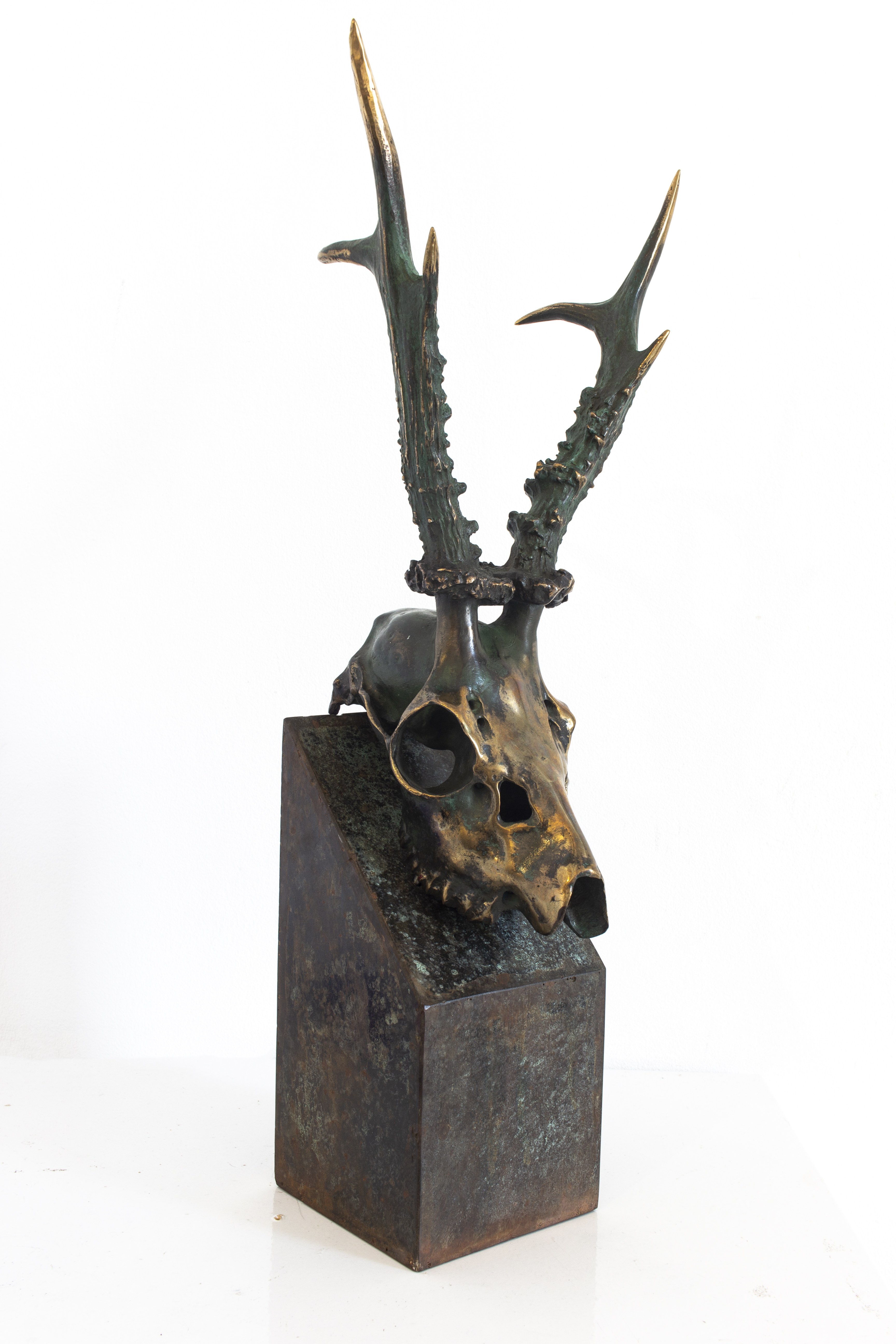
patinated bronze, 20 x 16 x 45 cm, base: corten sheet metal, signed and edition number on base
The sculpture is inspired by the form of the skull, its presence and importance in tradition, culture and art. Skull and bones have always accompanied man, had a decorative function, their aesthetic form was appreciated. They also served as a trophy, were a cult element, important for many religious rites. Their beauty and perfection aroused and still arouses anxiety - despite their safe and soothing shapes by people they are naturally associated with danger, tragedy and death.
In many ancient religions, it was the head and brain, protected by the skull, that was considered the abode of the soul, a fact reflected in modern research by neuroscientists. In art and painting for centuries, the skull has been an important symbol of transience, "vanitas," reminding us to celebrate a life that will inevitably be ended. The skull and bones during life are hidden in the human or animal body , which is considered beautiful After death, the body goes through a stage of decomposition, becomes repulsive, and then this beauty of snow-white bone is revealed after the coating of muscle, tissue and skin is completely disposed of.
The sculpture "Capreolus" is an object that has been refined in every detail. The fluid, rounded shape ending in a sharp line conveys the character of the representation, power and strength, further enhanced by the use of noble bronze and patina. This is an object that is harmonious, symmetrical and artful in execution.
Szybalsky, born 1982 in Busko Zdrój, betrayed an interest in sculpture from an early age, working out simple forms in wood.Parallel to his sculptural work, he deepened his technological knowledge, graduating with a degree in Metallurgy from the Faculty of Foundry at the AGH University of Science and Technology in Cracow. Already in his master's thesis, he touched on issues related to the workshop of a sculptor and a foundryman, as well as the basic techniques of artistic casting. As part of his thesis, he created a concept and realized dragon sculptures dedicated to his alma mater. In sculpture, he is interested in naturalistic form, and in his works he uses shapes that nature itself forms and applies them to sculptural compositions made of metal. He is keen to show contemporary art casting from the point of view of an art casting contractor and, at the same time, the creator of his own sculptural works. He pays special attention to the finishing of castings and patination processes.