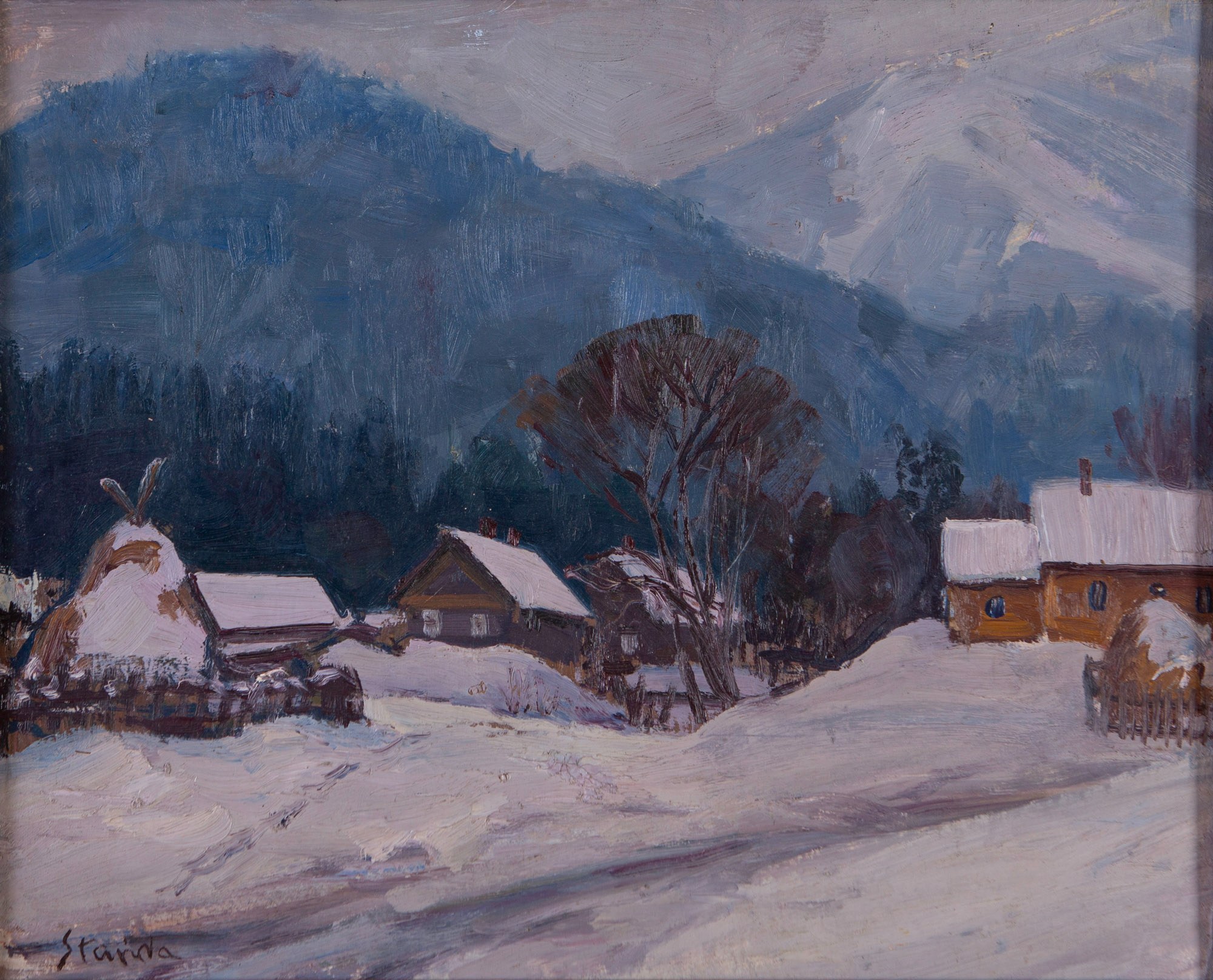
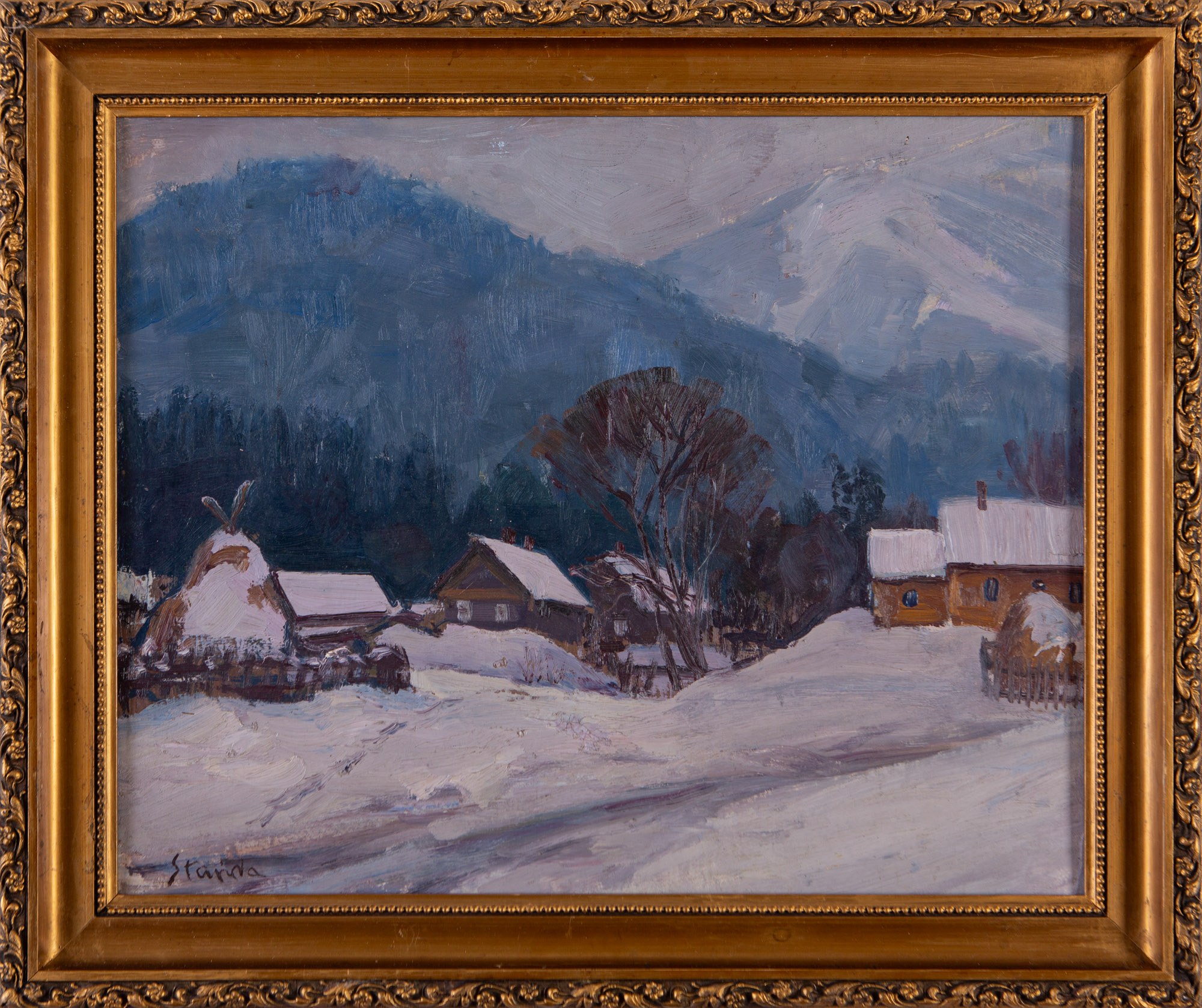
oil, cardboard; 40 x 49 cm
Signed l. d.: Stańda
Provenance: purchase Desa Katowice, private collection Poland
Painter and printmaker associated with Krakow. Studied at the Academy of Fine Arts from
1931 - 1936, receiving his diploma a year later. He created easel paintings, prints, as well as
also polychromes, mosaics and stained glass designs. Since the 1950s, he made ex-librises in the
woodcut technique, of which he created more than two hundred. He presented them at exhibitions
at home and abroad, including in Paris (1972), Krakow, Wroclaw and Stary Sacz, as well as at international biennials of ex-libris.
also during the international exlibris biennials in Malbork and the congresses of
of exlibris in Budapest and Lisbon. His work is distinguished by the precision of drawing,
clarity of form and attention to detail, which is particularly evident in his ex-librises.
In painting, he took up landscape, architectural and portrait subjects,
giving them a synthetic and decorative character. The artist's output, combining the tradition of
graphic tradition with a modern approach to form, is an important testimony to Polish graphic art
second half of the 20th century. Stańda's works can be found in museum collections in
Poland, including in the National Museum in Warsaw, the Jagiellonian Library and the
Museum in Bochnia.
Painter and graphic artist associated with Krakow.
He studied at the Academy of Fine Arts between 1931 and 1936, receiving his diploma the following year. His practice encompassed easel painting, printmaking, as well as polychromes, mosaics, and stained-glass designs. From the 1950s onwards he produced over two hundred ex libris woodcuts, which he presented at exhibitions in Poland and abroad, including in Paris (1972), Kraków, Wrocław, and Stary Sącz, as well as at international ex libris biennials in Malbork and congresses in Budapest and Lisbon.
His works are distinguished by precision of line, clarity of form, and meticulous attention to detail-qualities particularly evident in his ex libris prints. In painting, he explored landscapes, architectural views, and portraits, imbuing them with a synthetic and decorative character. His oeuvre, merging graphic traditions with a modern sense of form, constitutes an important testimony to Polish printmaking in the second half of the 20th century.
Stańda's works are held in Polish museum collections, including the National Museum in Warsaw, the Jagiellonian Library, and the Museum in Bochnia.