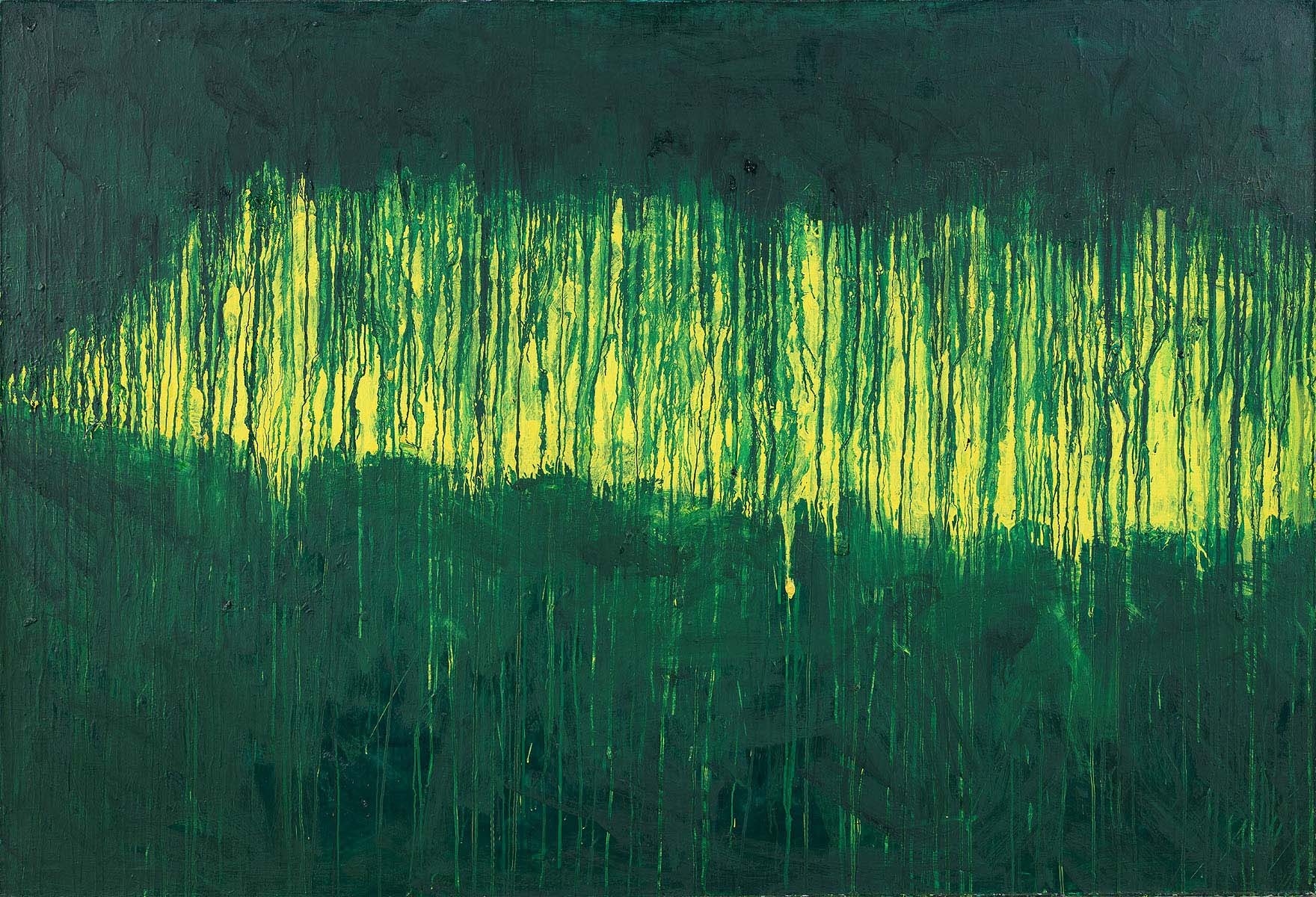
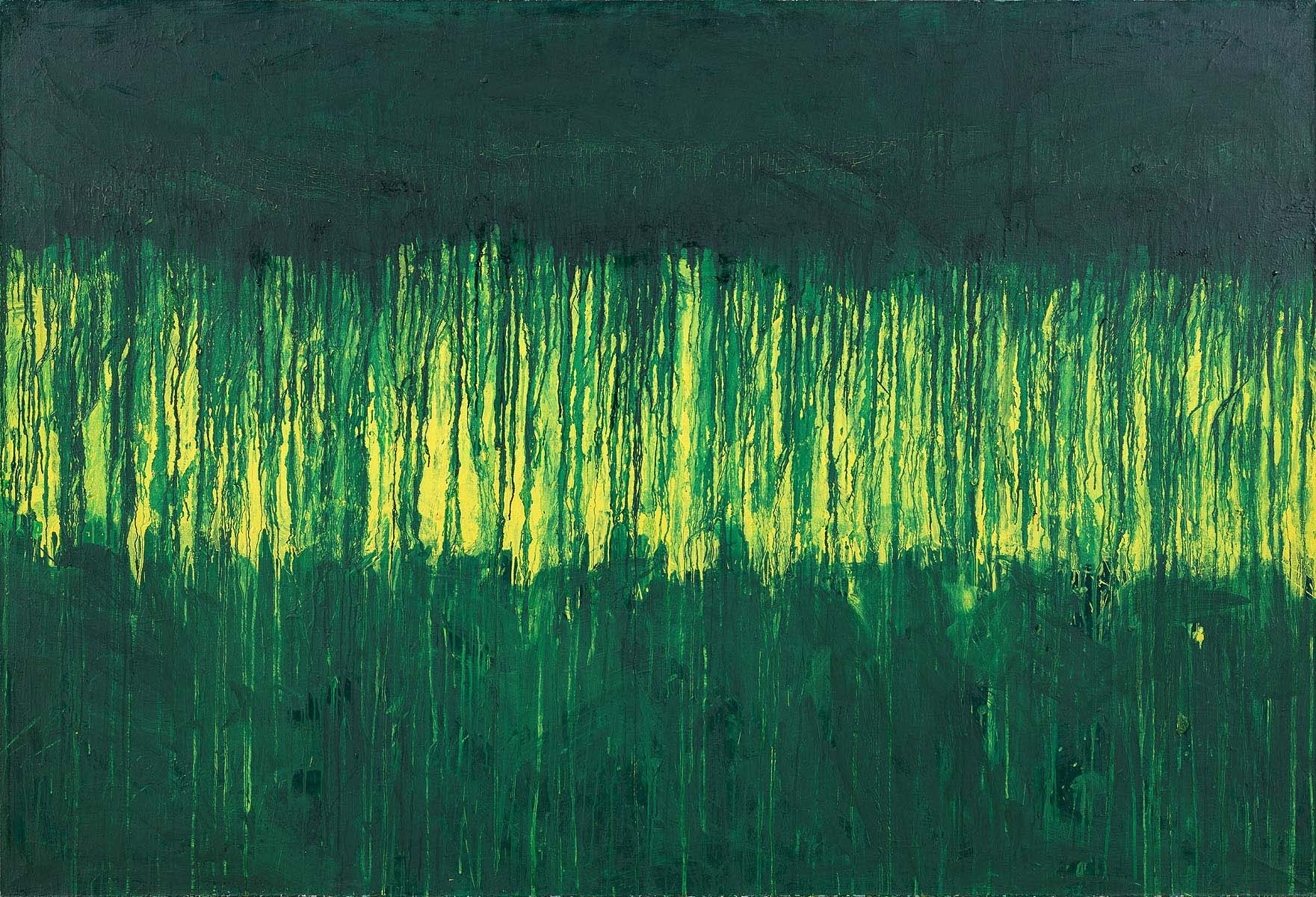
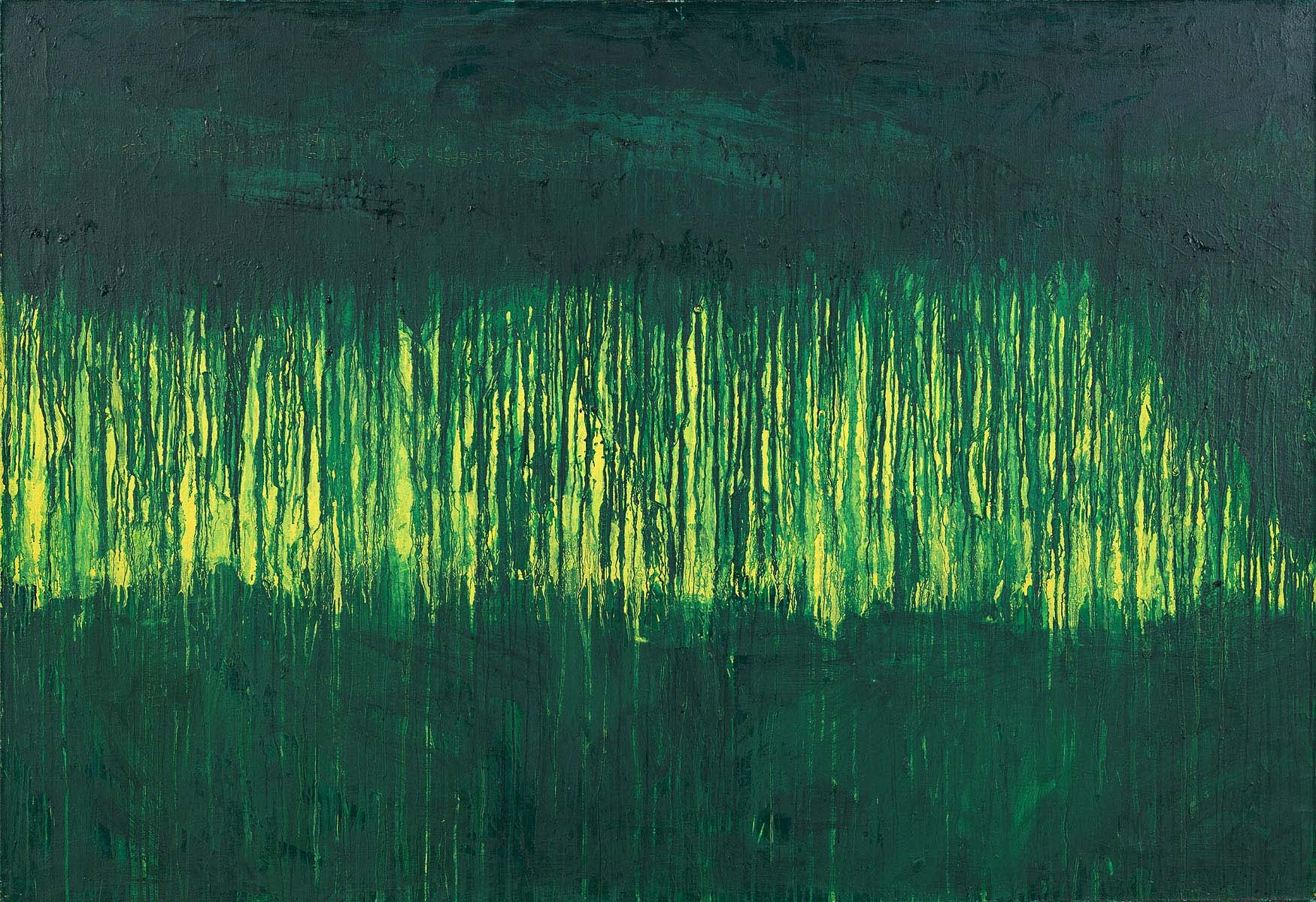
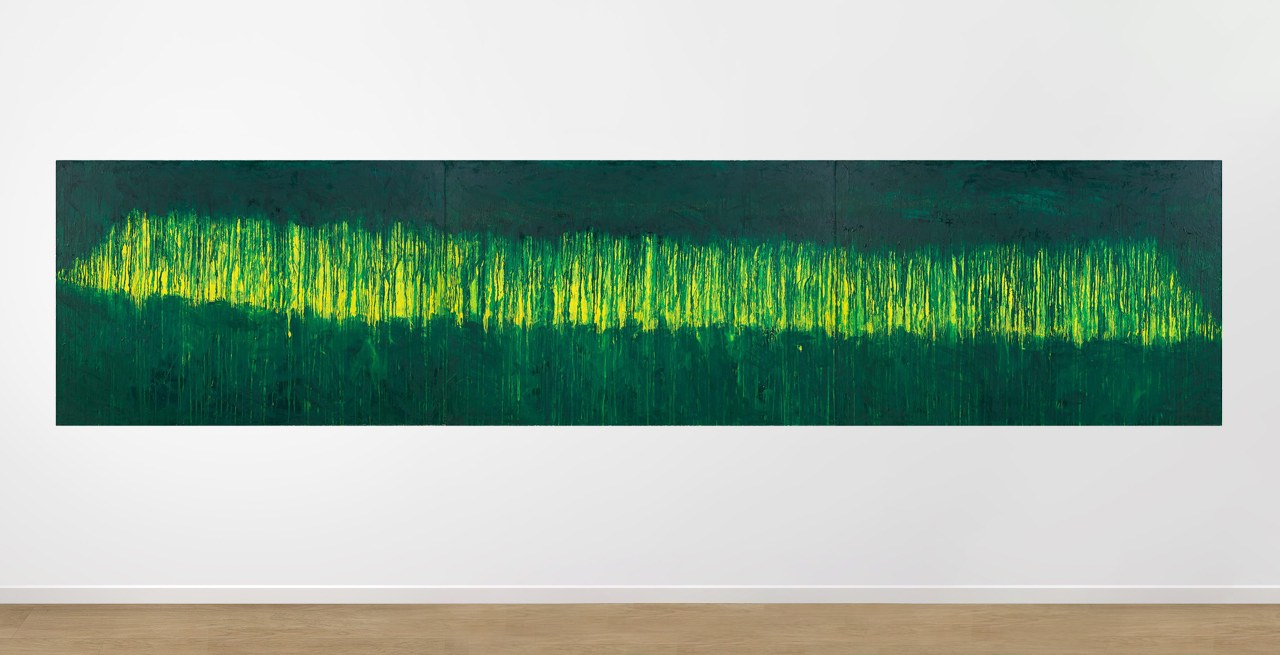
Dimensions: 130 x 570 cm
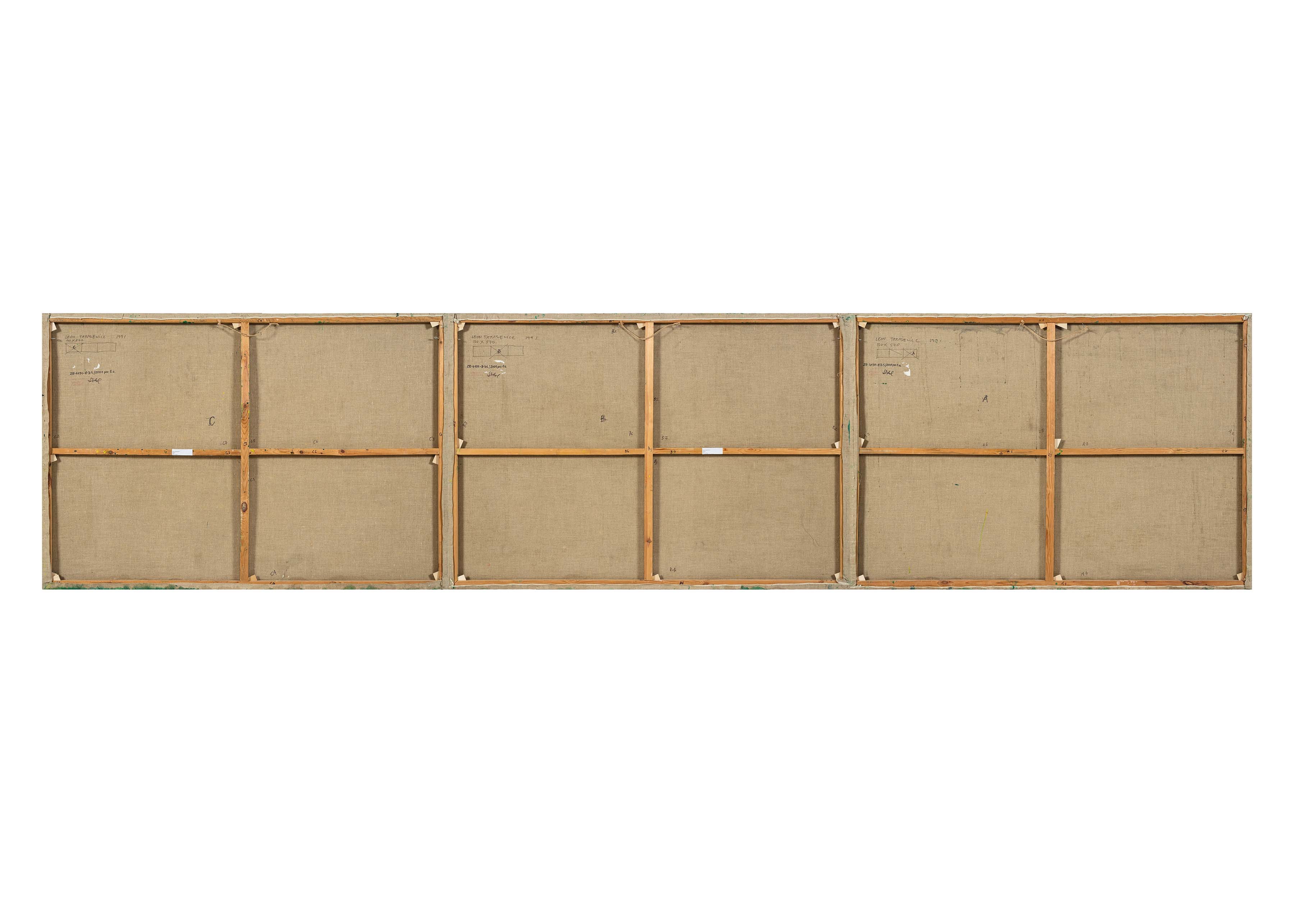
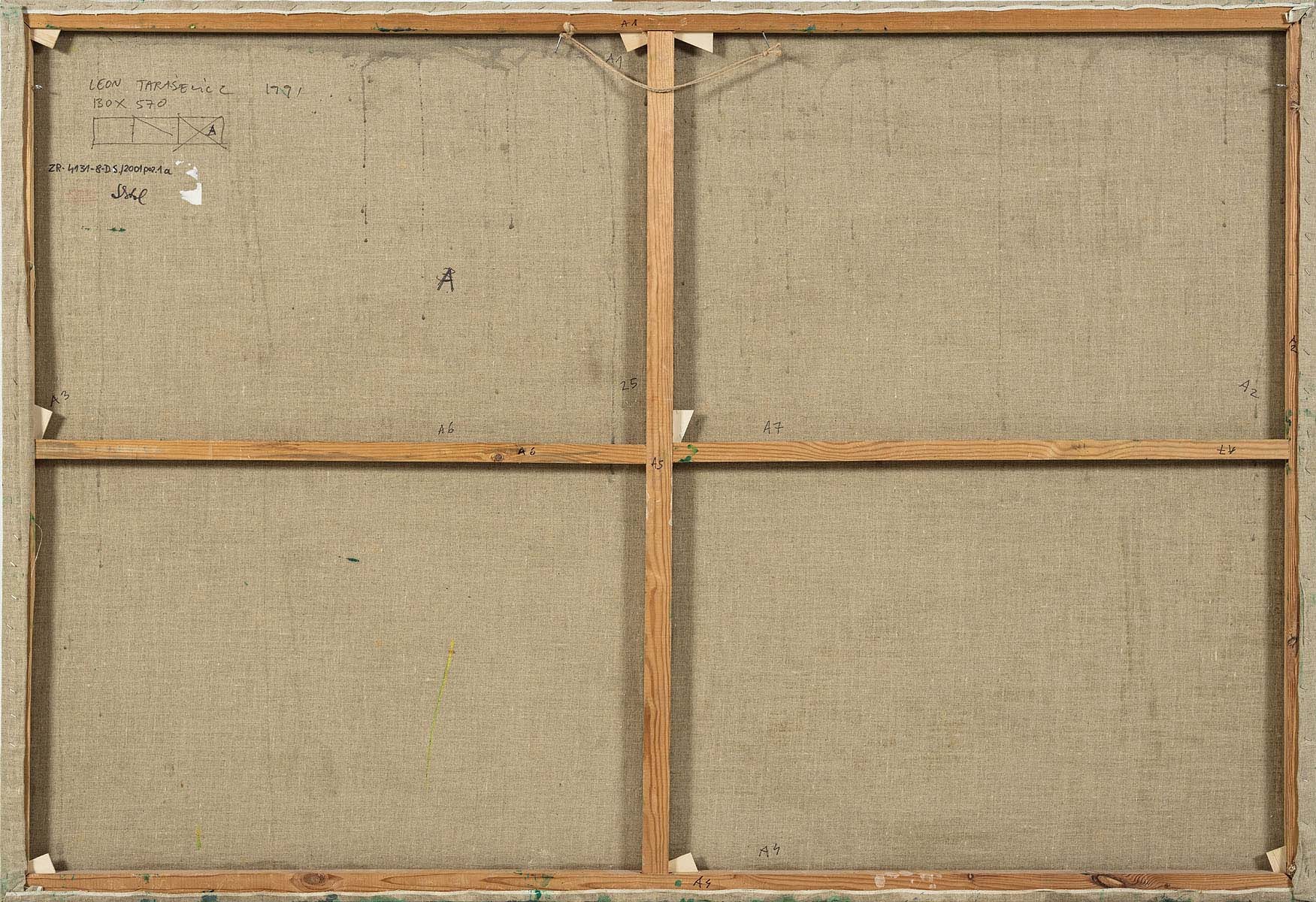
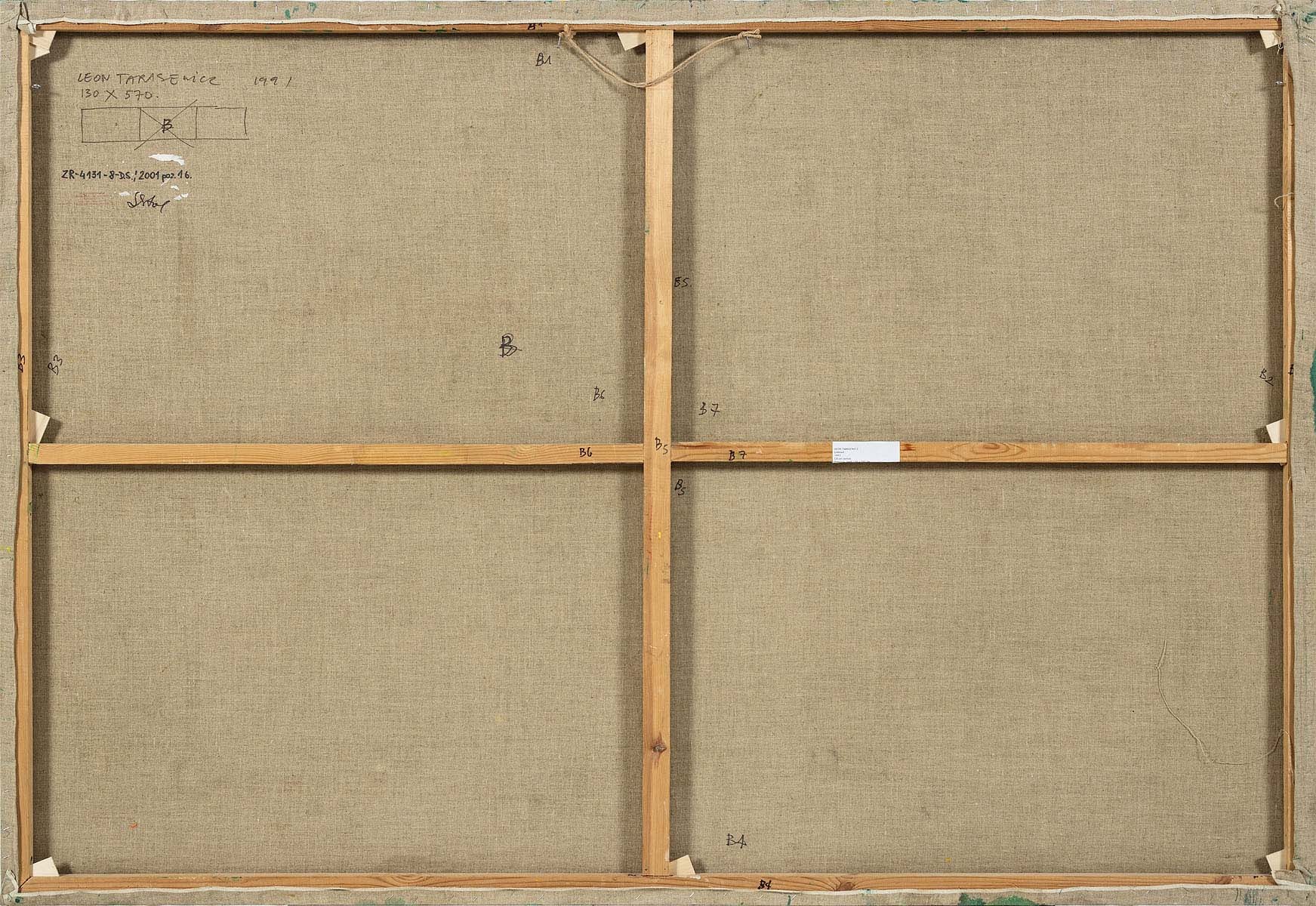
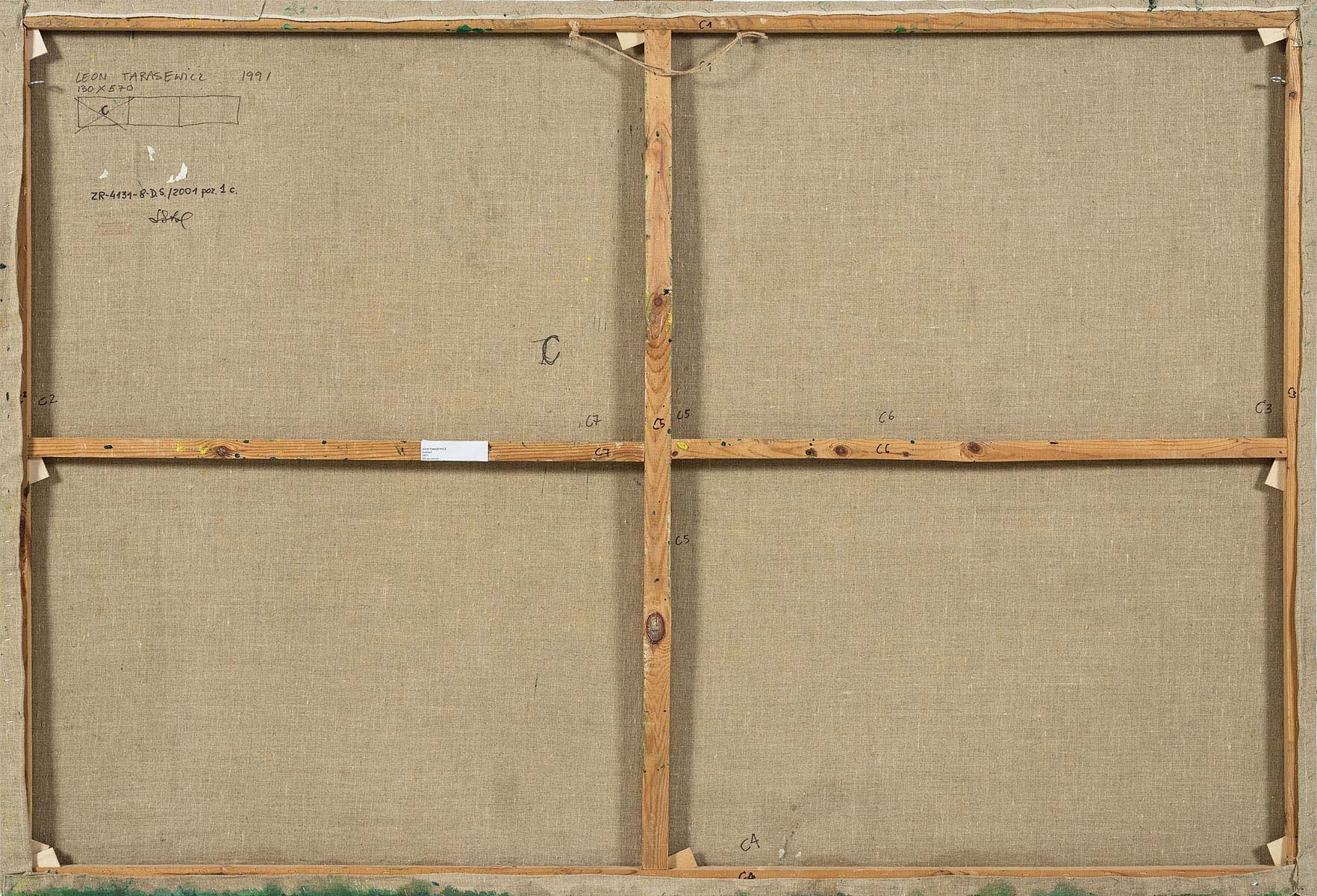
Signature: signed on the back: LEON TARASEWICZ 1991 and installation instructions, on the stretcher a sticker from Galerie Nordenhake
Provenance
Warsaw, private collection
Exhibited
Malmö, Malmö Konsthall, Leon Tarasewicz, 19.09 - 25.10.1992.
Reproduced
Leon Tarasewicz [exhibition catalog], published by Malmö Konsthall, Malmö 1992, p. 49.
Leon Tarasewicz's paintings are born out of his observation of the nature around him, which he thoroughly analyzes and then transfers to his canvases. These representations, however, have nothing of realism in them. Forests, fields or birds captured in flight - these are harmonious compositions of repeated motifs close to the language of abstraction. The artist aims to search for purely painterly values: color, texture, light. "My dream is for the painting to take possession of the viewer in such a way that the surroundings would cease to exist and the image, unconstrained by the frame, could freely expand, pull inward," Tarasewicz explains his concept (quoted in Slizinska M. [ed.], Leon Tarasewicz. Painting. Foksal Gallery 1984-2018, Foksal Gallery, Warsaw 2018, p. 35).
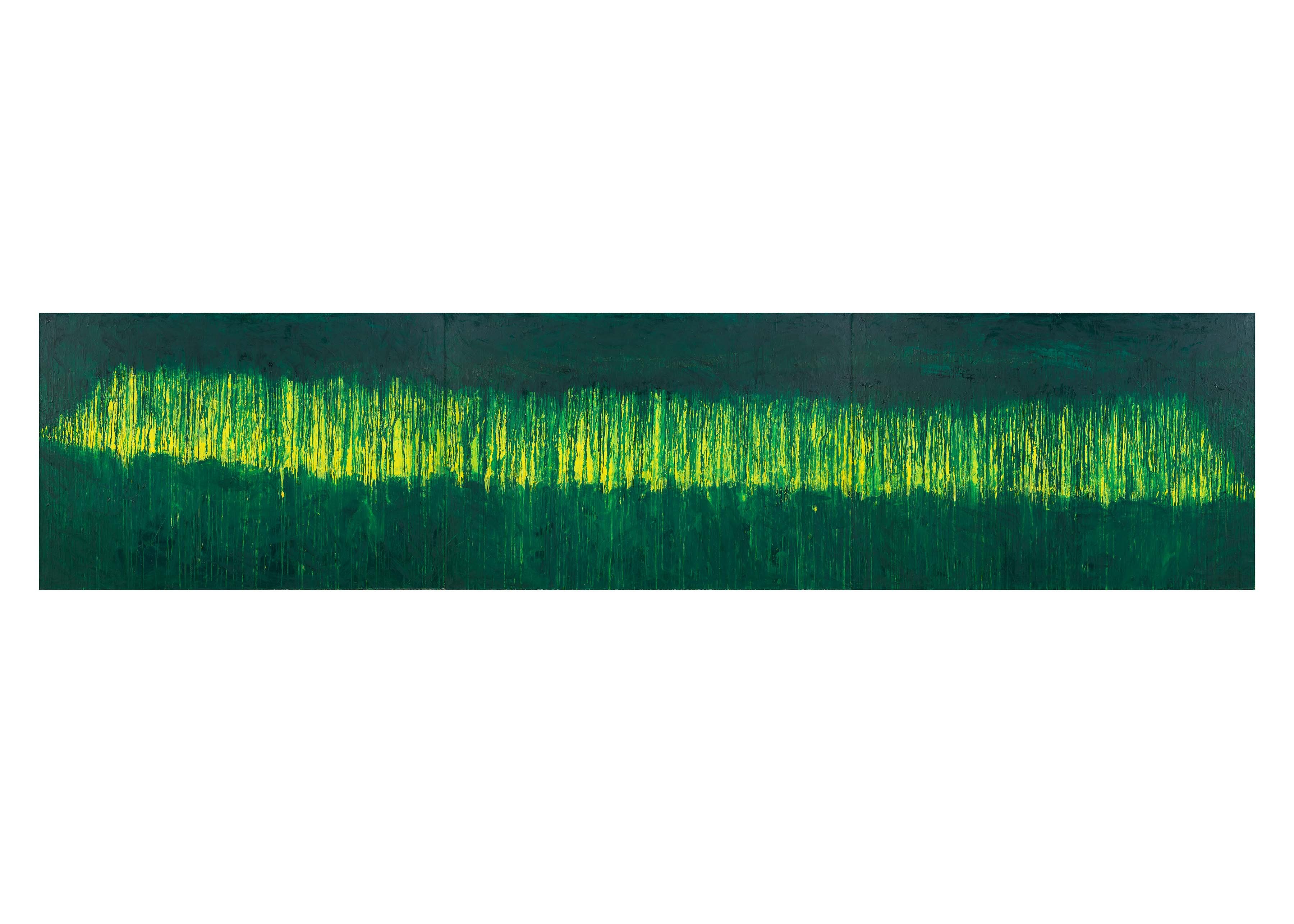
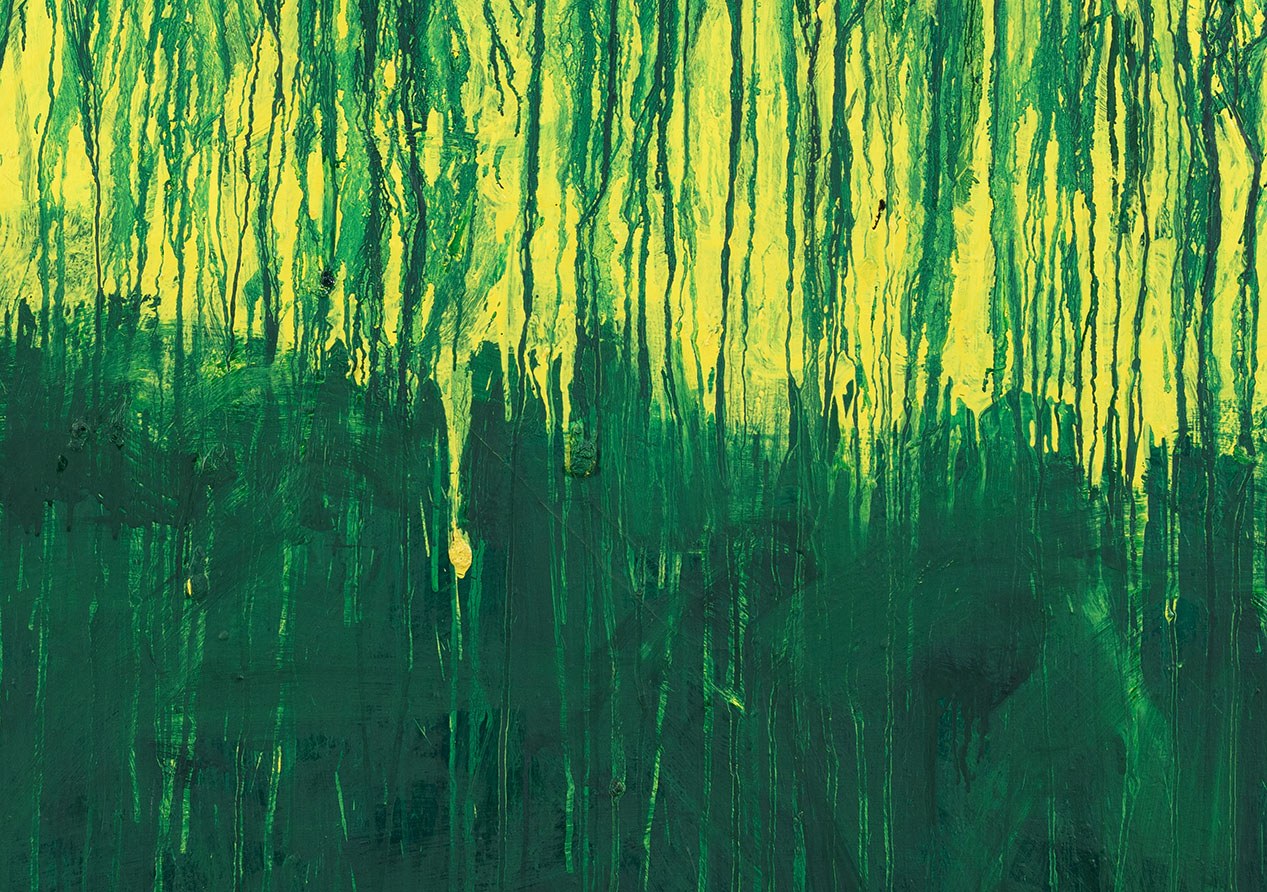
In 1991, the painter showed a series of new "yellow" paintings for the first time. These canvases were a commemoration of "blooming fields, or light itself, the shining through of light, the reflection of the sun in blooming vegetation, the illuminated horizon (...)" (Jedlinski J., Opposite Landscapes, December 1990). The monumental compositions stretched along the walls, in a special way inviting the viewer to experience color and space. The presented triptych from 1991 belongs to the aforementioned "yellow" series and alludes to the blossoming nature and rays of the sun. Monumental, stretching like abysmal fields of rapeseed, incredibly absorbs the space. A strip of strong yellow pierces through the luscious green, emanating brightness of color and inner positive energy.
Tarasewicz brings into discussion what abstract art is. Does it perhaps represent such a profound synthesis of the real world that we stop noticing it and start calling it non-figuration for the sake of order? Can the artist himself invent something he has never seen? If we wake up one morning and see a beautiful light coming through the window wanting to immortalize it, would a painting consisting of rays alone be figurative or abstract? Looking at Tarasewicz's art, it is difficult to make a definite judgment. The painter has repeatedly emphasized how inspired he is by nature. He does not give titles to his works, leaving the viewer helpless, without any hint. "Today's sense was gained by titles in the wave of enlightened ideology, which valued more the addition, explanation and understanding than the sensual reception of the artist's vision. With his paintings, Leon Tarasewicz was able to prove the absurdity of not only entangling words, titles, literary subject matter, but also the simple, 'naturalistic' association of shapes and forms existing in nature with those imagined on canvases" (Gorczyca Ł., Leon Tarasewicz, [in:] Tarasewicz [exhibition catalog], Godlewska-Siwerska M. [ed.], Arsenal Gallery, Białystok 1995). Thus, the offered work can be both a blooming field of rapeseed and a purely abstract yellow-green composition, which is meant to encourage reflection on what figuration in art is.