


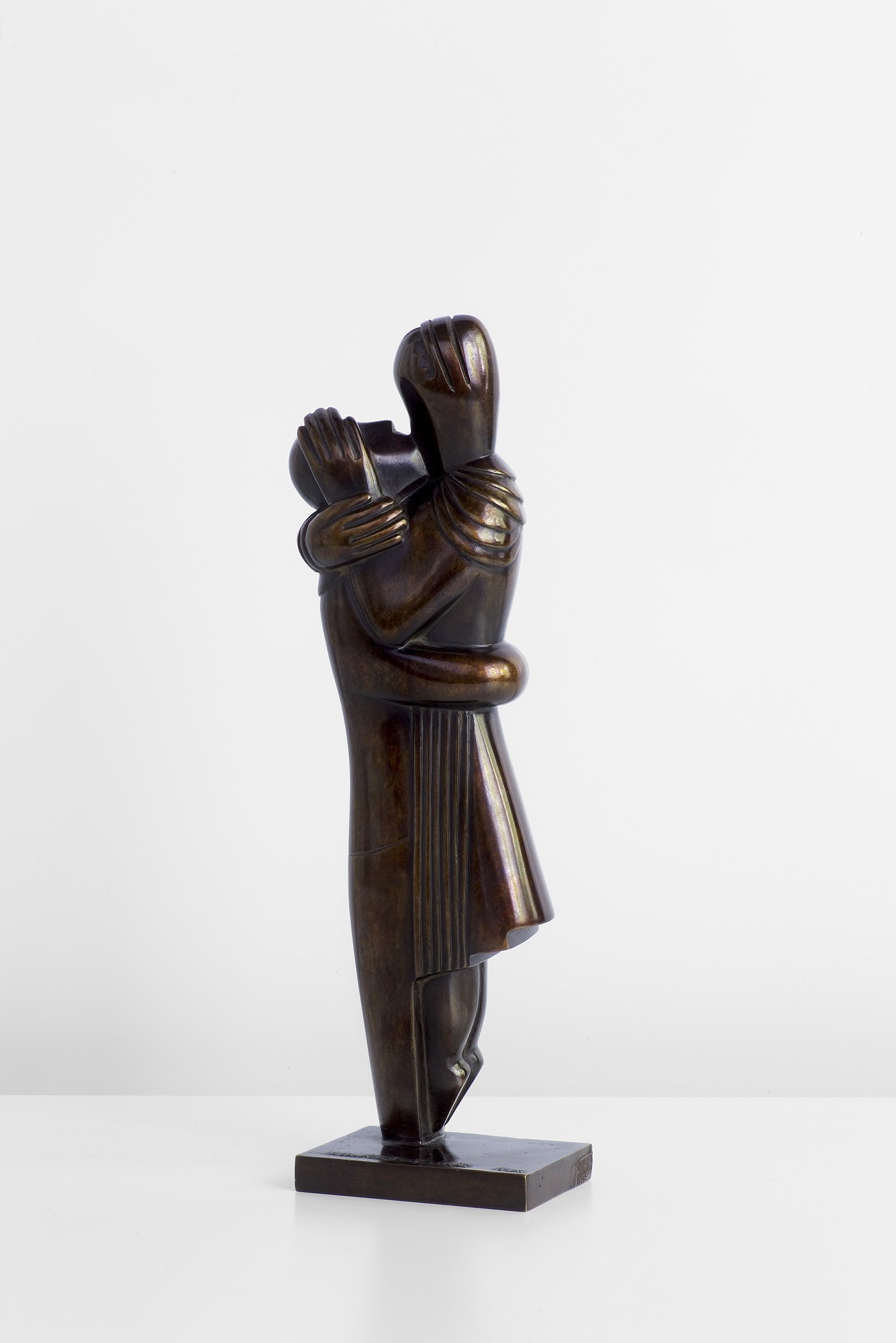
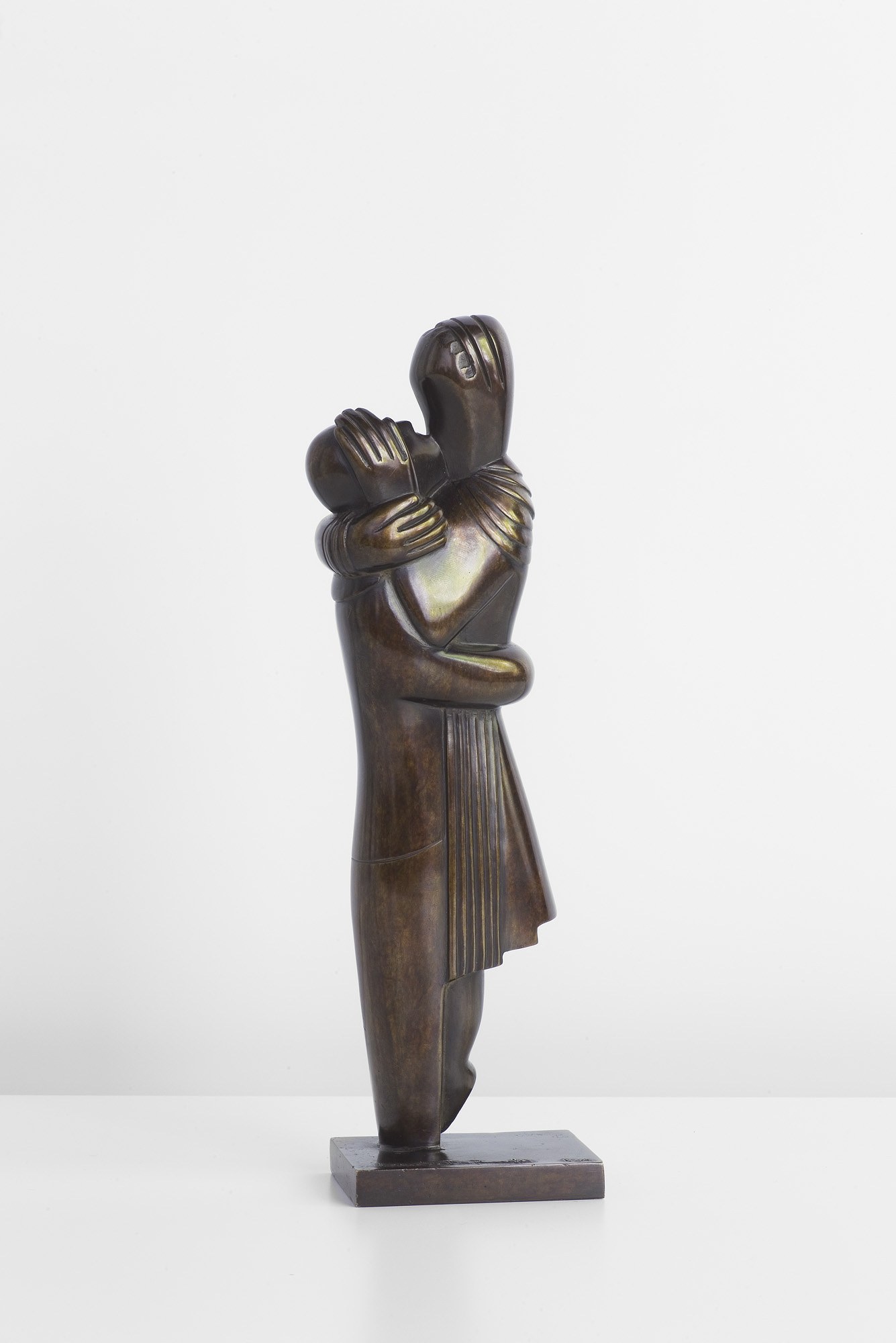
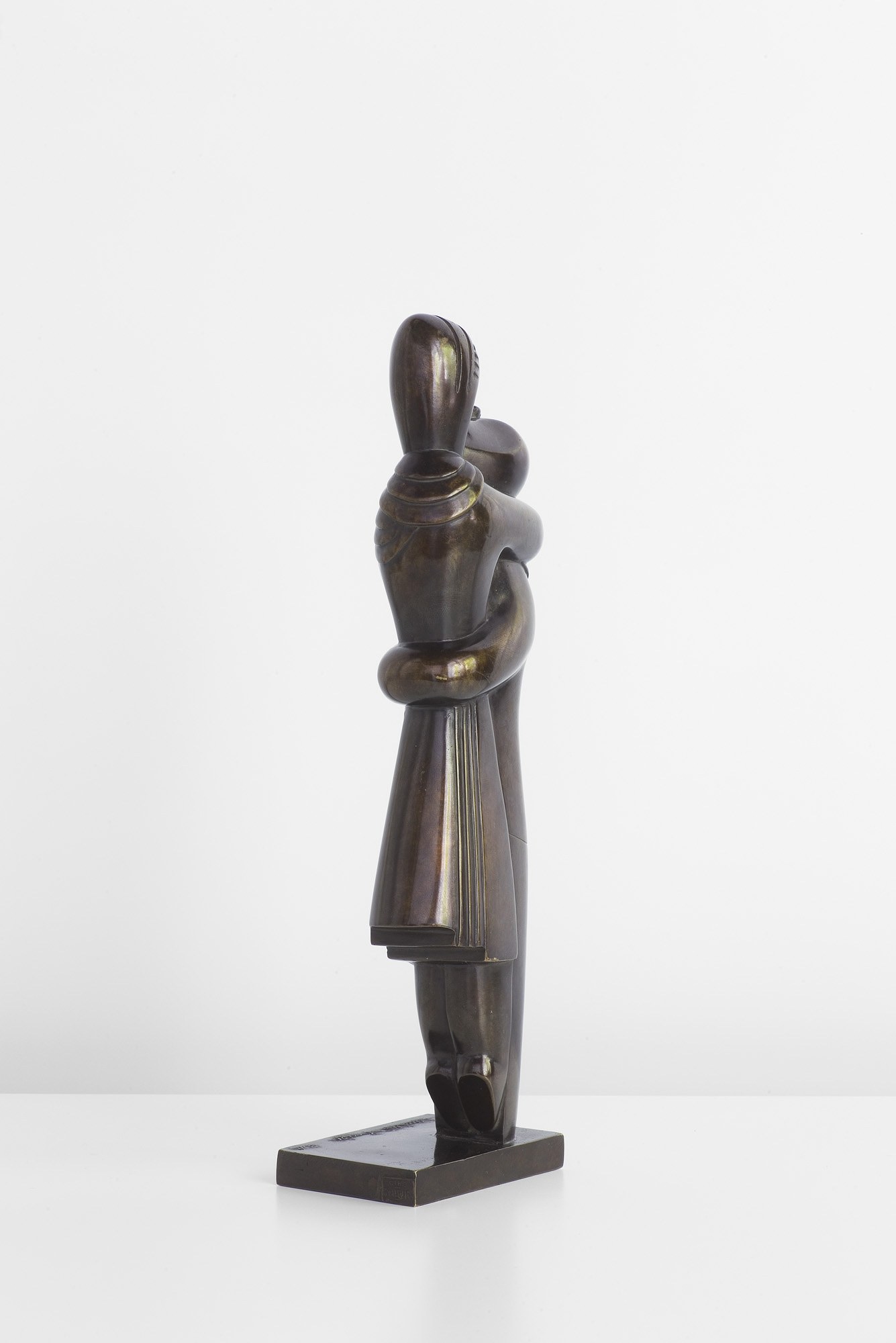
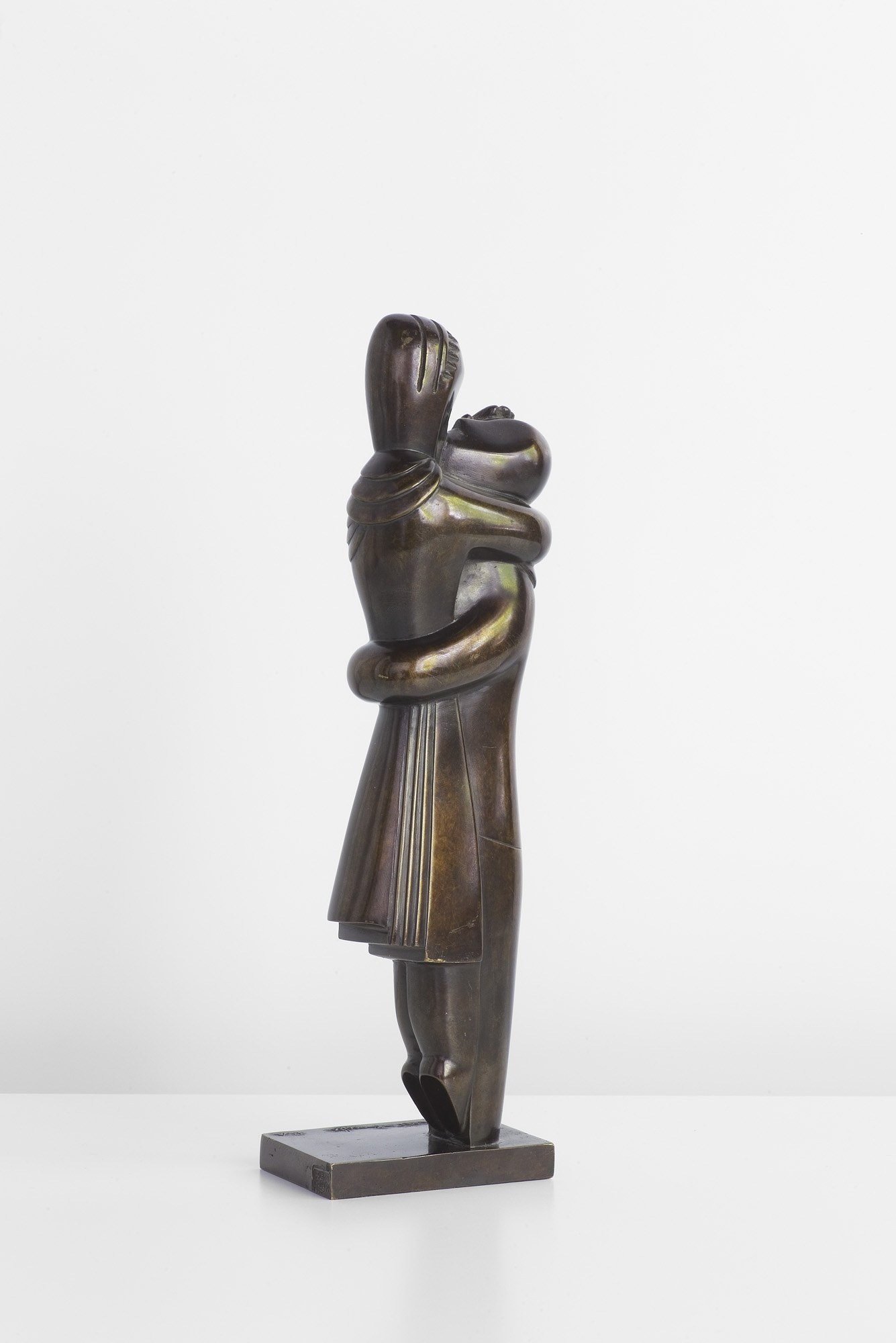
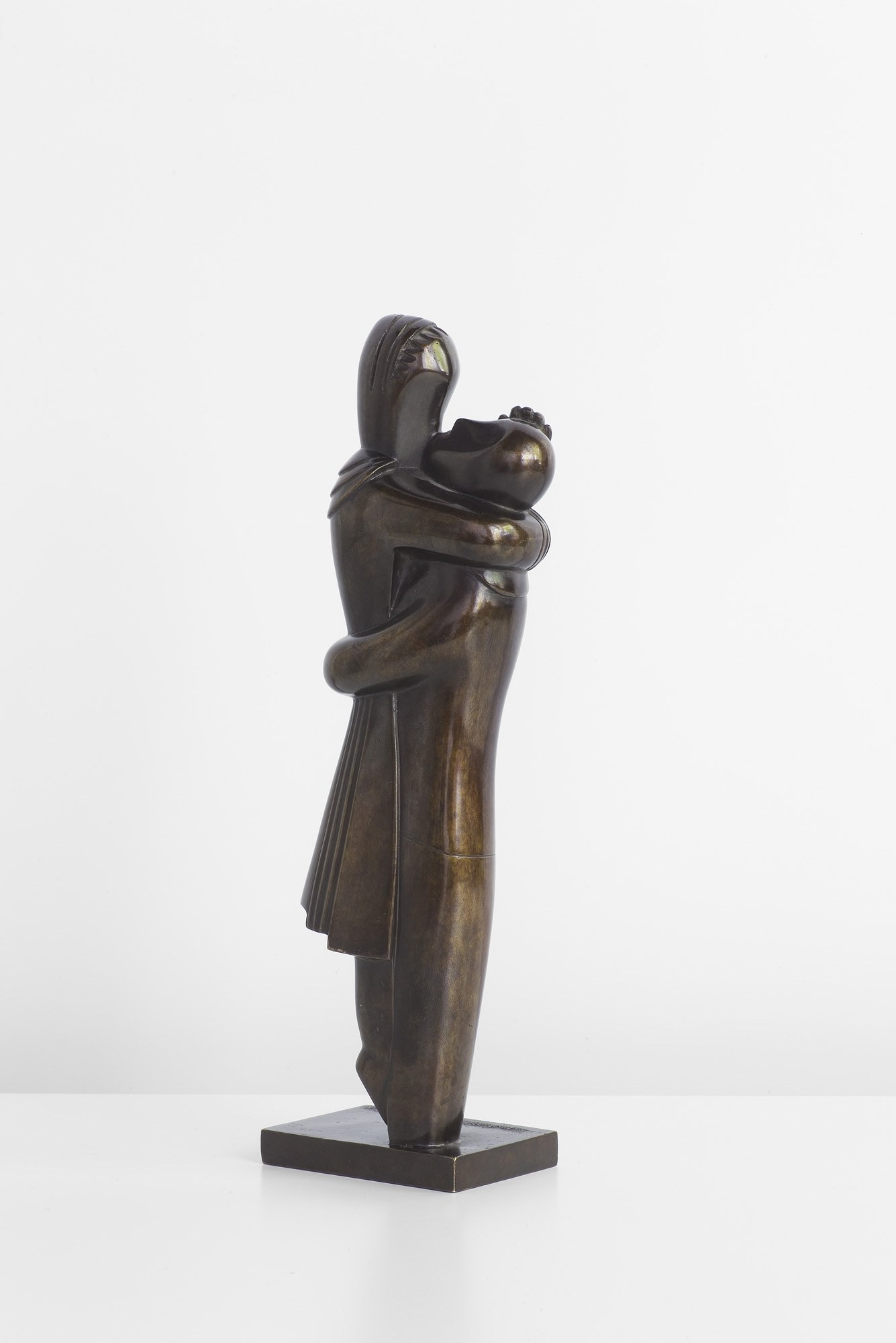
24.0 x 5.0 cm - patinated bronze cast on lost wax, patinated, 24 x 5 x 6.8 cm
Signed on the base: Lambert-Rucki E.A.
On the side of the base the maker's mark: CIRE | C. VALSUANI | PERDUE [partially obliterated].
Provenance:
The sculpture was created as a posthumous casting at the famous Valsuani foundry in Paris. The edition included 8 numbered casts and four épreuves d'artiste. It was acquired from the editor in 1977 by a French collector, who received a certificate for it, issued in October 1977 by Jacques Sokolowski, who had managed the Valsuani foundry since 1973.
Sculpture exhibited:
- Vascoeuil, Château de Vascoeuil, Bronzes du XXe siecle, Fonte Valsuani, mai-octobre 1977, n° 17.
Compare:
- A. Winiarski, Jean Lambert-Rucki 1888-1967, Villa La Fleur, Konstancin-Jeziorna 21 September - 31 December 2017, p. 109.
The album accompanying the first monographic exhibition of Jean Lambert-Rucki in Poland reproduces an ebony figure from the collection of the Comité Jean Lambert-Rucki, which probably served as a model for the casting of the edition of bronzes from which the offered sculpture comes: "Rucki," writes Artur Winiarski, "was particularly fond of carving small, several centimeter statues in wood. The group of sculptures from 1923-1934 combines many features, such as synthesis and elegance of form, while using geometric simplifications and maintaining a smooth texture. In these sculptures we recognize the echoing and embodied idea of Lugerian tubism (A. Winiarski, Jean Lambert-Rucki..., p. 74).
♣ to the auctioned price, in addition to other costs, will be added a fee resulting from the right of the creator and his heirs to receive remuneration in accordance with the Law of February 4, 1994 - on Copyright and Related Rights (droit de suite)
Jean Lambert-Rucki - world-renowned designer, painter and sculptor of Polish origin. In 1911 he graduated from the Academy of Fine Arts in Krakow. He settled permanently in Paris. In the first years of his stay in France, he shared a studio with Amedeo Modigliani, and was friends with Moses Kisling and Chaim Soutin. In the 1930s he was a member of the Union of Modern Artists (UAM) alongside, among others, Le Corbusier. In the second half of the 1930s, he produced dozens of masks and a series of sculptures inspired by rural folklore (Moon Figure, Storks, Scarecrow). He was also involved in sacred art.













Nylig sett
Logg deg inn for å se en liste over objekter
Favorittobjekter
Logg deg inn for å se en liste over objekter